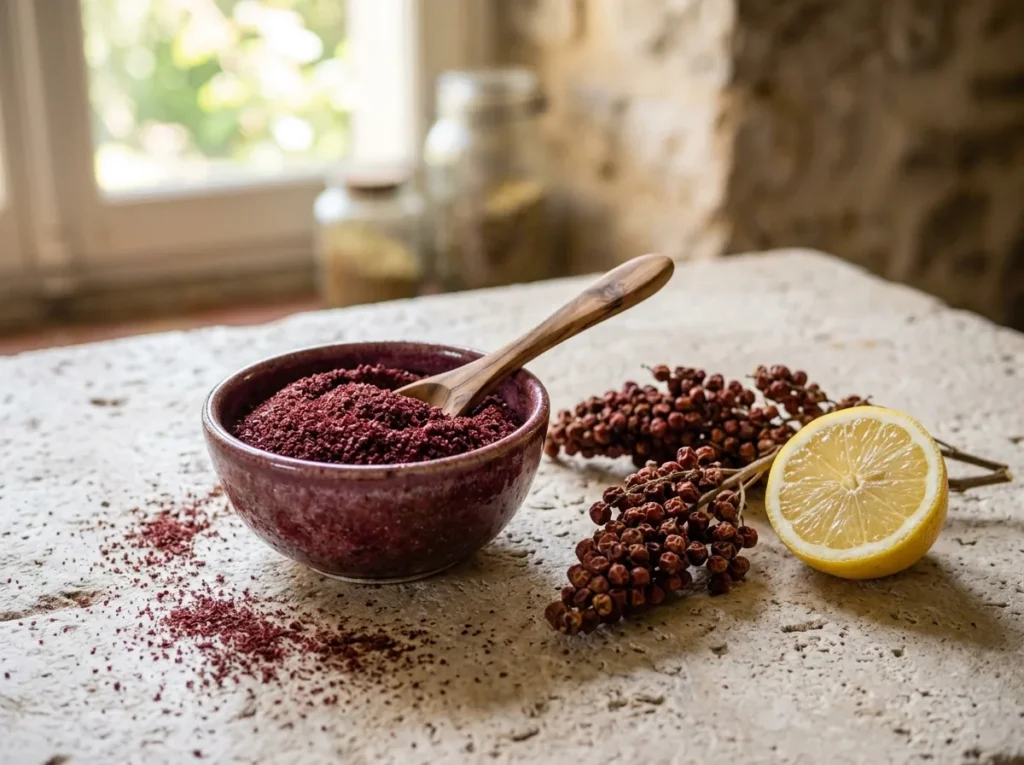
Deep red, slightly grainy and distinctly tangy, sumac is the spice that takes the place of lemon in much of the Middle East. It is sprinkled over the red onions served with kebabs, over fattoush salad, over hummus or roast chicken, and a single pinch brings a fruity sourness without making anything wet. Still little known in many European kitchens, it deserves a place in every cupboard. In this guide, we look at what sumac really is, its taste, its possible benefits, how to use it in cooking and our recipe ideas. We also explain why sumac the spice has nothing to do with the poison sumac found in the gardens and forests of North America.
What exactly is sumac?
Sumac the spice is made from the small dried and ground berries of tanner’s sumac, also called Sicilian sumac (Rhus coriaria), a shrub that grows wild around the Mediterranean, in Turkey, Iran, Syria, Lebanon, Sicily and as far as Afghanistan. Its fruits form tight clusters of small red berries covered in a fine down. They are harvested at the end of summer, dried in the sun and then coarsely ground. The hard, tasteless seed is partly removed.
The name “tanner’s sumac” recalls another ancient use: its leaves and bark, rich in tannins, were used to tan leather. The word sumac comes from the Arabic summāq, meaning “dark red”. The Romans already used it to add sourness to their dishes, at a time when lemons were still rare in Europe.
What does sumac taste like?
Sumac has a tangy, fruity and slightly astringent flavour. It brings to mind lemon, redcurrant or cranberry, with a subtle natural saltiness. Its sourness comes mainly from malic acid, the same acid found in green apples, along with a little citric acid. It is not hot at all, despite its red colour, which can make you think of chilli.
Its great strength is that it adds sourness without any liquid. Where lemon juice would make a salad soggy, soften toasted bread or make a marinade run, sumac stays dry. It also gives dishes a lovely burgundy-red colour.
It goes very well with onion, garlic, olive oil, parsley, mint, yoghurt, chickpeas, aubergine, tomato, cucumber, chicken, lamb, grilled fish and eggs.
Sumac vs za’atar: what is the difference?
The two are often confused, because sumac is one of the ingredients of za’atar. But they are not the same thing at all:
| Sumac | Za’atar | |
|---|---|---|
| What it is | A pure spice: dried, ground berries | A blend of herbs and seeds |
| Ingredients | Sumac only, sometimes with a little salt | Wild thyme or oregano, sumac, sesame seeds, salt |
| Colour | Burgundy red | Olive green, flecked with sesame |
| Taste | Tangy, fruity | Herby, toasty, slightly tangy |
| Typical uses | Onions, salads, grilled meat, hummus | Flatbread with olive oil (man’oushe), labneh, eggs |
In short, sumac is an ingredient and za’atar is a recipe. If a recipe calls for za’atar, sumac alone will not do. On the other hand, with sumac, dried thyme, toasted sesame seeds and a pinch of salt, you can make your own za’atar in two minutes.
The health benefits of sumac
Sumac is above all a seasoning, used at a rate of one or two teaspoons per dish. So it is wise to stay realistic about what it can offer. That said, it interests researchers for several reasons:
- A spice rich in polyphenols: tannins, flavonoids and anthocyanins, the pigments that give it its red colour.
- A way to use less salt: thanks to its sourness, it livens up dishes and often lets you cut down a little on salt, which is useful if you are keeping an eye on your blood pressure.
- Blood sugar and cholesterol: a few small clinical trials, carried out mainly in Iran on people with type 2 diabetes or high cholesterol, observed a slight improvement in certain markers with around 3 to 6 g of sumac a day for a few weeks. These studies are few in number, short and involve only small numbers of participants. They do not allow any conclusions to be drawn.
- Anti-inflammatory effect and digestion: in traditional Middle Eastern medicine, sumac was given for digestive complaints and diarrhoea, probably because of its astringent tannins. The anti-inflammatory effects have mostly been observed in the laboratory.
Sumac therefore does not cure any disease and is no substitute for treatment for diabetes or high cholesterol. As with all spices, no health claim is authorised for sumac in the European Union. Its real benefit is that it makes vegetables, pulses and salads tastier, and these are the foundation of a healthy diet.
Is sumac a powerful antioxidant?
You often read that sumac is “the most antioxidant-rich spice in the world”. This idea comes from a table published in 2010 by the US Department of Agriculture (USDA), which ranked foods according to their ORAC score, a laboratory measure of antioxidant capacity. Sumac bran came out near the very top, ahead of cloves and cinnamon.
The figure is real, but it needs to be put in perspective. The same department withdrew the table in 2012, explaining that an ORAC score measured in a test tube tells us nothing about what happens in the human body. What is more, we eat a few grams of sumac, not a hundred grams. The takeaway is that sumac is rich in antioxidant compounds, like many spices, red fruits and vegetables, without making it a miracle shield.
How to use sumac in cooking
Sumac is very easy to use. Here are its main uses:
- As a finishing touch: this is its main use. Sprinkle it at the last moment over a hot or cold dish, as you would pepper. Half a teaspoon is enough for one plate.
- In salads: on tomatoes, cucumber, raw vegetables, and lentil or chickpea salads.
- In marinades: mixed with olive oil, garlic and onions, it flavours and tenderises meat and fish.
- On roast vegetables: sweet potato, cauliflower, aubergine or carrots, straight out of the oven.
- On eggs: fried eggs, scrambled eggs or shakshuka.
- In yoghurt sauces: Greek yoghurt, garlic, mint and sumac, and you have the perfect sauce for grilled meat.
Sumac does not take well to long cooking, which dulls its sourness. It is best added at the end of cooking or just before serving. To release its full flavour, you can also steep it for ten minutes in a little warm water, then use this tangy red liquid as you would lemon juice.
Sumac onions: the star condiment
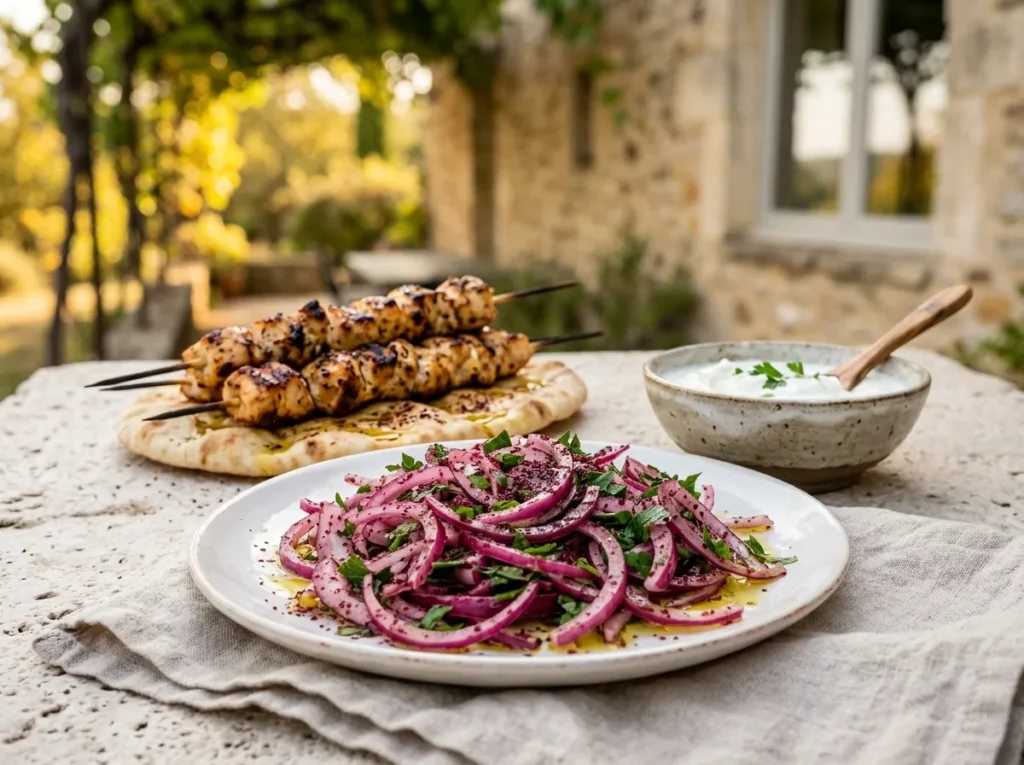
If you were to make only one sumac recipe, this would be it. Red onions with sumac are served with grilled meat, kebabs and skewers in Turkey, Lebanon and Iran.
Thinly slice two red onions into half-moons. Put them in a bowl with a pinch of salt and rub them with your fingers for a few seconds to soften them. Add a tablespoon of sumac, a handful of chopped flat-leaf parsley and a drizzle of olive oil. Leave to rest for at least fifteen minutes. The onions become milder, crunchy and a lovely bright pink. They keep for two days in the fridge in a sealed container.
Sumac chicken
Sumac chicken is one of the great classics of Middle Eastern cooking. The most famous version is Palestinian musakhan: roast chicken on a flatbread, on a bed of onions softened in olive oil and generously sprinkled with sumac.
For a simple version at home, mix two tablespoons of sumac, three crushed garlic cloves, the juice of half a lemon, four tablespoons of olive oil, a teaspoon of cumin, salt and pepper. Brush the mixture over four chicken thighs and leave to marinate in the fridge for at least an hour. Roast for about forty-five minutes at 200 °C on a bed of sliced onions. When it comes out of the oven, sprinkle with a little fresh sumac, parsley and toasted pine nuts.
Sumac and fattoush salad
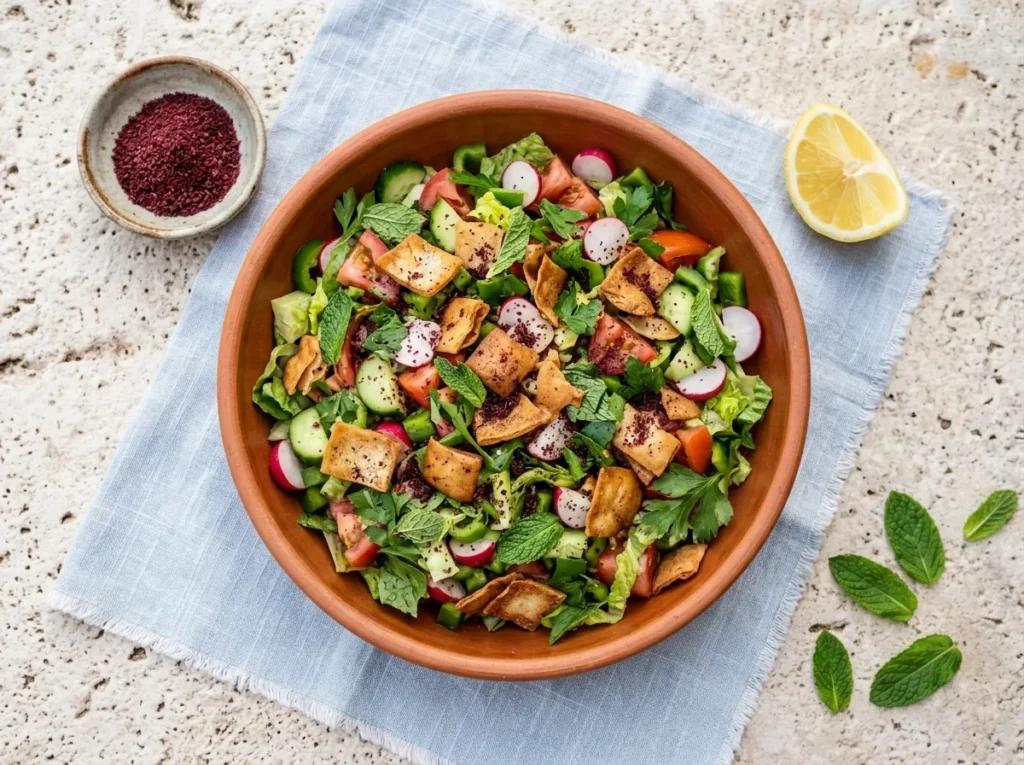
Fattoush is Lebanon’s great everyday salad, and sumac is its essential ingredient. It is what gives the salad its typical sourness and colour.
Chop two tomatoes, a cucumber, a green pepper, a few radishes and three spring onions. Add a shredded romaine lettuce, parsley and fresh mint. Toast pieces of pitta bread in the oven or in a frying pan until nice and crisp. For the dressing, mix the juice of one lemon, five tablespoons of olive oil, a crushed garlic clove, a tablespoon of sumac and salt. Toss the salad with the dressing, add the bread at the last moment so that it stays crisp, then sprinkle with a little more sumac. Some families add a drizzle of pomegranate molasses.
Sumac dressing
Sumac dressing takes a minute to make and completely transforms a green salad or a lentil salad. Mix three tablespoons of olive oil, a tablespoon of cider vinegar or lemon juice, a teaspoon of sumac, half a teaspoon of honey, salt and pepper. Leave to rest for five minutes before serving: the sumac turns the dressing pink and releases its flavour.
It is delicious on our chickpea, feta and cucumber salad, which already has everything of a Middle Eastern salad.
Sumac and hummus
Hummus is very often served with a drizzle of olive oil and a pinch of sumac or paprika on top. Sumac adds a tangy touch that lightens the chickpea and tahini purée, and it gives a pretty contrast of colour. You can also stir half a teaspoon straight into the hummus, in place of some of the lemon juice.
The same trick works with baba ganoush, labneh (strained yoghurt) and tzatziki, or on our baked falafel, served with a yoghurt sauce.
Sumac and kebab
In Turkish and Lebanese restaurants, sumac is almost always there, next to the grilled meat. In Turkey, kebab and dürüm are served with the famous onion salad with sumac and parsley. In Iran, a small bowl of sumac is set on the table for sprinkling over chelow kebab, skewers of meat served with rice.
At home, you can add it to the minced meat for kofta, with onion, parsley and cumin, or to your homemade sandwiches with grilled chicken or roast vegetables. Sumac brings that little tangy note that makes all the difference in Middle Eastern street food.
Sumac recipe ideas
Here are some more simple ways to use your jar of sumac:
- Roast cauliflower with sumac: in florets, with olive oil and cumin, roasted in the oven, then sprinkled with sumac and served with a yoghurt sauce.
- Roast sweet potato: in wedges, with sumac and crumbled feta as it comes out of the oven.
- Fried eggs with sumac: a pinch on the yolks, with a little parsley and toast.
- Grilled salmon or sea bream: rubbed with sumac, garlic and olive oil before cooking.
- Tomato salad: tomatoes, red onion, olive oil and sumac, nothing more.
- Rice or bulgur: a spoonful of sumac and fresh herbs just before serving.
- Refreshing drink: in the Middle East, and among some Native American peoples with their local sumacs, a “lemonade” is made by soaking the berries in cold water, then straining and lightly sweetening it.
Poison sumac: beware of confusion
The word “sumac” sometimes sounds alarming, and understandably so: in North America, poison sumac (Toxicodendron vernix) is a highly irritant swamp shrub, and poison ivy (Toxicodendron radicans, formerly called Rhus radicans) is a climbing vine that is notorious in Canada and the United States. Their sap contains urushiol, a substance that causes red patches, intense itching and blisters on simple contact.
These plants have nothing to do with sumac the spice. They are easy to tell apart: their fruits are white or light grey and hang in loose clusters, whereas edible sumacs have clusters of red berries that point upwards. The sumac sold in shops comes from Rhus coriaria and does not carry this danger.
In gardens in Europe, you may also come across stag’s horn sumac (Rhus typhina), an ornamental shrub whose leaves turn red in autumn. Its red clusters are not toxic, but it is not the spice sold in shops. Never pick or eat a wild or ornamental plant unless you are absolutely sure of its identity.
Sumac precautions
Used in cooking, tanner’s sumac is considered safe for most people. A few precautions are still worth knowing:
- Allergy: sumac belongs to the same plant family as cashew nuts, pistachios and mangoes. If you are allergic to any of them, ask your doctor for advice before trying it.
- Diabetes treatment: because of the studies on blood sugar, be careful with supplements or high doses if you are taking medication for diabetes. Culinary amounts pose no known problem.
- Pregnancy and breastfeeding: sumac used in cooking poses no known problem, but supplements and high doses are best avoided, as there are no studies.
- Added salt: some shop-bought sumac contains salt. If you are watching your salt intake, read the label.
Where to buy sumac
You can find sumac in Middle Eastern grocery shops, Lebanese, Turkish or Iranian, often at low prices and in large bags. It is also sold in organic shops, spice shops and online, and increasingly in supermarkets, in the spice or world food aisle.
A good sumac has a deep burgundy-red colour, slightly glossy, a slightly moist and lumpy texture, and a fruity scent when you open the bag. Be wary of a bright red sumac that is too uniform, or of a very fine, very dry powder: some cheap products are cut with salt, bran or colourings. Read the ingredients list, which should only mention sumac, possibly with a little salt.
What can I use instead of sumac?
If you do not have any sumac to hand, several options give a similar result:
- Lemon zest and salt: the finely grated zest of a lemon mixed with a pinch of salt is the simplest substitute.
- Lemon juice or a dash of vinegar: for sourness, but be careful, as they are liquid.
- Pomegranate molasses: tangy and fruity, perfect in fattoush and marinades.
- Amchur: the green mango powder of Indian cooking, dry and tangy like sumac.
- Paprika and lemon: a little sweet paprika with lemon zest, to recreate both the colour and the sourness as a finishing touch.
How to store sumac
Keep sumac in a tightly sealed jar, away from light, heat and moisture. It keeps for about six months to a year. Over time, it loses its colour and sourness and turns brownish. To check its freshness, taste a pinch: it should be distinctly tangy. Avoid sprinkling it straight over a steaming pan, as the steam makes the powder in the jar go hard.
Sumac and its fellow spices
In Middle Eastern cooking, sumac often goes hand in hand with cumin in marinades and kofta, and with coriander seeds in spice blends for grilled meat. Find all our spices in our spice guide.
Frequently asked questions about sumac
Is sumac spicy?
No, not at all. Despite its red colour, sumac is not hot. It is tangy, a little like lemon.
How much sumac should I use?
Half a teaspoon as a finishing touch on a plate, and one to two tablespoons in a marinade for four people.
Is sumac salty?
It has a subtle natural saltiness, and some shop-bought sumac contains added salt. Taste your dish before adding salt.
Can you cook with sumac?
Yes, in a marinade or a roast dish, but it tastes best added at the end of cooking. Always add a fresh pinch just before serving.
This article is for general information only and is not a substitute for advice from a doctor or pharmacist.