It flavours mulled wine, stewed fruit, sweet buns and tagines: cinnamon is probably the most comforting spice in the cupboard. It is also credited with plenty of virtues, from blood sugar to weight loss. But did you know there are two main kinds of cinnamon, and that the most widely sold one should be eaten in moderation? In this guide, we look at the health benefits of cinnamon, the difference between Ceylon and cassia, how much is too much, and then head to the kitchen for cinnamon tea, cinnamon water and a few savoury ideas.
What exactly is cinnamon?
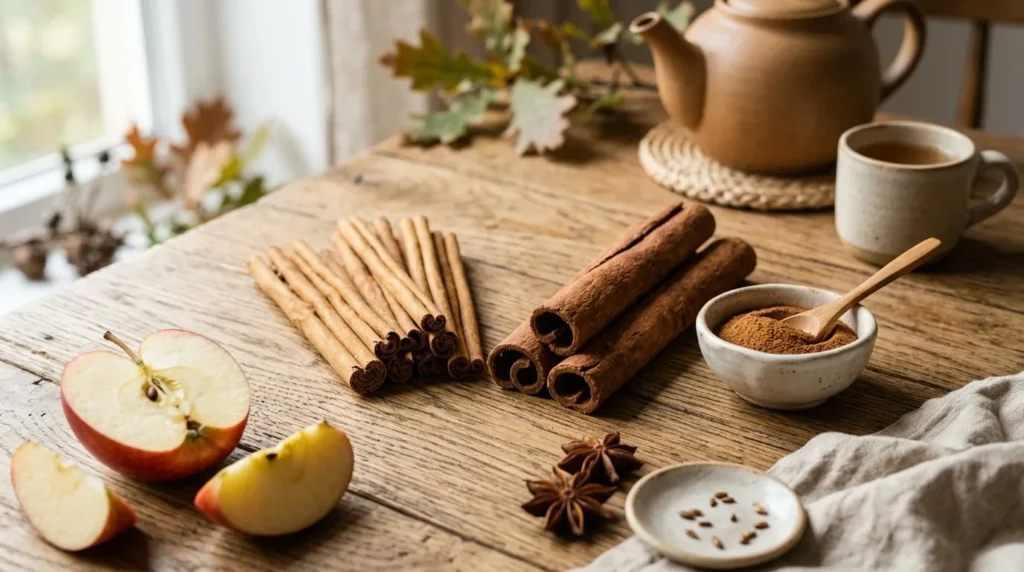
Cinnamon is the dried bark of small tropical trees from the genus Cinnamomum, part of the laurel family. The thin inner bark is stripped from young branches and curls up as it dries: that is what gives us the familiar sticks.
It is one of the oldest traded spices. The ancient Egyptians already used it to embalm their dead, and in ancient Rome it was worth more than gold. In the Middle Ages it was at the heart of the European nobility’s cooking, and Arab merchants long kept its trade route a secret. In the 16th century, first the Portuguese and then the Dutch fought over the island of Ceylon, now Sri Lanka, to control the trade.
Its warm, sweet aroma comes mainly from cinnamaldehyde, the main compound in its essential oil. Cinnamon also contains antioxidant polyphenols and, depending on the variety, more or less coumarin, a substance we will be talking about a lot.
Ceylon vs cassia cinnamon: the difference that matters
Behind the simple word “cinnamon” there are actually two main families of spice. This is no minor detail: they taste different, they cost different amounts and, above all, they contain very different levels of coumarin.
| Ceylon cinnamon | Cassia cinnamon | |
|---|---|---|
| Botanical name | Cinnamomum verum (or zeylanicum) | Cinnamomum cassia, plus related species from Indonesia and Vietnam |
| Origin | Sri Lanka, southern India, Madagascar | China, Vietnam, Indonesia |
| Stick | Thin layers rolled like a cigar, crumbly | Thick, hard bark, rolled just once |
| Colour | Light, golden brown | Reddish brown, darker |
| Flavour | Mild, delicate, slightly lemony | Stronger, spicy, a little bitter |
| Coumarin | Traces only | A lot: around 3 g per kilo on average |
| Price | More expensive | Cheap, the most widely sold |
| On the label | “Ceylon” or “Cinnamomum verum“ | Often just “cinnamon”, or “Chinese cinnamon” |
Our advice: for everyday use (tea, porridge, morning water), choose Ceylon cinnamon. Cassia is perfectly fine for occasional use, in baking or in a slow-cooked dish.
Coumarin in cinnamon: should you be worried?
Coumarin is a substance found naturally in several plants. In high doses and over a long period, it can damage the liver in sensitive people. That is why the European Food Safety Authority (EFSA) has set a tolerable daily intake of 0.1 mg per kilo of body weight.
In practical terms, the German Federal Institute for Risk Assessment (BfR) has done the maths: cassia cinnamon contains on average around 3 g of coumarin per kilo. An adult weighing 60 kg therefore reaches the tolerable intake with about 2 g of cassia a day, roughly one level teaspoon. For a child weighing 15 kg, about half a teaspoon is enough to reach it.
No need to panic, though: according to the BfR, going slightly over this amount for a week or two, over the Christmas holidays for example, is not a problem. The risk mainly concerns large, regular consumption of cassia over months. Shop-bought biscuits and gingerbread are regulated too: EU rules limit how much coumarin they can contain.
Ceylon cinnamon, on the other hand, contains only traces of coumarin. It is the best option if you eat cinnamon often.
Cinnamon health benefits
Cinnamon has been widely studied, but it is important to keep a cool head. In Europe, no health claim has been approved for cinnamon: a product cannot claim to treat or prevent a disease. Here is what we know today.
A spice rich in antioxidants
Gram for gram, cinnamon is among the foods richest in polyphenols, which are antioxidant compounds. Of course, we only eat it in small amounts: it complements a diet rich in fruit and vegetables, it does not replace one.
Cinnamon and blood sugar: what the studies say
This is the most searched question, especially by people with diabetes. Several reviews of studies show that taking cinnamon regularly (often 1 to 6 g a day, for a few weeks to a few months) can slightly lower fasting blood sugar in people with type 2 diabetes. The effect remains modest, much weaker than that of medication, and results vary a great deal from one study to another.
Two important points:
- Cinnamon never replaces diabetes treatment. Do not change your treatment without talking to your doctor.
- The doses studied often exceed 2 g a day: with cassia, you would then go over the coumarin limit. If you take it every day, choose Ceylon cinnamon.
Cinnamon and digestion
Like many spices, cinnamon is traditionally used for sluggish digestion, bloating and wind. The European Medicines Agency (EMA) does in fact recognise Ceylon cinnamon bark as a traditional herbal medicine for these minor digestive complaints. “Traditional use” means this use is long-established and plausible, but its effectiveness has not been proven by robust studies. A cup of cinnamon tea after a big meal is still a pleasant habit.
Cinnamon for weight loss: myth or reality?
You often read that cinnamon “melts fat” or “curbs your appetite”. In reality, no serious study shows that cinnamon makes you lose weight on its own. A few small trials have observed slight weight loss in overweight people, but the effect is minimal and uncertain.
Its real strength lies elsewhere: its naturally sweet taste helps you cut down on sugar in yoghurt, porridge, stewed fruit or coffee. It is a small change, but repeated every day, it adds up. Be wary, however, of high-strength “slimming” capsules, especially if they contain cassia.
How much cinnamon per day?
It all depends on the variety:
- Cassia cinnamon: no more than about 2 g a day for an adult weighing 60 kg (one level teaspoon), and much less for a child.
- Ceylon cinnamon: coumarin is not an issue. The usual amounts used in cooking, and even one to two teaspoons a day, are well tolerated by a healthy adult.
As a guide: a level teaspoon of ground cinnamon weighs about 2 to 3 g. A cinnamon stick weighs 2 to 4 g on average, but it only releases part of its compounds into a tea.
Cinnamon side effects and precautions
In cooking, cinnamon is very well tolerated. In large amounts or as a supplement, a few precautions are needed. Ask your doctor or pharmacist for advice if any of the following applies to you:
- Liver disease or medication that puts strain on the liver: avoid large amounts of cassia, because of the coumarin.
- Diabetes medication: cinnamon could enhance the effect of certain drugs and lower blood sugar too much.
- Anticoagulant treatment: to be on the safe side, avoid cassia supplements, as coumarin is related to certain anticoagulants.
- Allergy: cinnamon can cause reactions, notably irritation of the mouth or skin in people sensitive to cinnamaldehyde.
- Children: their low body weight means they reach the coumarin limit sooner. Choose Ceylon cinnamon and small amounts.
Finally, never try to swallow a spoonful of dry ground cinnamon, a “challenge” that has done the rounds on social media: the powder can be inhaled and cause serious breathing problems.
Cinnamon during pregnancy
During pregnancy, cinnamon in cooking, in normal amounts, poses no known problem. A pinch in stewed apples or a slice of cinnamon cake is absolutely fine.
However, to be on the safe side:
- avoid cinnamon supplements and essential oils, as there is not enough data on their safety;
- choose Ceylon cinnamon if you eat it often, to limit coumarin;
- if you have gestational diabetes, do not use cinnamon as a treatment: follow the advice of your doctor or midwife.
Cinnamon sticks or ground?
Both forms have their uses:
- Sticks are ideal for liquids and slow-cooked dishes: teas, mulled wine, rice pudding, stewed fruit, tagines. Remove them before serving. They keep their aroma much longer.
- Ground cinnamon mixes straight into batters and doughs, yoghurt, fruit or spice blends. It is more convenient but loses its aroma faster. For an intense flavour, you can grind a stick of Ceylon cinnamon yourself, as it is fairly soft, in a spice grinder.
Tip for spotting a Ceylon stick: it is made up of many thin layers rolled together, and it snaps easily between your fingers. A cassia stick is a thick, very hard piece of bark.
How to store cinnamon
Cinnamon does not like light, heat or moisture, which make its aroma fade.
- Keep it in an airtight jar, ideally an opaque one, in a cupboard away from the cooker.
- Ground cinnamon keeps its aroma well for about six months to a year.
- Sticks keep for two to three years.
- To check it is still good, rub a little powder between your fingers: if the smell is faint, it has lost much of its flavour.
Cinnamon tea recipe

Simple and comforting, cinnamon tea can be drunk hot in winter or iced in summer. For one large mug:
- 1 Ceylon cinnamon stick
- 300 ml water
- Optional: a slice of orange, 2 cloves, a few slices of fresh ginger, a teaspoon of honey
- Break the stick in two and put it in a saucepan with the cold water.
- Bring to a simmer and simmer gently for 10 minutes with the lid on.
- Turn off the heat and leave to infuse for another 5 minutes.
- Strain, then add the orange or honey once the drink has cooled slightly.
The cinnamon and ginger version is particularly comforting. To find out all about this root, read our guide to ginger: benefits, uses and precautions.
Cinnamon water in the morning: a good idea?
Cinnamon water is simply water in which a cinnamon stick has been left to infuse, often overnight. Drunk in the morning, it is marketed as a “detox” or “fat-burning” drink.
Let’s be honest: there is no evidence to back up these promises, and it is your liver and kidneys that get rid of the body’s waste, with no outside help. Cinnamon water is still a pleasant way to rehydrate when you wake up, with a gently sweet taste and no added sugar.
To make it: put a Ceylon cinnamon stick in a litre of water in the fridge and leave it to infuse for 8 to 12 hours. If you drink it every day, Ceylon cinnamon is once again the best choice.
Cinnamon and honey: a delicious duo
The combination of cinnamon and honey has long been touted as an old wives’ remedy for everything: colds, skin, weight loss, cholesterol. These promises are not proven. Honey can soothe a sore throat, and that is about all that can be said.
In the kitchen, on the other hand, it is a delicious pairing: on toast, in yoghurt, on baked apples or in a cup of tea. Two precautions: honey is still a sugar, to be eaten in moderation, and it must never be given to babies under one year old, because of the risk of infant botulism.
Cooking with cinnamon: sweet ideas and savoury recipes
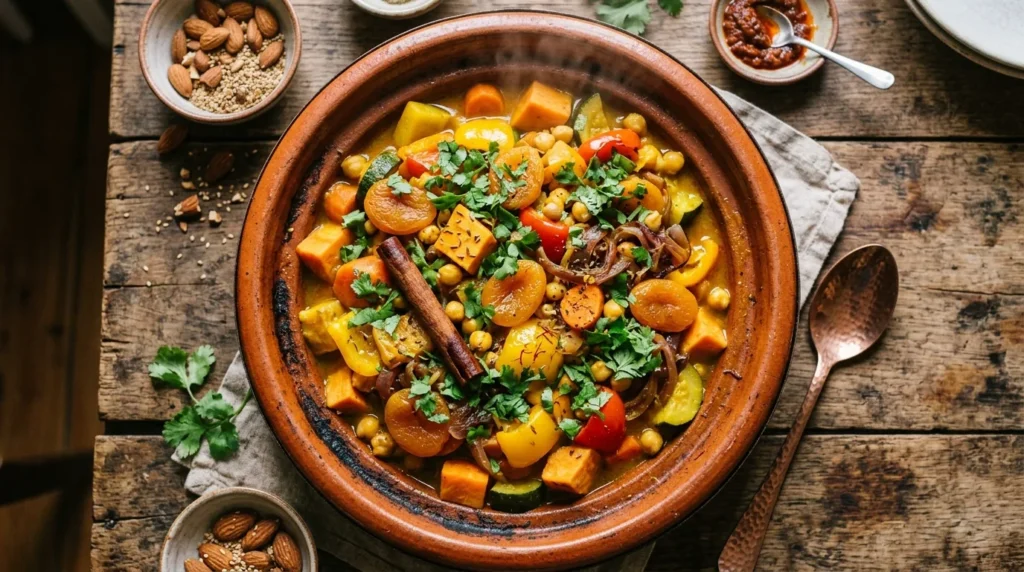
In many kitchens cinnamon is mostly associated with desserts, but elsewhere in the world it also flavours plenty of savoury dishes.
Sweet ideas
- Stewed and baked fruit, such as our apple peel and cinnamon compote, a zero-waste recipe.
- Porridge, rice pudding, French toast, pancakes.
- Sweet buns, cinnamon rolls, gingerbread, Christmas biscuits.
- Hot drinks: hot chocolate, coffee, turmeric golden milk.
Savoury recipes with cinnamon
- Tagines and couscous: a stick with lamb, chicken or vegetables, especially with dried fruit.
- Curries and biryanis: cinnamon is part of garam masala, the Indian spice blend.
- Chilli con carne or veggie chilli: a pinch rounds out the flavour of the spices and cocoa.
- Squash soups: a hint of cinnamon brings out the best in red kuri squash, as in our red kuri squash and chestnut soup.
- Roasted vegetables: carrots, sweet potatoes or butternut squash with a drizzle of olive oil, cumin and a pinch of cinnamon.
- Greek moussaka and Middle Eastern stews, where cinnamon goes beautifully with tomato and minced meat.
Tip: in a savoury dish, start with a small pinch. Cinnamon should stay in the background, not take over the dish.
Want to pair this spice with pepper? Discover the different varieties, piperine and our homemade peppercorn sauce in our guide to pepper.
Read next: our complete guides to cumin, the go-to spice for digestion, and paprika, sweet, hot or smoked. And for special occasions, discover saffron, the red gold of spices. And to flavour tea, coffee and buns, discover cardamom, the queen of spices. And for mulled wine, slow-cooked stews and Christmas pomanders, discover cloves. Not forgetting nutmeg, the secret of a good béchamel and mashed potatoes. And for gentle heat, discover Espelette pepper, the pride of the Basque Country. Finally, for a gentle lemony note, try coriander seeds, perfect in vegetables à la grecque.
Cinnamon FAQ
Can you eat cinnamon every day?
Yes. With Ceylon cinnamon, everyday use in cooking poses no problem for a healthy adult. With cassia, stay below roughly one level teaspoon a day, because of the coumarin.
How can I tell if my cinnamon is Ceylon?
Check the label: it should say “Ceylon” or “Cinnamomum verum“. If it just says “cinnamon”, it is most likely cassia. As for sticks, Ceylon ones are made of thin rolled layers and snap easily.
Does cinnamon lower blood sugar?
According to several studies, it may slightly lower fasting blood sugar in people with diabetes, but the effect is small and uncertain. It is in no way a substitute for treatment.
Is cinnamon bad for your liver?
Not in normal amounts. It is the coumarin, plentiful in cassia, that can cause problems in high doses and over a long period. Ceylon cinnamon contains only traces of it.
This article is for general information only and does not replace advice from a doctor, midwife or pharmacist.