Coriander is best known for its fresh leaves, which split food lovers into devoted fans and committed haters. But the plant also gives us a far less divisive spice: coriander seeds. These little beige spheres smell of orange, lemon and wood, and they flavour Greek-style vegetables, curries, pickles and even some beers. In this guide, we look at the health benefits of coriander seeds, especially for digestion, at how they taste and how they differ from the leaves, before heading into the kitchen and out to the vegetable garden.
What exactly are coriander seeds?
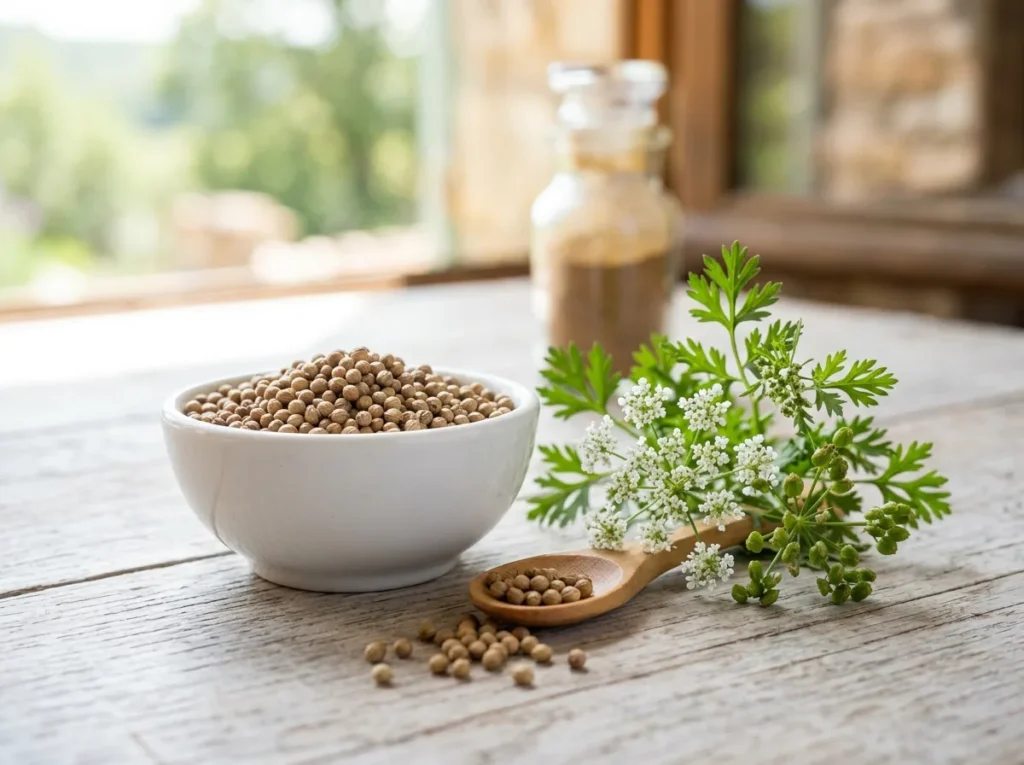
Coriander (Coriandrum sativum) is an annual plant in the Apiaceae family, like carrot, parsley, fennel, caraway and cumin. What we call “seeds” are actually its dried fruits: small ribbed spheres 3 to 5 mm across that split into two halves when you crush them.
Native to the Mediterranean and the Near East, coriander is one of the oldest known spices: seeds were found in Tutankhamun’s tomb in Egypt. The Romans spread it throughout Europe. Today India is by far the largest producer and consumer, ahead of Morocco, Russia, Ukraine, Bulgaria and Canada.
What do coriander seeds taste like?
Coriander seeds taste mild, warm and slightly sweet, with clear notes of orange and lemon, a floral touch and a woody background that turns almost nutty when toasted. They are neither hot nor bitter. Their aroma comes mainly from linalool, an aromatic compound also found in lavender and citrus zest, which makes up most of their essential oil.
This mild, fruity character is what makes them so easy to use: they go just as well with vegetables and fish as with meat, bread and even some desserts.
Coriander seeds vs leaves: what’s the difference?
The leaves and seeds come from the same plant, but in the kitchen they have almost nothing in common. Fresh leaves (often called cilantro) taste bright, grassy and lemony, and some people find them “soapy”. There is an explanation for this: it is thought to come from compounds called aldehydes, which are present in the leaves but not in the seeds, combined with a genetic sensitivity to these compounds in some people. Good news if you can’t stand fresh coriander: you will often enjoy the seeds.
| Part | Flavour | Uses | Storage |
|---|---|---|---|
| Seeds | Mild, citrusy, woody | Greek-style vegetables, curries, marinades, pickles, breads | 1 to 2 years whole |
| Leaves | Bright, grassy, lemony, sometimes “soapy” | Salads, guacamole, soups, Asian and Mexican dishes | A few days in the fridge |
| Roots | Intense, between leaf and seed | Curry pastes, Thai cooking | A few days in the fridge |
So the two are not interchangeable: you can’t swap a spoonful of seeds for leaves, or the other way round.
The health benefits of coriander seeds
Coriander seeds have been used since ancient times in traditional medicine, in Europe as well as in India, mostly for digestion. They contain essential oils, fibre and antioxidant compounds. In laboratory and animal studies, their extracts have shown antioxidant and antibacterial effects, and a possible influence on blood sugar and cholesterol. In humans, studies are still few and small. It is worth remembering that in Europe no health claims are authorised for coriander.
Coriander seeds and digestion
This is the oldest and best-recognised use. Like its cousins cumin, fennel and caraway, coriander is considered a carminative spice: it is said to help reduce bloating, wind and mild cramps after meals. In Germany, the expert panel that assessed medicinal plants, Commission E, recognised the use of coriander fruit for mild digestive complaints and loss of appetite. Modern clinical evidence remains limited, but a cup of coriander seed tea after a heavy meal is a pleasant habit that is safe for most people.
Coriander seed tea
Warm and lightly lemony, coriander seed tea is a simple digestive infusion to make.
For 1 cup:
- 1 teaspoon coriander seeds
- 250 ml water
- Optional: a few fennel seeds, a thin slice of ginger, a slice of lemon or a teaspoon of honey
Method: lightly crush the seeds in a mortar or with the flat of a knife to release their aroma. Pour simmering water over them, cover and leave to infuse for 10 minutes. Strain and drink warm, ideally after a meal. One to two cups a day is plenty.
How to use coriander seeds
There are three ways to use coriander seeds:
- Whole, in cooking liquids, marinades, court-bouillons, pickles and Greek-style vegetables. They release their flavour slowly and are pleasant to bite into.
- Crushed in a mortar, over roasted carrots, fish or grilled meat, or in bread dough.
- Ground, in curries, tagines, soups, sauces and spice blends such as garam masala, ras el hanout or harissa.
Because they are mild, you can use more of them than other spices: one to two teaspoons for a dish serving four is a typical amount. They pair especially well with cumin, ginger, garlic, lemon, orange, carrot, cauliflower, mushrooms, lamb, pork and salmon.
Toasted coriander seeds
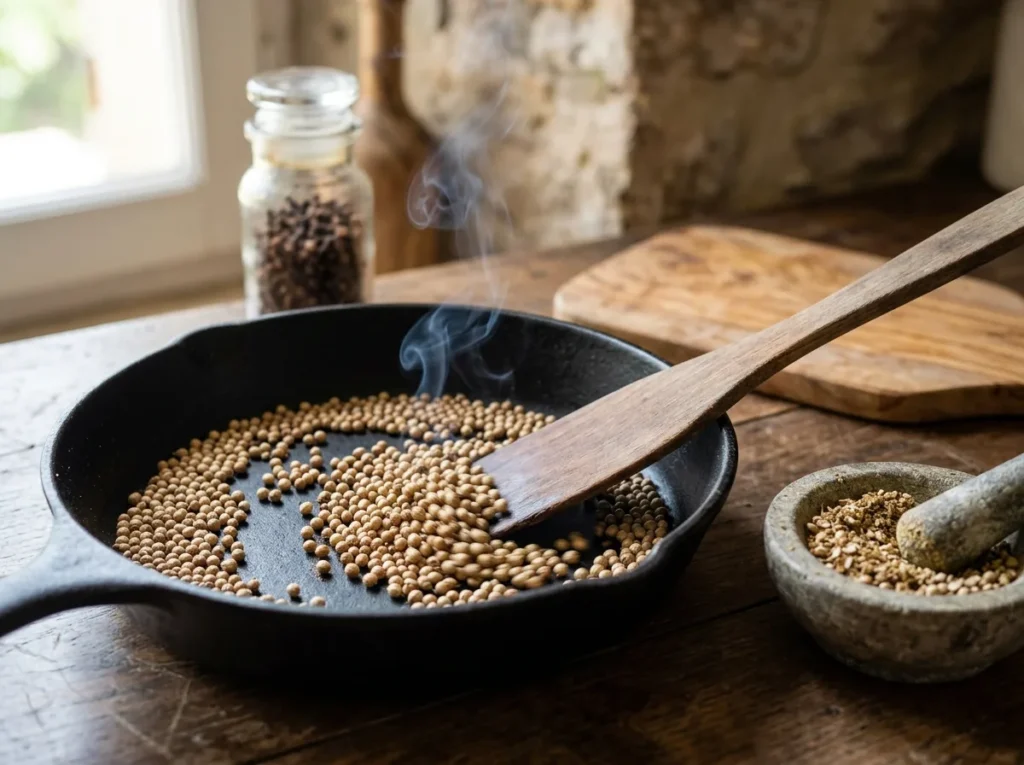
This is the trick that changes everything: dry-toast the seeds before using them. The heat releases their essential oils and brings out notes of hazelnut and toasted citrus.
- Heat a dry frying pan over medium heat.
- Add the seeds and stir constantly for 1 to 2 minutes.
- As soon as they turn lightly golden and smell very fragrant, tip them onto a plate to stop the cooking. Be careful: they burn quickly and then turn bitter.
- Leave to cool, then use them whole, crushed or ground.
Toasted seeds are delicious sprinkled over roasted vegetables, carrot soup, hummus or a lentil salad.
Ground or whole coriander seeds?
Our advice: buy whole seeds and grind them just before use, in a mortar or a coffee grinder. Whole, they keep their aroma for one to two years. Ground, they lose much of their flavour within a few months, because their essential oils evaporate quickly. Shop-bought ground coriander is still handy for curries and spice blends, as long as you replace it often.
Greek-style vegetables with coriander
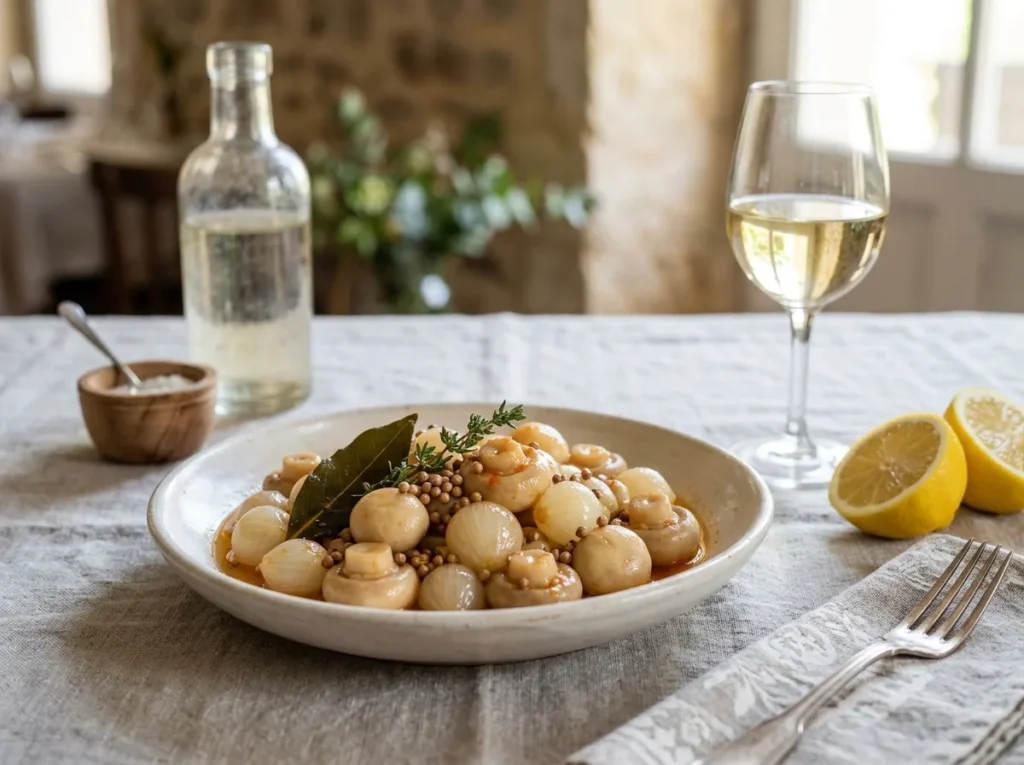
Despite the name, vegetables “à la grecque” (Greek-style) are a great classic of French cooking: vegetables simmered in a fragrant broth of olive oil, lemon and coriander seeds, then served cold. Button mushrooms are the best-known version, but the recipe works with baby onions, carrots, cauliflower, fennel or leeks.
Greek-style mushrooms, serves 4:
- 500 g small button mushrooms
- 10 baby onions (optional)
- 100 ml dry white wine and 100 ml water
- 5 tablespoons olive oil
- Juice of one lemon
- 1 tablespoon coriander seeds
- 1 tablespoon tomato purée (optional)
- 1 bay leaf, 2 sprigs of thyme, salt, pepper
Method: clean the mushrooms and halve the larger ones. In a saucepan, combine the wine, water, olive oil, lemon juice, lightly crushed coriander seeds, tomato purée, bay leaf and thyme. Bring to the boil, add the onions and cook for 5 minutes, then add the mushrooms and cook for another 10 minutes uncovered. Season with salt and pepper, leave to cool, then refrigerate for a few hours. Greek-style mushrooms are even better the next day, served as a starter or with drinks.
Coriander seeds: our recipe ideas
- Roasted carrots: toss carrots with olive oil, crushed coriander seeds, cumin and a drizzle of honey, then roast them in the oven.
- Pickles: add a teaspoon of seeds to the vinegar for your pickled onions, cucumbers or cauliflower.
- Salmon or mackerel: coat the fish in a crust of crushed coriander seeds and pepper before pan-frying.
- Curries and dhals: ground coriander is the base of a great many Indian curries, together with cumin and turmeric.
- Marinades: for lamb, pork or chicken, with garlic, lemon and olive oil.
- Breads and biscuits: a few crushed seeds in bread, brioche or shortbread dough add a surprising citrus note.
- Wheat beer: in Belgium, witbier is traditionally flavoured with coriander seeds and orange peel.
What can I use instead of coriander seeds?
Run out of coriander seeds? No spice tastes exactly the same, but here are some options:
- Cumin: from the same family, it works very well in curries and Middle Eastern dishes, but it is stronger. Use about half as much.
- Caraway: ideal in bread, cabbage and potato dishes.
- Fennel seeds: they bring an aniseed note, perfect with fish and vegetables.
- Orange or lemon zest with a pinch of cumin: to recreate the citrus note in a marinade or Greek-style vegetables.
- Garam masala: it already contains coriander and is a good stand-in for a curry.
Sowing coriander seeds
Coriander is easy to grow in the garden or in a pot, and you can harvest both the leaves and the seeds:
- When to sow: from April to June, directly where it is to grow, as coriander does not like being transplanted. For leaves all summer long, sow a little every three weeks.
- How: lightly crush the seeds to separate the two halves, then sow them 1 cm deep in light, well-drained soil, in sun or partial shade.
- Care: water regularly but not too much. In hot weather, coriander “bolts” (runs to seed) very quickly: a drawback if you want leaves, but a bonus if you want seeds.
- Harvesting the seeds: at the end of summer, when the flower heads and seeds have turned light brown. Cut the stems, put the heads in a paper bag and leave them to dry for one to two weeks somewhere dry. Shake the bag and the seeds fall out on their own.
Keep a few seeds from your harvest to sow the following year.
Coriander seeds: contraindications and precautions
In culinary amounts, coriander seeds suit almost everyone. A few precautions:
- Allergy: people who are allergic to other Apiaceae, such as celery, carrot, fennel or anise, or to certain pollens such as mugwort, may react to coriander.
- Diabetes: coriander may slightly lower blood sugar. As a precaution, if you are on treatment, talk to your doctor before drinking strong infusions every day.
- Essential oil: it is highly concentrated, should not be swallowed without medical advice and is not suitable for children.
Coriander seeds and pregnancy
During pregnancy, coriander seeds used in cooking in normal amounts pose no known problem: a few seeds in a curry or Greek-style vegetables are safe. However, because of a lack of data, it is best to avoid very strong infusions in large quantities, supplements and the essential oil during pregnancy and breastfeeding. If in doubt, ask your doctor or midwife.
How to store coriander seeds
Like all spices, coriander seeds don’t like light, heat or moisture. Keep them in an airtight jar, made of tinted glass or metal, in a cool, dry cupboard away from the hob. Whole, they stay fragrant for one to two years; ground, they are best used within six months. To check how fresh they are, crush a seed between your fingers: it should immediately give off a citrus scent.
Coriander and its fellow spices
Coriander forms an inseparable duo with its cousin cumin, and joins turmeric and ginger in most curries. In garam masala, it teams up with cardamom, cinnamon, cloves and black pepper. Also discover our guides to paprika, saffron, nutmeg and Espelette pepper.
Frequently asked questions about coriander seeds
Do coriander seeds taste like the leaves?
No. The seeds are mild, warm and orange-scented, without the grassy or “soapy” side of the fresh leaves.
How many coriander seeds should you use in a dish?
Allow one to two teaspoons for a dish serving four, and one tablespoon for a Greek-style vegetable broth.
Can you eat coriander seeds whole?
Yes, they are crunchy and pleasant, especially after light toasting. In a slow-cooked dish, they soften a little.
Do coriander seeds go off?
They don’t become dangerous, but they lose their aroma over time, especially when ground. If they no longer smell of anything when crushed, replace them.
This article is for general information only and is not a substitute for advice from a doctor, midwife or pharmacist.