Barszcz czerwony (Polish beetroot soup)
Ingredients
Method
- Peel the beetroot and slice thinly. Peel the carrot, celeriac and onion and cut them into chunks.
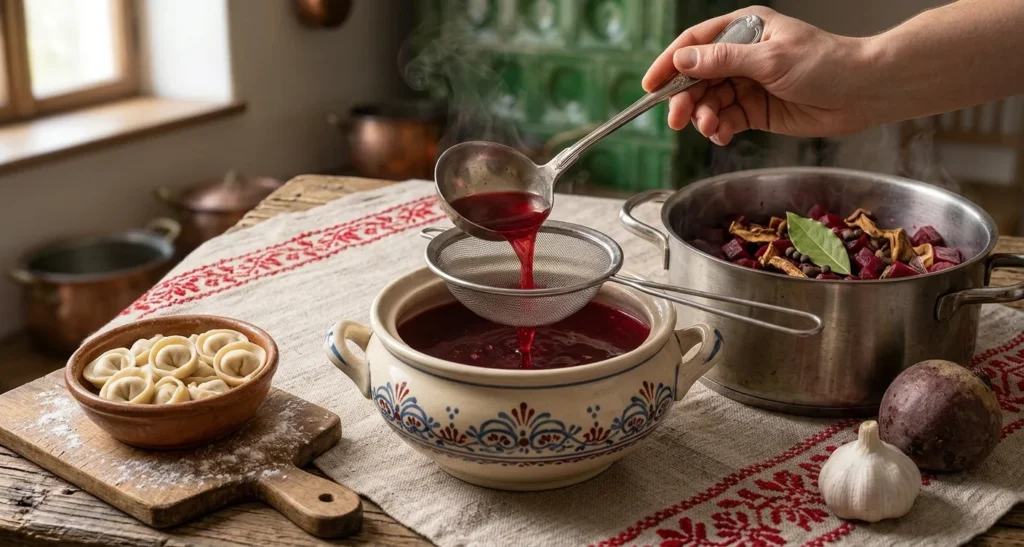
- Put the vegetables, dried mushrooms, allspice and bay leaves in a large pan with the stock. Bring to a simmer and cook for 45 minutes over a low heat, without letting it boil hard.
- Add the crushed garlic and marjoram, turn off the heat and leave to infuse for 10 minutes, covered.
- Strain the broth through a fine sieve, pressing the vegetables lightly.
- Season with lemon juice, sugar, salt and pepper to get a balanced sweet and sour taste.
- Reheat gently without boiling and serve in shallow bowls with uszka, or in cups.
Notes
Clear, ruby red and gently sweet and sour: barszcz is Poland’s most iconic soup. Here is our traditional barszcz recipe, in an easy lemon version, ready in 1 hour 20 minutes.
The history of barszcz
The word barszcz originally meant hogweed, a wild plant used to make a sour soup in the Slavic countryside. Beetroot gradually replaced it, and red barszcz became a festive soup. Today it opens the Wigilia meal, Polish Christmas Eve, when twelve meatless dishes are served.
Barszcz czerwony
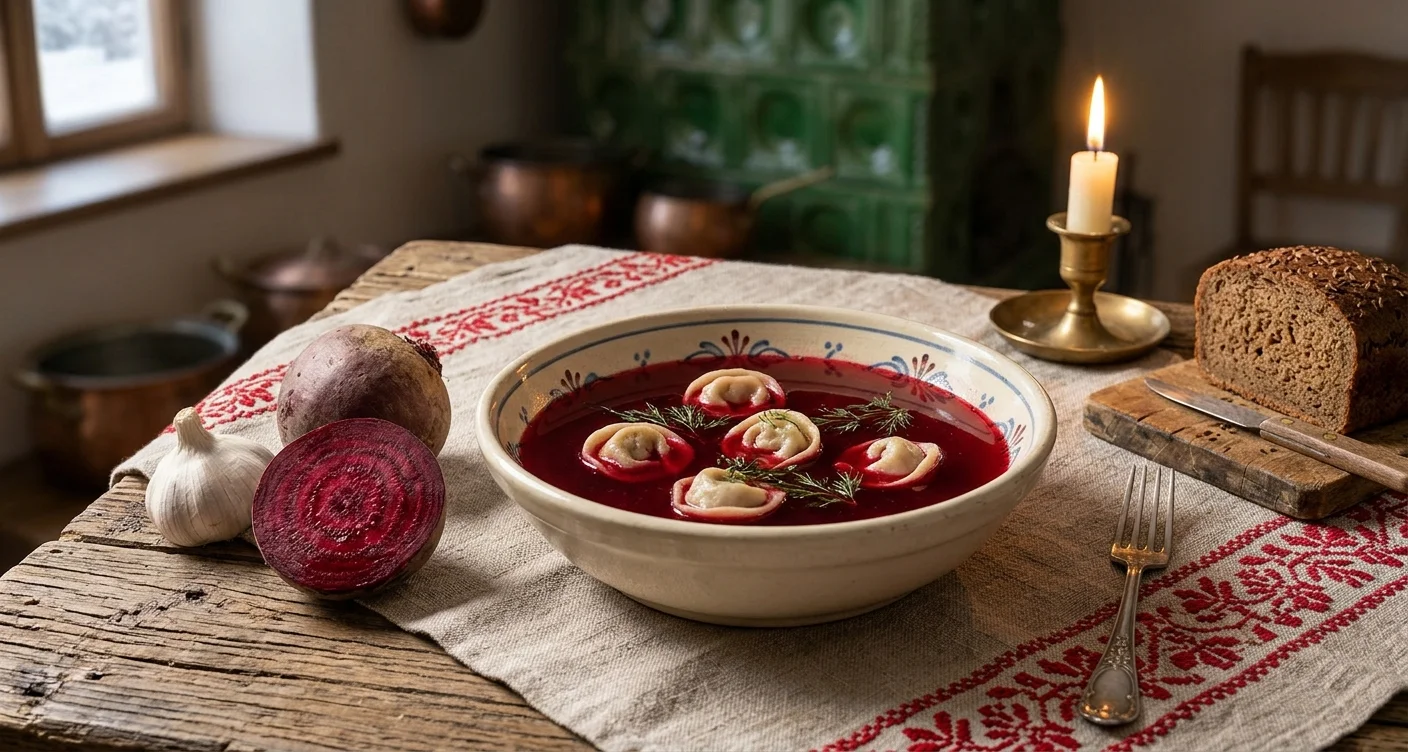
Barszcz czerwony, or red barszcz, is a clear broth with no pieces in it. The beetroot, vegetables and aromatics cook gently, then everything is strained. It is drunk from a cup with a puff pastry roll or a croquette, or eaten from a bowl with tiny dumplings.
Polish beetroot soup
What gives Polish beetroot soup its character is its sweet and sour balance. The sweetness of the beetroot is lifted by acidity: lemon, vinegar or fermented juice. Garlic, marjoram and allspice give it its typical aroma.
An easy barszcz recipe
Our easy barszcz recipe skips fermentation: lemon brings the acidity. You can also use 2 to 3 tablespoons of cider vinegar. Taste and adjust at the end: barszcz should be bright, neither too sweet nor too sour.
Barszcz with zakwas
The most traditional version relies on zakwas, a lacto-fermented beetroot juice. For a zakwas barszcz recipe, slice 1 kg of beetroot into a jar and add 4 garlic cloves, 2 bay leaves, a few allspice berries and a crust of rye bread. Cover with 1.5 litres of lukewarm water mixed with 1 tablespoon of salt. Leave to ferment for 4 to 6 days at room temperature, then strain. This juice replaces the lemon and gives a deeper flavour.
Barszcz z uszkami, the Christmas star
Barszcz z uszkami is the must-have dish of Wigilia. Uszka, “little ears”, are tiny dumplings filled with mushrooms and onion. They are made with the same dough as pierogi, cut into small squares and folded into an ear shape. Allow 4 to 6 per bowl.
Ukrainian or Polish borscht?
The difference between Ukrainian and Polish borscht is clear. Ukrainian borscht is a thick, hearty soup with cabbage, potatoes, beans and often meat. Polish barszcz is a clear, strained broth served as a starter. Both share beetroot and a sour note.
Barszcz biały
Barszcz biały, or white barszcz, is a different dish altogether. It is based on a zakwas of fermented rye or wheat flour, with white sausage, a hard-boiled egg and marjoram. It is the Easter soup in many Polish families.
How to keep barszcz red
To keep a ruby-red colour, follow two rules. The beetroot should simmer, not boil hard, as fierce boiling dulls its colour. And acidity sets the colour: add the lemon or zakwas just before serving, then don’t boil again. A grated raw beetroot added for the last 5 minutes also brightens the red.
Barszcz in a Thermomix
In a Thermomix, chop the beetroot, carrot, celeriac and onion for 5 seconds on speed 5. Add the stock, mushrooms and aromatics, then cook for 40 minutes at 100 °C, reverse, soft speed. Add the garlic and marjoram, leave to infuse for 10 minutes, strain and season as in the recipe.
A vegetarian barszcz
Our recipe is already a vegetarian barszcz, and even vegan: it uses vegetable stock, as the meatless Wigilia tradition requires. The dried mushrooms give it depth. For everyday barszcz, some families use beef or chicken stock.
Instant barszcz: our verdict
In Poland, instant barszcz is sold everywhere, as a powder or a liquid concentrate. It is handy for a quick cup, but the taste is often saltier and flatter, with added flavourings. Homemade barszcz takes little hands-on time and is in another league.
What to do with the cooked beetroot
Don’t throw away the strained beetroot. Grated and mixed with a little horseradish, vinegar and sugar, it becomes ćwikła, a Polish relish. It can also end up in a salad with onion, oil and parsley.
Barszcz calories
A bowl of clear barszcz contains only about 70 kcal, for 6 people. It is a very light soup, high in water and low in fat. With a serving of uszka, add about 150 to 200 kcal.
How to store barszcz
Barszcz keeps for 3 days in the fridge in a closed container, and it is often better the next day. It freezes very well for up to 3 months. Zakwas keeps for about 2 weeks in a closed jar in the fridge.
What to serve with barszcz
With uszka, or pierogi as a main, barszcz makes a real festive meal. On weekdays, serve it in a cup with a slice of rye bread or before placki ziemniaczane. If you like Nordic soups, also try Finnish lohikeitto or Dutch erwtensoep. A pinch of pepper at the end lifts the broth, and our spice guide helps you vary the flavours.
Frequently asked questions
Should you peel beetroot for barszcz?
Yes, peel it: the skin can give the broth an earthy taste. Wear gloves or work quickly, as the juice stains your hands.
Can you make barszcz with cooked beetroot?
You can, but the broth will be less colourful and less fragrant. Cut the cooking time to 20 minutes and add a grated raw beetroot at the end for colour.