Pumpkin seed pesto
Ingredients
Method
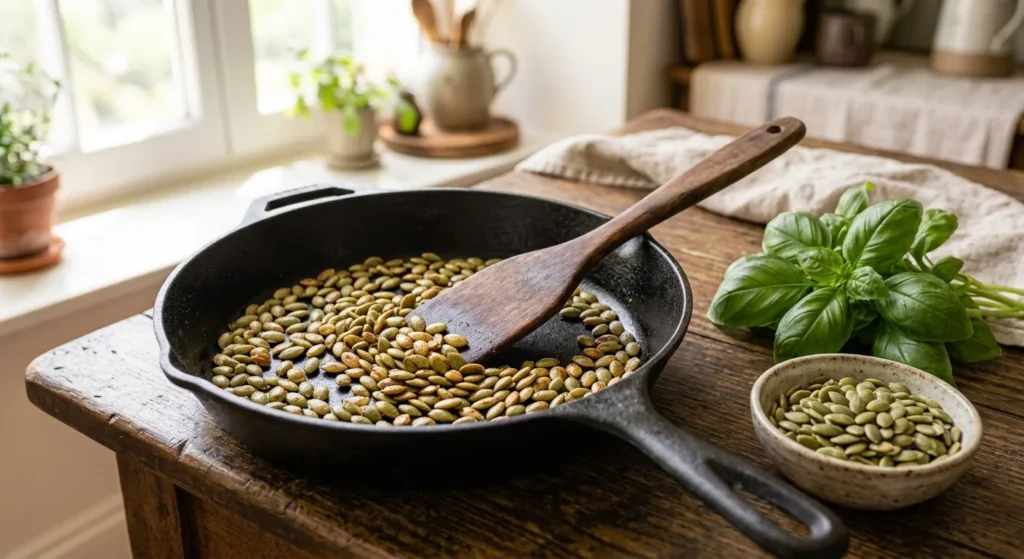
- Dry-toast the pumpkin seeds in a frying pan over a medium heat for 3 to 4 minutes, stirring, until they puff up and start to pop. Tip them onto a plate and leave to cool completely.
- Wash and carefully dry the basil. Keep only the leaves.
- In the bowl of a food processor, pulse the pumpkin seeds with the garlic and a pinch of salt until you have a coarse powder.
- Add the basil and lemon juice, then pulse while gradually pouring in the olive oil.
- Add the Parmesan, blend for a few seconds, taste and adjust the seasoning. Spoon into a clean jar and cover with a thin layer of oil.
Notes
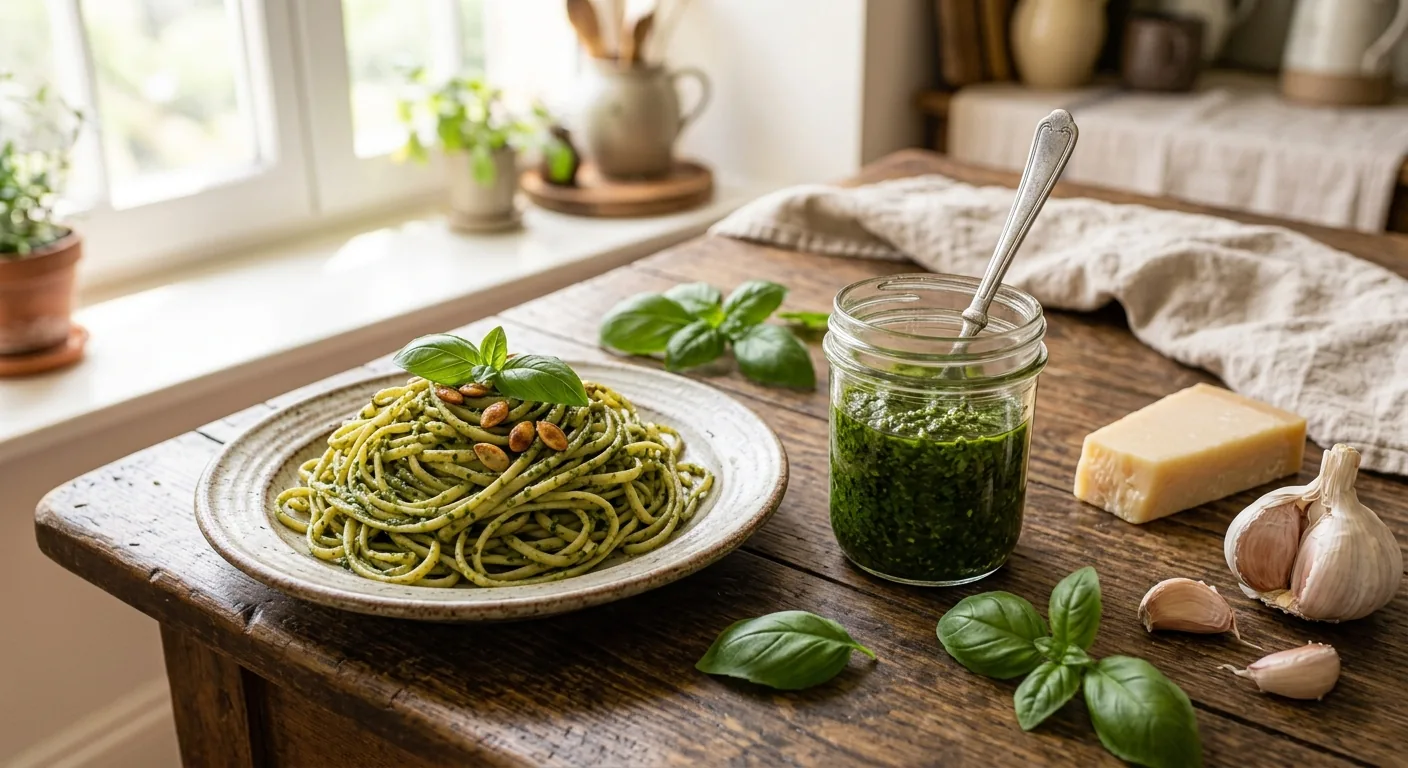
Traditional pesto is made with pine nuts. Delicious, but often very expensive. Good news: pumpkin seeds make a wonderful substitute. They give a deep green pesto with a mild, slightly toasted flavour, at a much more reasonable price. Here is our pumpkin seed pesto recipe, ready in ten minutes, with our tips for getting it right, storing it and changing it up.
Pesto, a sauce from Genoa
The word “pesto” comes from the Italian pestare, meaning to pound or crush. The most famous recipe, pesto alla genovese, was born in Liguria, in the area around Genoa. It combines basil, pine nuts, garlic, olive oil, salt and grated cheeses (Parmesan and pecorino), traditionally pounded in a mortar.
Since then, the idea has travelled the world: today people make pestos with all sorts of herbs, leaves and seeds. Pumpkin seed pesto is one of them. It keeps the spirit of the Italian recipe, but with a more affordable ingredient.
Why swap pine nuts for pumpkin seeds?
A question of price
Pine nuts are among the most expensive nuts on the market: they are harvested by hand from pine cones, which takes a lot of work. Shelled pumpkin seeds are generally much cheaper, and you’ll find them in every supermarket, in the dried fruit and nuts aisle or the health food section.
A question of flavour
Once lightly toasted, pumpkin seeds develop a very pleasant nutty flavour. They make a slightly more rustic pesto than the original, with a lovely deep pine-green colour that comes from their green skin.
A question of nutrition
Pumpkin seeds are rich in plant protein, fibre and minerals, including magnesium, zinc and iron. They also contain healthy fats. Like all nuts and seeds, they are high in calories: pesto is still a condiment to use in moderation, and one to two tablespoons per serving of pasta is plenty.
The secret: toast the seeds
This is the step that makes all the difference. Dry-toast the pumpkin seeds in a frying pan over a medium heat for 3 to 4 minutes, stirring often. They will puff up slightly, some will pop with a little crackle, and a lovely toasted smell will rise from the pan. Take them off the heat straight away and tip them onto a plate to stop them cooking: they burn very quickly.
Let them cool completely before blending. Warm seeds could “cook” the basil and turn it dark.
Our tips for a bright green pesto
- Use very fresh basil, with completely dry leaves. Moisture makes pesto spoil more quickly.
- Use the pulse button rather than running the food processor continuously. Heat from the blade oxidises the basil, which turns brown.
- Add the oil gradually, until you get the texture you want: thicker for spreading, looser for coating pasta.
- A squeeze of lemon helps keep the green colour while adding a fresh note.
- Cover with oil: a thin layer of olive oil on top of the jar protects the pesto from the air.
How to use pumpkin seed pesto
Use this pesto exactly as you would a classic pesto:
- With pasta: add one or two tablespoons of the pasta cooking water to loosen the sauce so it coats the pasta well.
- On toast: spread on toasted bread, with cherry tomatoes or a burrata.
- In a salad: mixed with olive oil and lemon, it becomes a fragrant dressing for a potato salad or a cold pasta salad.
- With roasted vegetables: squash, carrots, sweet potato or courgettes.
- In soup: a spoonful stirred into a minestrone or a smooth soup, like the Provençal pistou.
- On a pizza or focaccia, straight out of the oven.
Our variations
Pumpkin seed and coriander pesto
Replace the basil with fresh coriander, the lemon with lime, and add a pinch of chilli. This pesto is delicious on tacos, grilled fish or a rice bowl.
Turmeric pesto
Add half a teaspoon of ground turmeric and a little black pepper when blending. The colour becomes more olive green, and the flavour gains a warm, gently spiced note. To find out more about this spice, read our article on the health benefits of turmeric.
Vegetable top pesto
Replace some of the basil with well-washed carrot tops or radish leaves. An excellent way to use the whole vegetable.
Vegan pesto
Replace the Parmesan with two tablespoons of nutritional yeast flakes, which have a cheese-like flavour, and add an extra pinch of salt.
Storage
Pumpkin seed pesto keeps for 5 to 7 days in the fridge in a clean, tightly sealed jar, covered with a thin layer of olive oil. Remember to top up the oil after each use.
It also freezes very well. Spoon it into an ice cube tray, freeze until solid, then pop the cubes out into a freezer bag. That way you’ll have single portions ready to use for 3 months. A tip: freeze the pesto without the cheese and add it when serving, for an even better flavour.
Frequently asked questions
Can I use the seeds from a pumpkin or squash?
Fresh pumpkin seeds are encased in a hard white shell. They need to be cleaned, dried and then roasted in the oven, after which they are nibbled whole. For pesto, it’s much easier to buy ready-shelled green pumpkin seeds.
Can I make this pesto without a food processor?
Yes, with a pestle and mortar, as they do in Genoa: pound the garlic and salt first, then the seeds, then the basil, and finish with the cheese and oil. It takes longer, but the texture is wonderful.
Why is my pesto bitter?
Often it’s because the olive oil was blended for too long, or the garlic was a bit strong. Blend the oil only briefly, or stir it in with a spoon at the end, and remove the green shoot from the garlic.