Genoese focaccia with rosemary and flaky salt
Ingredients
Method
- Dissolve the yeast and honey in the lukewarm water. Add the flour, mix, then the salt and 40 ml of oil. Work for 5 minutes: the dough is very sticky, that is normal.
- Cover and let rise for 1 hour 30 minutes at room temperature, doing two sets of stretch and folds during the first hour.
- Generously oil the pan with 40 ml of oil. Tip in the dough, stretch it to the corners with oiled fingertips (if it resists, wait 10 minutes) and let rise for another hour.
- Preheat the oven to 230 °C (450 °F). Whisk the water, oil and salt for the brine. Press your fingers straight down to the bottom of the dough to dimple it all over, then pour the brine over.
- Scatter with rosemary leaves and flaky salt. Bake for 20 to 22 minutes on the lowest rack until deep golden.
- Let cool for 10 minutes on a rack, drizzle with olive oil and cut into squares.
Notes
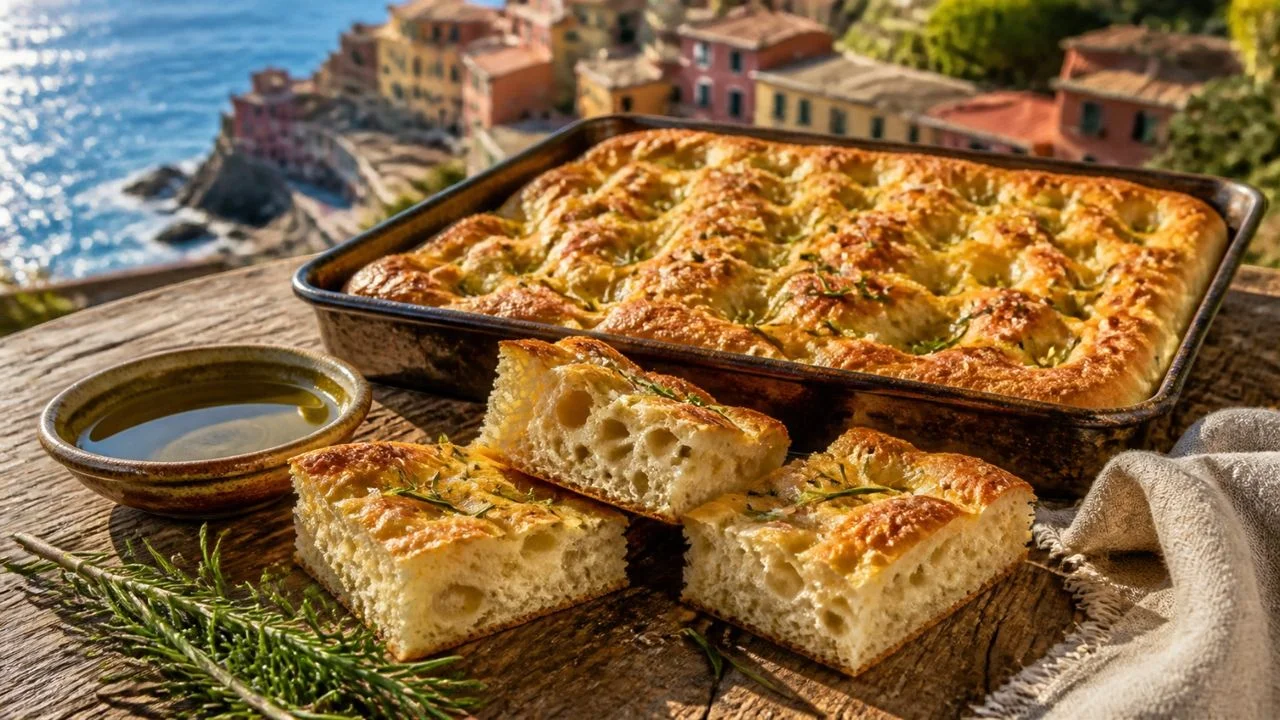
A golden crust that crackles, an airy, melt-in-the-mouth crumb, little wells full of olive oil, the scent of rosemary and a few flakes of sea salt: rosemary focaccia is the bread eaten at any hour in Liguria, dunked in a cappuccino at breakfast or with an aperitivo. Here is our focaccia recipe in the traditional Genoese style, with every tip to nail it the first time.
Focaccia, an Italian baking specialty
Focaccia is one of Italy’s oldest breads: its name comes from the Latin focus, the hearth, because it was once baked in the embers. Every region has its own, but the most famous is focaccia genovese from Genoa, about 2 cm thick, soft and glistening with oil. In Puglia, focaccia barese is topped with cherry tomatoes and olives. Put simply, it is the ultimate Italian focaccia bread, a flatbread made with olive oil, cousin to pizza dough but thicker and more tender.
Which flour for focaccia?
This is the question that changes everything. You need a high-protein flour, around 12 to 13%, able to absorb lots of water and build an elastic network: bread flour or Italian Manitoba flour. All-purpose flour also works, with a slightly less open crumb. Check the protein figure on the nutrition label.
An easy focaccia recipe
This easy focaccia recipe needs no stand mixer and no hard kneading. The dough is very wet (75% hydration), so it is sticky: time and stretch and folds do the work. Two sets of folds during the first rise are enough to give the dough strength. If you have time, a slow overnight rise in the fridge builds more flavor and bigger holes.
Sourdough focaccia
For sourdough focaccia, replace the yeast with 150 g of active starter and use 75 g less flour and 75 ml less water. Allow 4 to 6 hours for the first rise at room temperature, or overnight in the fridge. The flavor is deeper and the focaccia keeps longer.

How to dimple focaccia
The famous dimples are the signature of Genoese focaccia. To make dimples that don’t vanish in the oven, oil your fingers, hold them straight and press down until you touch the pan, all over the surface, without hesitating. Don’t do it too early: the dough must be well risen and soft.
The oil and water brine
The secret of Genoa’s bakers is the salamoia: a lightly salted emulsion of water and olive oil poured into the dimples just before baking. The water evaporates and keeps the crumb tender, while the oil fries the top for that golden crust. It is what makes focaccia soft and crispy at the same time.
Herbs and spices for focaccia
Rosemary and flaky salt is the classic version. But you can vary the herbs and spices: dried oregano, thinly sliced fresh garlic, fennel seeds, thyme or a few chili flakes. Add fresh herbs just before baking so they don’t burn. For more pairings, see our spice guide.
Topped focaccia for appetizers
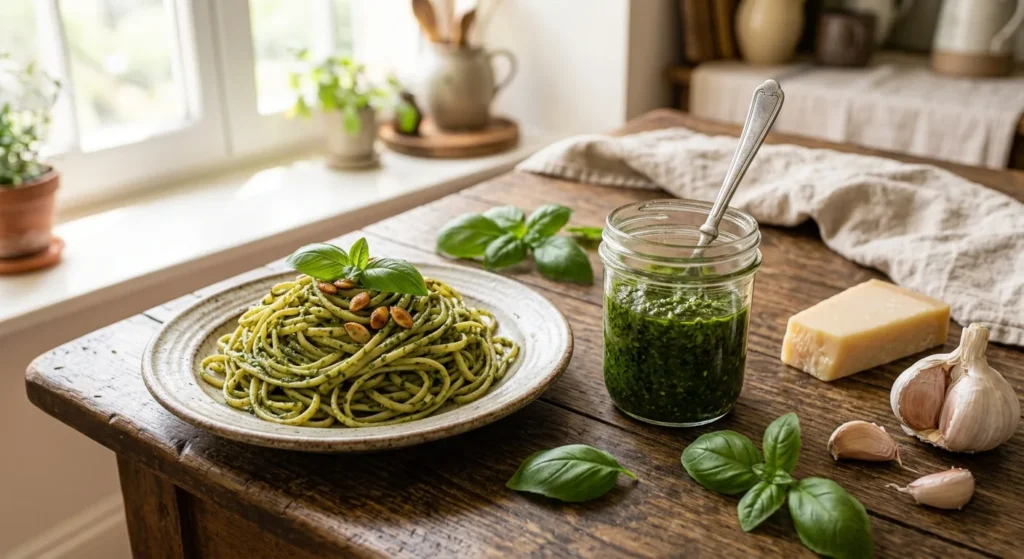
For an appetizer, try the Puglia version: halved cherry tomatoes pressed into the dough, black olives and oregano. Thinly sliced red onion, potato or zucchini work too. Cut into small squares, it is great with Italian cured meats, or before a plate of cacio e pepe. In summer, serve it with a caprese salad with homemade pesto too.
Focaccia baking time
Bake focaccia for 20 to 22 minutes at 230 °C (450 °F) on the lowest rack so the bottom is golden and crisp. The top should be golden, not brown. Let it cool on a rack, not in the pan, or the steam will soften the crust. If you love breads with character, try the Alsatian soft pretzel and Danish rugbrød too.
How to store homemade focaccia
Keep homemade focaccia for 2 days in a paper bag or wrapped in a cloth. To bring back the crunch, warm it for 5 minutes in the oven at 200 °C (400 °F). It freezes very well in squares; reheat straight from frozen in the oven.
Frequently asked questions
Why is my focaccia dense?
The dough didn’t rise enough, or the flour was too weak. Let it double in size and use a high-protein flour.
Can I make it the day before?
Yes, do the first rise in the fridge overnight, then spread it in the pan the next day and let it rise for 1 hour 30 minutes before baking.