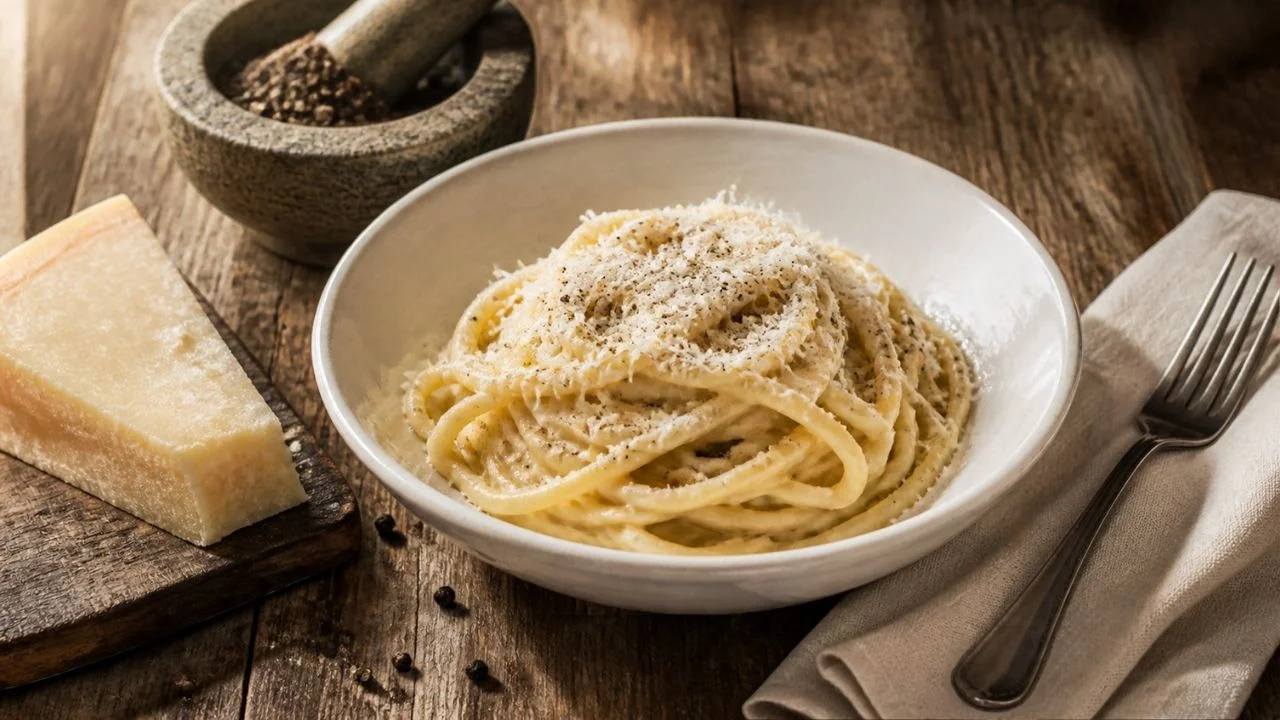
Cacio e pepe, pasta with pecorino and black pepper
Ingredients
Method
- Grate the pecorino very finely, with a fine grater such as a microplane, into a large bowl. Crush the peppercorns in a mortar or with the bottom of a saucepan: they should stay in small pieces, not powder.
- Bring a pot with only 2 litres of water to the boil and salt it lightly with the coarse salt: pecorino is already very salty. Cook the pasta 2 minutes less than the time on the packet.
- Meanwhile, toast the crushed pepper in a large dry frying pan over medium heat for 1 to 2 minutes, until fragrant. Pour 1 ladle of pasta water into the pan and let it simmer.
- Take 4 tablespoons of warm (not boiling) pasta water and add them to the grated pecorino. Mix briskly with a fork until you get a thick, smooth cream.
- Drain the pasta, keeping a large bowl of the cooking water. Put the pasta into the pepper pan and finish cooking for 2 minutes, stirring and adding a little pasta water if needed.
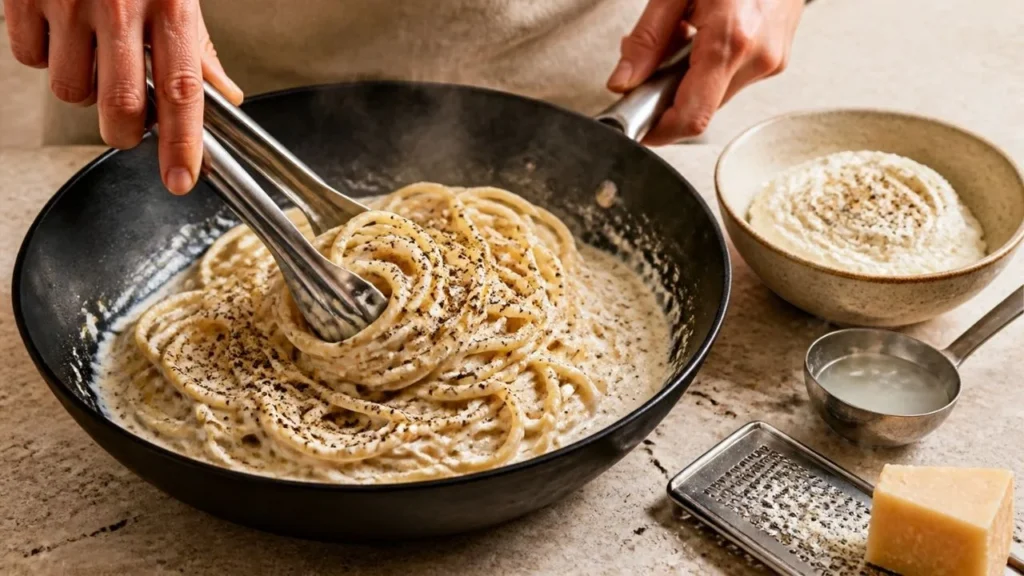
- Turn off the heat and wait 30 seconds. Add the pecorino cream and toss vigorously with tongs, adding pasta water one spoonful at a time, until the sauce is creamy and coats the pasta.
- Serve immediately on warm plates, with a little grated pecorino and a grind of pepper on top.
Notes
Three ingredients, twenty-five minutes and real know-how: cacio e pepe is one of the most famous dishes in Rome. Its name simply means “cheese and pepper” in Roman dialect, cacio being the local word for cheese. This cacio e pepe pasta is coated in a silky sauce made only from Pecorino Romano, black pepper and pasta water, with no cream or butter. Our cacio e pepe recipe gives you every key to a smooth, glossy sauce on the very first try.
The authentic traditional Roman recipe
The Italian cacio e pepe recipe comes from the shepherds of the Roman countryside. During the seasonal migration of their flocks, they carried light ingredients that kept well: dried pasta, a piece of aged pecorino and peppercorns, which warmed the body during cold nights. With water from the pot, they made a simple, filling and very tasty dish.
Today you will find it on the menu of almost every trattoria in Rome. It is a Roman pasta speciality on a par with the three other great classic Roman pasta dishes, which form one family:
- Cacio e pepe: pecorino and pepper, the base of all the others.
- Gricia: cacio e pepe with guanciale, cured pork cheek.
- Carbonara: gricia with egg yolks.
- Amatriciana: gricia with tomato sauce.
This pasta with pepper and cheese is therefore the mother recipe of Roman cooking. It contains no meat or fish. Note, however, that PDO Pecorino Romano is made with lamb rennet: strict vegetarians should choose a pecorino made with vegetable rennet.
Easy cacio e pepe: the quick step-by-step
This easy cacio e pepe comes down to four stages. First, cook the pasta in a small amount of water so that it becomes rich in starch. Meanwhile, toast the crushed pepper in a pan and make a pecorino cream with a little warm water. Next, finish cooking the pasta in the pepper pan. Finally, off the heat, add the cheese cream and toss briskly, adding pasta water until the sauce coats the pasta.
Everything happens in the last two minutes. Get all your ingredients ready before you start, keep a bowl of pasta water within reach and serve as soon as the sauce is ready: cacio e pepe waits for no one.
Spaghetti, tonnarelli or bucatini: which pasta to choose?
Wondering which pasta to use for cacio e pepe? In Rome the favourite shape is tonnarello, a fresh egg pasta with a square cross-section, similar to spaghetti alla chitarra. Its rough surface grips the sauce perfectly. Otherwise, use thick spaghetti or good-quality spaghettoni, ideally bronze-cut: their porous surface holds the cheese better and releases more starch. Bucatini, thick hollow spaghetti, also work very well. Rigatoni are a common choice in trattorias, but avoid very thin pasta such as angel hair, which cooks too fast.
Which cheese for cacio e pepe?
To the question “which cheese for cacio e pepe?”, the traditional answer is clear: Pecorino Romano. It is a hard sheep’s milk cheese, aged for at least five months and protected by a designation of origin (PDO). It is produced in Lazio, Sardinia and the province of Grosseto in Tuscany. Its flavour is strong, salty and slightly sharp, which lets it stand up to the pepper.
Pecorino Romano, an aged and salty cheese
Pecorino Romano makes the cacio e pepe. Buy it in a piece and grate it yourself at the last minute: pre-grated cheese often contains anti-caking agents that stop the sauce from becoming smooth. Grate it as finely as possible, almost to a powder, so that it melts instantly. Because it is very salty, barely salt the pasta water: this is the most common mistake, and it quickly makes the dish inedible.
Cacio e pepe with parmesan: can you replace the pecorino?
Yes, cacio e pepe with parmesan is possible, but it will be different. Parmigiano Reggiano, made from cow’s milk, is milder, fruitier and less salty than pecorino. The result is rounder and less punchy. Many cooks choose a compromise: two thirds pecorino and one third parmesan, to soften the dish while keeping its character. Parmesan also tends to get stringy: grate it very finely and add a little more pasta water.
The secret of a perfect emulsion without cream
A creamy cacio e pepe sauce contains not a drop of cream. Its silkiness comes from an emulsion between the fat in the cheese and the pasta cooking water. This water is rich in starch, released by the pasta as it cooks. The starch acts as a binder: it surrounds the tiny droplets of fat from the cheese and stops them from clumping together. The result is a smooth, glossy, stable sauce that coats every strand of spaghetti.
For this emulsion to work, you need concentrated cooking water. Cook the pasta in 2 litres of water instead of the usual 4, or in a large frying pan with just enough water to cover it. You can also finish cooking the pasta in the pan, risotto-style: it releases even more starch.
How to make cacio e pepe sauce without clumps
Every beginner’s nightmare is cheese forming sticky balls at the bottom of the pan. Here is how to get cacio e pepe sauce right every time:
- Control the temperature: pecorino turns lumpy when it gets too hot, above about 60 to 65 °C (140 to 150 °F). Its proteins tighten and the fat separates. Always turn off the heat and wait 30 seconds before adding the cheese.
- Make a pecorino cream: mix the grated cheese with a little warm pasta water in a bowl before adding it to the pasta. It is already half melted and blends in much more easily.
- Toss vigorously: mix briskly with tongs or by tossing the pasta in the pan. The movement helps the emulsion form.
- Add the water little by little: one spoonful at a time, until you reach the right texture. A slightly runny sauce, which thickens as it cools, is better than one that is too stiff.
If clumps appear anyway, don’t panic: add 2 or 3 spoonfuls of hot pasta water and toss briskly. Some cooks even blitz the pecorino cream with a stick blender for a perfectly smooth texture.
The pepper in cacio e pepe
Pepper is the second pillar of cacio e pepe. Use good-quality whole black peppercorns, such as Kampot, Tellicherry or Sarawak pepper, and forget ready-ground pepper in a tin, which has lost most of its aroma. The quantity is generous, about half a teaspoon per person: pepper is not just a seasoning here, it is an ingredient in its own right.
Toasting crushed black pepper in the pan
The chef’s secret is to toast the pepper. Crush the peppercorns coarsely in a mortar, then heat them in a dry pan over medium heat for 1 to 2 minutes. The heat releases their essential oils and gives a warmer, almost woody note. Then pour a ladle of pasta water into the pan: the pepper infuses in this water, which becomes the base of the sauce. To learn all about the varieties, piperine and the benefits of this spice, read our full article on black pepper, its benefits and its uses in cooking.
What to serve with cacio e pepe pasta?
In Rome, cacio e pepe is served as a primo piatto, the pasta course that comes before the main course. At home it makes a complete meal with a simple green salad or a rocket salad with lemon, whose acidity balances the richness of the cheese. To stay in an Italian mood, start with grilled vegetables topped with our carrot top pesto or our pumpkin seed pesto. As for drinks, a dry white wine from Lazio, such as a Frascati, goes perfectly with the dish.
Frequently asked questions about cacio e pepe
Can you add cream or butter?
Not in the traditional recipe. A little butter or olive oil in the pepper pan is a common trick to help the emulsion, but it is not essential. Cream, on the other hand, masks the taste of the pecorino and changes the dish: it would no longer be a real cacio e pepe.
Can you make cacio e pepe ahead of time?
No. The sauce thickens as it cools and becomes stiff and sticky. When reheated, the cheese forms clumps. Cacio e pepe is made at the last minute and eaten straight away, on warm plates.
How much pecorino per person?
Allow about 40 g of Pecorino Romano and 100 g of dried pasta per person for a main course. For an Italian-style starter, reduce to 70 g of pasta and 30 g of cheese.