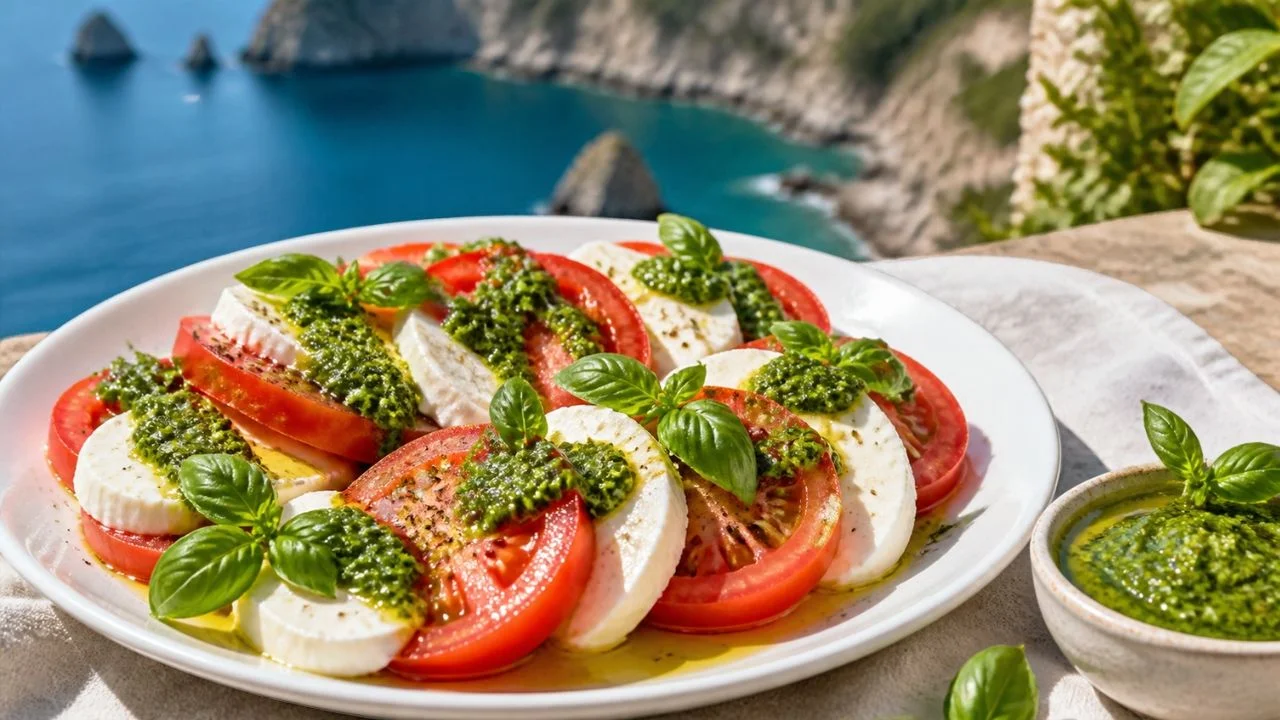
Caprese salad with Genoese pesto
Ingredients
Method
- Take the mozzarella out of the fridge 30 minutes ahead. Drain it.
- Pesto: pound the garlic with the coarse salt in the mortar. Add the pine nuts, then the basil leaves in small handfuls, crushing them with a circular motion of the pestle against the sides.
- When the basil forms a green cream, stir in the Parmesan and pecorino, then drizzle in the olive oil, mixing with a spoon.
- Slice the tomatoes and mozzarella about 1 cm (1/2 inch) thick. Arrange them alternately on a large platter.
- Season the tomatoes lightly with flaky salt and pepper, tuck in a few basil leaves and drizzle with olive oil.
- Spoon the pesto over the salad just before serving.
Notes
The red of the tomatoes, the white of the mozzarella, the green of the basil: caprese salad wears the colors of the Italian flag and tastes of summer. Here we serve it with a homemade basil pesto, pounded in a mortar as they do in Genoa. This is our caprese salad with pesto, an Italian summer starter ready in 25 minutes, with all the tips for choosing the right ingredients.
Traditional caprese salad
Insalata caprese comes from the island of Capri, in Campania, off Naples. The traditional recipe could not be simpler: tomatoes, mozzarella, basil leaves, olive oil and salt, sometimes a little oregano. Nothing more. Pesto is not part of it: it is a specialty of Liguria, at the other end of Italy. We add it in our richer version, but you can absolutely serve caprese plain. This tomato, mozzarella and pesto salad simply brings two Italian treasures together on one plate.
Which mozzarella for caprese?
The best choice is mozzarella di bufala campana, made from buffalo milk, creamier and more flavorful. Fior di latte, made from cow’s milk, is a good, firmer alternative. Avoid low-moisture pizza mozzarella, which is too dry. Take it out of the fridge 30 minutes ahead: cold, it loses its flavor and turns rubbery.
The best tomatoes for caprese
The best tomatoes are fleshy, juicy and fully ripe: beefsteak, ribbed heirloom tomatoes, or Sorrento tomatoes in Italy. San Marzano, often mentioned, is a sauce tomato, drier and less suited to a salad. Make this caprese in summer, at the height of tomato season: that is the whole secret.
How to make green pesto at home
Genoese pesto takes seven ingredients: small-leaf basil, pine nuts and Parmigiano Reggiano, pecorino, garlic, coarse salt and a mild Ligurian olive oil. Choose very fresh basil, washed and thoroughly dried.
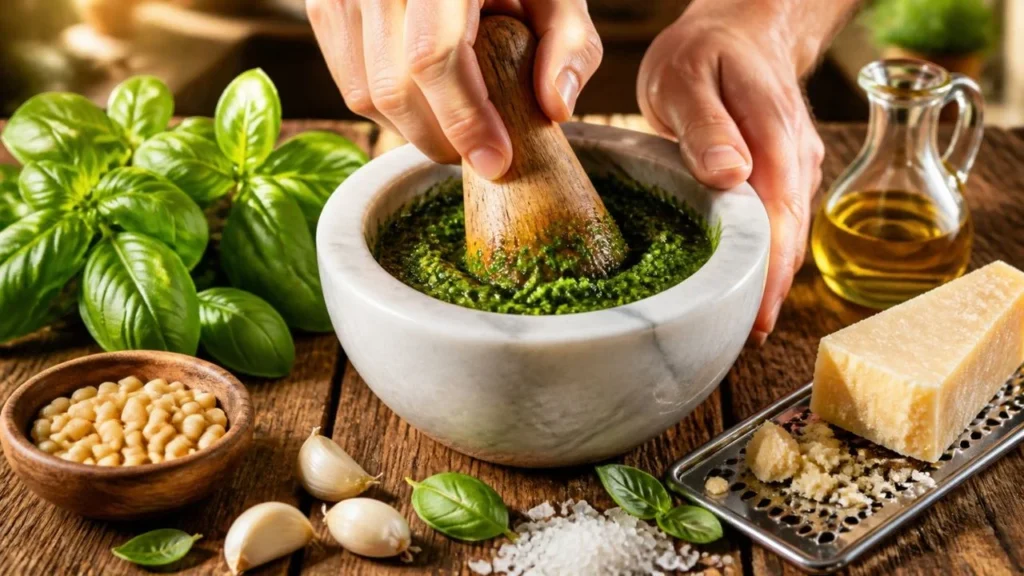
Pesto in a marble mortar
Pesto made in a marble mortar with a wooden pestle is the traditional method. Crush the garlic with the coarse salt, then the pine nuts, then the basil in small handfuls, rotating the pestle against the sides rather than pounding. The leaves release their oils without heating up, so the pesto stays bright green and fragrant. It is also pesto without a blender: it takes 10 minutes and a little elbow grease. With a blender, use the pulse button and add an ice cube to keep the basil from darkening.
Want to vary it? Try our no-waste pestos: carrot top pesto and pumpkin seed pesto.
Spices for caprese salad
The seasoning is minimal: flaky salt and a grind of black pepper, and perhaps a pinch of dried oregano, as some families in Campania do. The basil does the rest. For more ideas, see our spice guide.
Balsamic vinegar on caprese?
Balsamic on caprese is a real debate. In Italy it is not used: it masks the delicate taste of the mozzarella. Outside Italy, caprese with balsamic has become very common. If you like it, add a few drops of real, thick, sweet balsamic from Modena, no more.
Creative ways to serve caprese
For an original presentation, arrange the slices in a rosette on a large round platter, or build tomato, mozzarella and pesto stacks. For appetizers, thread cherry tomatoes and mozzarella balls (bocconcini) onto skewers with a basil leaf and serve the pesto as a dip. Add squares of rosemary focaccia for mopping up. For the main course, follow it with a creamy mushroom risotto.
How to store homemade pesto
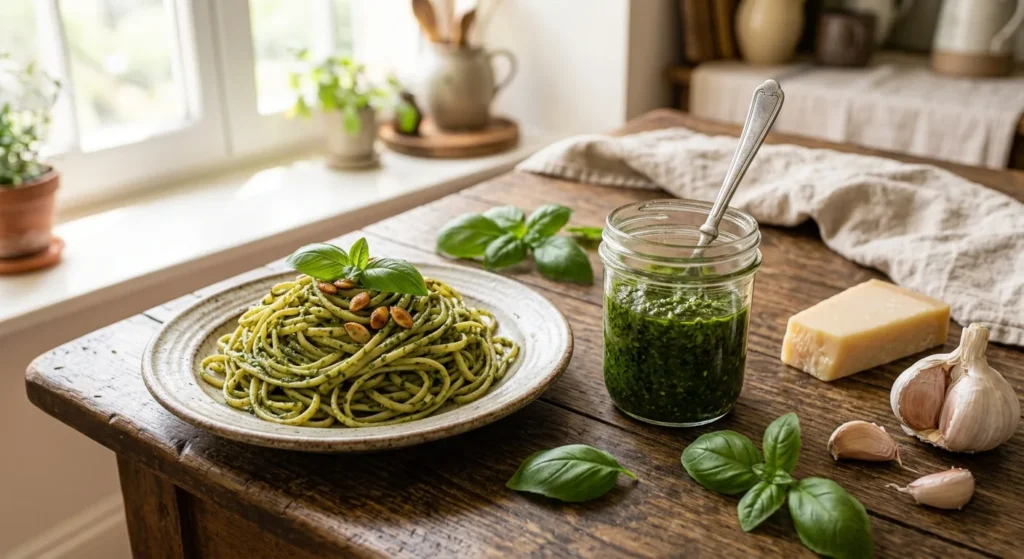
Spoon the pesto into a clean jar and cover it with a thin layer of olive oil: it keeps 4 days in the fridge. Top up the oil after each use. You can also freeze it in ice cube trays, without the cheese, which you add when serving.
Frequently asked questions
Can caprese be made ahead?
It is best assembled at the last minute: salt draws water out of the tomatoes. Make the pesto ahead and slice the tomatoes just before serving.
Can I replace the pine nuts?
Yes, with walnuts or almonds, which are cheaper. The flavor changes a little but the pesto is still delicious.