Lefse (Norwegian potato flatbread)
Ingredients
Method
- Peel the potatoes, cut them into pieces and boil them in salted water for 20 minutes. Drain very well and let them steam dry for 2 minutes in the hot pan.
- Pass them through a ricer or food mill for a very fine, lump-free mash. Add the butter, cream, salt and sugar. Cover and leave to cool completely, at least 2 hours or overnight in the fridge.
- Work the flour into the cold mash and knead briefly until you have a soft dough that no longer sticks. Shape into a log and cut into 16 balls. Keep them cold.
- Heat a large griddle or crêpe pan, with no fat, over a medium-high heat (about 230 °C).
- On a well-floured cloth or worktop, roll a ball into a very thin disc, 25 to 30 cm across, with a grooved or floured rolling pin. Turn the dough often so it doesn’t stick.
- Lift the round with a lefse stick or long flat spatula and lay it on the griddle. Cook for about 1 minute per side, until brown spots appear.
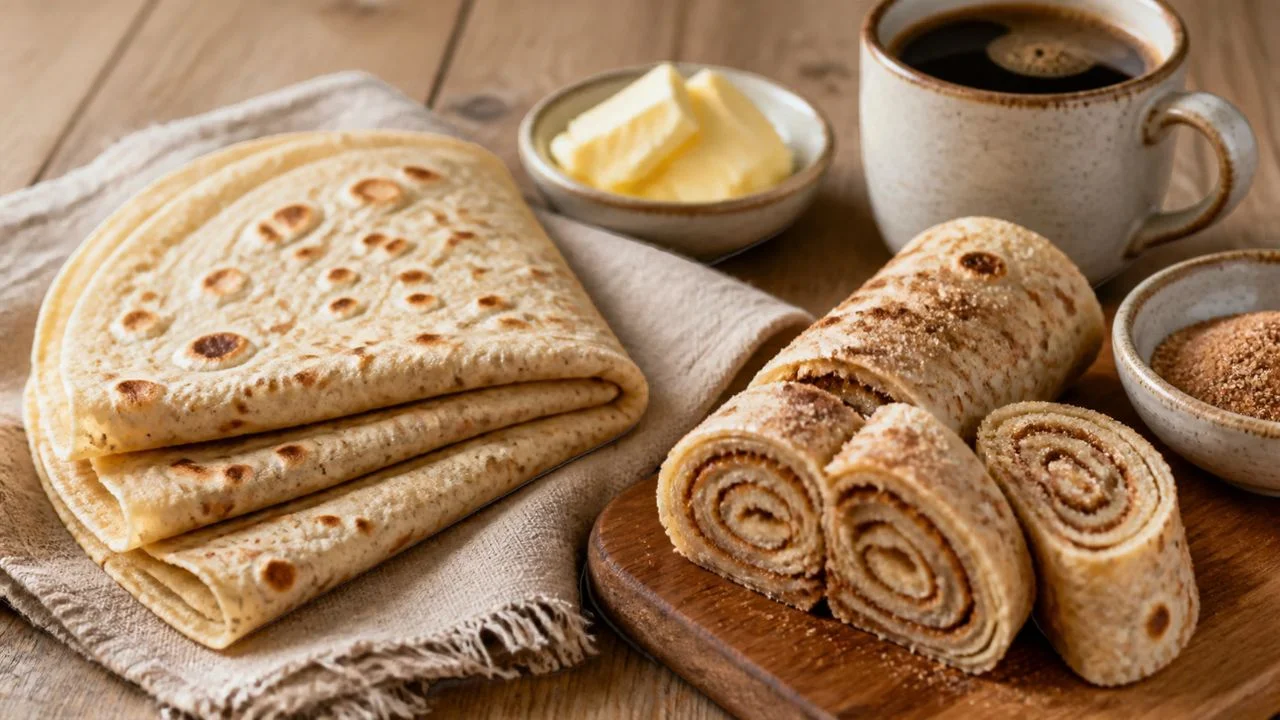
- Stack the cooked rounds between two tea towels to keep them soft. Serve plain, or spread with soft butter, sprinkle with sugar and cinnamon, then roll or fold.
Notes
Thin, soft and speckled with golden brown, lefse is one of the great prides of Norwegian cooking. This Norwegian potato flatbread is made with mashed potato, a little flour and butter, then cooked dry on a very hot griddle. In this lefse recipe, we explain how to choose the potatoes, roll the dough very thin, cook the rounds, fill them and store them well.
Lefse, a Norwegian flatbread
Lefse is a very old Norwegian flatbread. In the past, farms made it in large batches before winter to keep for months. The oldest versions were made with flour only; the potato version, the best known today, spread once potatoes became a staple in Norway, from the 18th century. Every region has its own lefse, thicker or thinner, sweet or savoury.
For a wider audience, you could describe it as a Scandinavian potato pancake. But it isn’t made from a pouring batter: it is a dough rolled out with a pin, like a very thin pastry. The result is softer than a crêpe and thinner than a tortilla.
Norwegian kling
In some regions, lefse is spread with a mixture of butter and sugar, sometimes cream, then folded into triangles: this sweet version is often called Norwegian kling, or lefsekling. It is a treat served with coffee at celebrations and weddings. Our butter, brown sugar and cinnamon version is very close to it.
A soft potato flatbread recipe
This is above all a soft potato flatbread recipe, easy to roll or fold. The secret of its softness comes down to three things: a very fine, lump-free mash, a mash that is completely cold before adding the flour, and quick cooking on a very hot griddle. Once cooked, the rounds are stacked between two tea towels: the steam keeps them tender.
Which potatoes for lefse?
Wondering which potatoes to use for lefse? Choose a floury, starchy potato, such as Maris Piper, King Edward or russet. It gives a dry, light mash that absorbs little flour. Waxy potatoes give a sticky mash that needs too much flour and makes the lefse tough. Drain them very well and let them dry for a moment in the pan: less water means less flour.
How to make lefse
Here is how to make lefse without fuss. The day before, cook the potatoes and mash them very finely with the butter, cream, salt and sugar. Leave to cool overnight. The next day, add the flour, knead briefly and shape 16 balls. Roll each ball into a very thin disc, then cook it for about 1 minute per side on a very hot griddle, with no fat. Stack the rounds under a tea towel as you go.
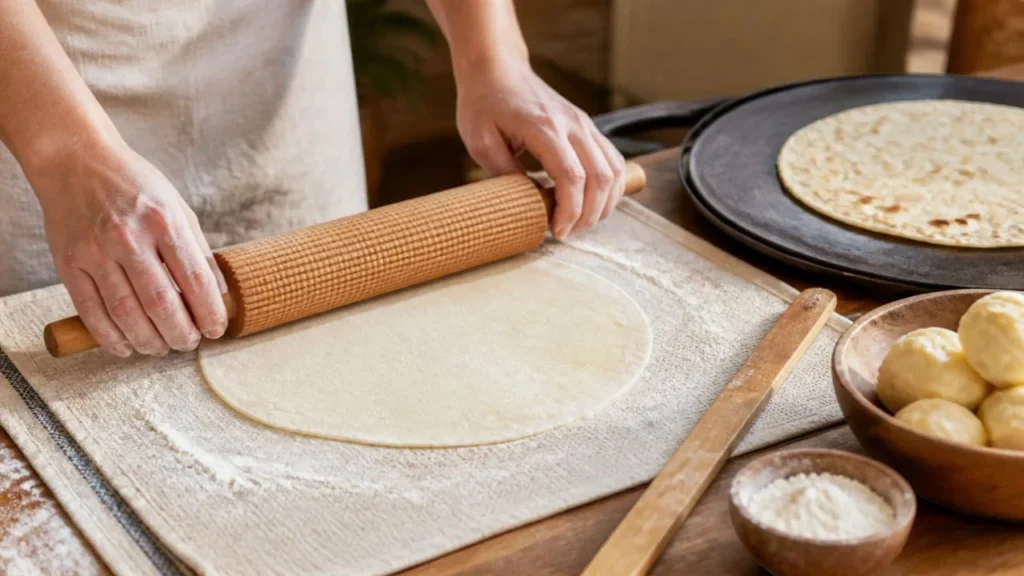
The lefse rolling pin
Norwegians use special tools. The lefse rolling pin, or riflet kjevle, is a grooved wooden pin, often covered with a floured cloth sleeve: the grooves stop the dough sticking and let you roll it very thin. The lefsepinne, a long flat wooden stick, is used to lift the fragile round and turn it on the griddle. At home, a regular well-floured rolling pin and a long flat spatula work very well. A floured pastry cloth helps a lot.
There are also round electric lefse griddles that get very hot. A large cast-iron crêpe pan or a plancha are perfect to start with.
Spices for lefse
Classic lefse dough contains no spices: the topping brings them. The most common spices for lefse are cinnamon, mixed with brown sugar and butter, and sometimes a hint of ground cardamom, much loved in Norwegian baking. A small pinch of nutmeg goes well with the butter. For a savoury version, dill, pepper and chives are perfect. To discover more pairings, see our spice guide.
Lefse toppings
Lefse toppings can be sweet or savoury. The most popular is still the sweet version: soft butter, brown sugar and cinnamon, then roll or fold the round. It is also served with lingonberry jam or cream. On the savoury side, lefse goes with smoked salmon or gravlax, with a little dill cream. It is even used to wrap sausages, like a wrap, especially on 17 May, Norway’s national day.
Lefse, lompe and other variations
Norway has many variations. Tynnlefse, very thin, is often made with flour and eaten sweet. Tjukklefse, thicker, is like a soft cake spread with butter and sugar. Lompe, a small, thicker potato flatbread, is used to wrap sausages at street stands: it is the Norwegian hot dog. Our recipe is potetlefse, potato lefse, the most widespread and the easiest to make at home. It stays thin, soft and slightly sweet, like a Scandinavian potato pancake.
A Norwegian Christmas bread recipe
Lefse is also a Norwegian Christmas bread recipe. In many families it is made in December and served over the holidays, with lutefisk or pinnekjøtt, or simply with butter and sugar at coffee time. It also sits alongside other Christmas treats, such as our krumkake, the rolled wafer cookies. Making lefse together is part of Advent traditions.
An easy Norwegian speciality
Despite its delicate look, it is an easy Norwegian speciality. The ingredients are simple and cheap: potatoes, butter, cream and flour. The only challenge is rolling the dough thinly: the first rounds may be uneven, but they are still delicious. With a little practice, you will make them one after another with ease. Children love filling and rolling them.
Storing lefse
For storing lefse, let the rounds cool stacked under a tea towel, then fold them into quarters and put them in a freezer bag. They keep for 3 to 4 days in the fridge and freeze very well for up to 3 months, with a sheet of baking paper between each one. To warm them, heat them for a few seconds in a frying pan or simply let them come back to room temperature.
Frequently asked questions about lefse
Why is my lefse dough sticky?
The mash was probably still warm or too wet. It must be completely cold. Flour the worktop and rolling pin generously, and turn the dough often.
Can you make lefse with instant mashed potato flakes?
Yes, some modern Norwegian recipes use potato flakes. The flavour is less fine, but the dough is easier to handle.
Why is my lefse hard?
It was overcooked or left in the open air. Cook it just until brown spots appear, and stack the rounds under a tea towel straight away.