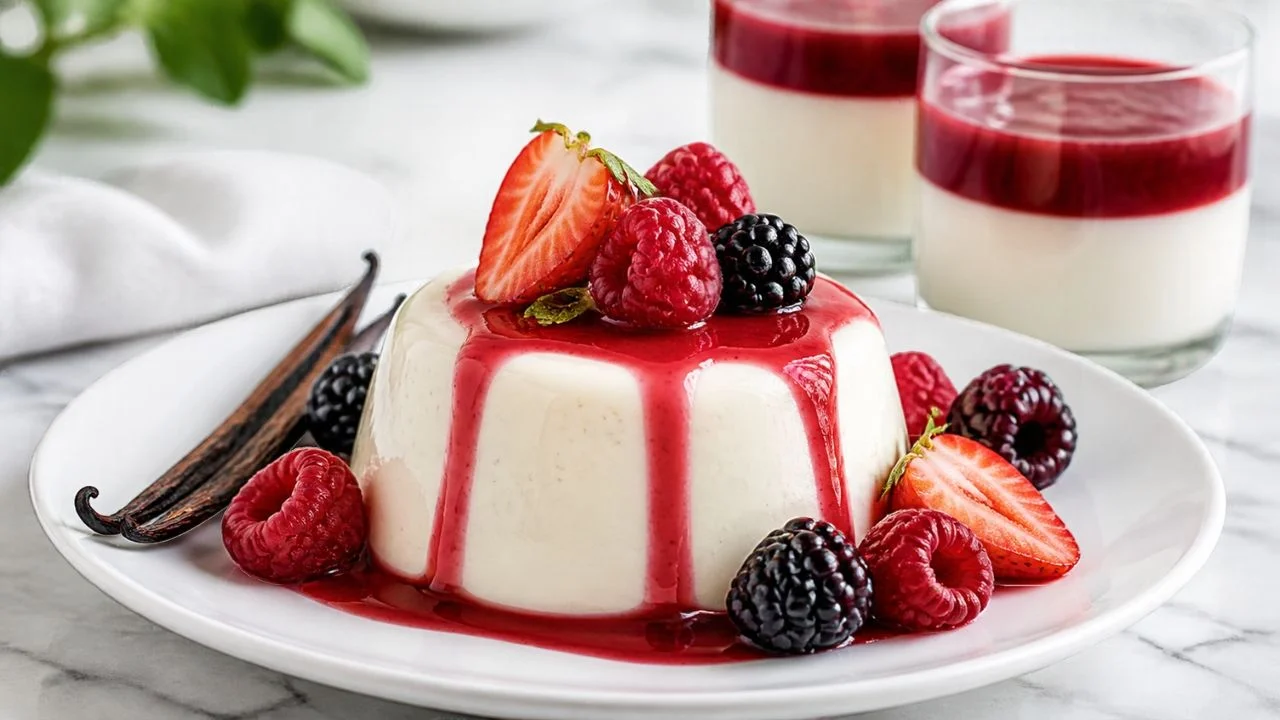
Vanilla panna cotta with berry coulis
Ingredients
Method
- Soak the gelatin sheets in a large bowl of cold water for 10 minutes. Split the vanilla pod in half and scrape out the seeds with the tip of a knife.
- In a saucepan, heat the cream, milk, sugar, vanilla pod and seeds (and the crushed cardamom if using) until it just simmers, without boiling. Off the heat, leave to infuse for 10 minutes, then remove the pod.
- Squeeze the gelatin dry and add it to the still-hot cream. Stir until fully dissolved, then strain through a fine sieve.
- Pour into 6 lightly oiled 100 ml ramekins (for unmolding) or into glasses. Leave to cool, cover and refrigerate for at least 4 hours, ideally overnight.
- For the coulis, cook the berries with 40 g of sugar for 5 minutes over medium heat. Blend, press through a sieve to remove the seeds, add the lemon juice and leave to cool.
- To unmold, dip each ramekin in hot water for 5 to 10 seconds, run a thin blade around the edge and turn it out onto the plate. Spoon over the coulis and add the fresh berries and mint.
Notes
A vanilla cream that barely wobbles under the spoon, a bright, tangy red coulis and a few fresh raspberries: berry panna cotta is the simplest and most elegant Italian dessert there is. Here is our easy panna cotta recipe, with the right amount of gelatin, the raspberry coulis and the trick to unmold it without breaking it.
Panna cotta, an Italian cream dessert
Panna cotta means “cooked cream” in Italian. This Italian cream dessert comes from Piedmont, more precisely from the Langhe hills south of Turin, a dairy region where cream was never in short supply. The classic recipe has four ingredients: cream, sugar, vanilla and gelatin. Long a regional sweet, it became one of the most popular desserts in Italian restaurants worldwide in the 1990s.
Unlike crème brûlée or crème caramel, panna cotta contains no eggs and is not baked: the cream is only heated, then set in the fridge. That gives it its smooth, melting texture and makes it a dessert to prepare the day before.
Panna cotta: gelatin or agar agar?
The question panna cotta gelatin or agar agar comes up often. The traditional recipe uses gelatin: 4 sheets (8 g) for 600 ml of liquid give a panna cotta that holds its shape when unmolded while still wobbling. For panna cotta served in glasses, set just enough and eaten from the glass, 3 sheets are enough and the texture is even creamier.
Agar agar, a plant-based gelling agent made from seaweed, replaces gelatin for a version without animal products, but it is not used the same way. Allow about 2 g per 500 ml and, above all, boil the cream with the agar agar for 1 to 2 minutes, or it will not set. The texture is firmer and more “brittle” than with gelatin, and agar agar even sets at room temperature. Use a light hand.
Berry coulis for panna cotta
A good berry coulis for panna cotta should be tangy, to lift the sweetness of the cream. Mix raspberries, strawberries, blackberries or blackcurrants, fresh or frozen: frozen fruit makes an excellent coulis all year round. A short 5-minute cook with a little sugar is enough, then blend and press through a sieve to remove the seeds. Tangy raspberry coulis is the great classic: a spoonful of lemon juice at the end sharpens the acidity and keeps a bright red color.
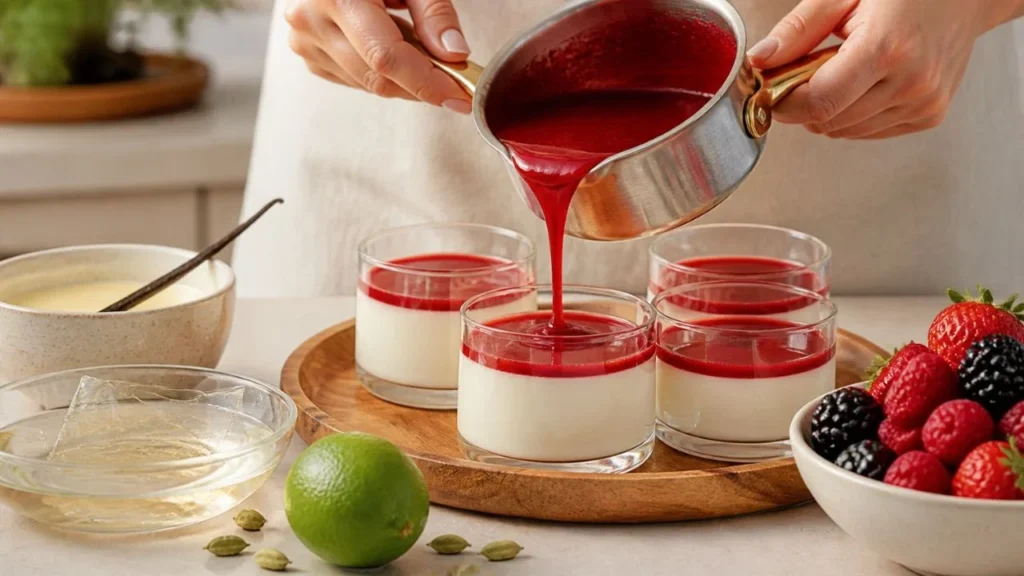
Vanilla panna cotta with berries
Vanilla panna cotta with berries is all about infusion. Heat the cream, milk and sugar with a real vanilla pod, split and scraped, without ever boiling, then leave to infuse off the heat for 10 minutes. Dissolve the squeezed gelatin in it, strain and pour into the molds. A Bourbon or Tahitian vanilla pod makes all the difference compared with flavoring: you should see the tiny black seeds in the cream.
How long to chill panna cotta
Panna cotta needs at least 4 hours in the fridge, ideally overnight for a risk-free unmolding. Let the cream cool before chilling and cover the ramekins so it doesn’t absorb fridge smells. In glasses, 3 hours can be enough.
How to unmold panna cotta
Here is how to unmold panna cotta without breaking it. Before pouring in the cream, very lightly oil the ramekins with a neutral oil. When serving, dip each ramekin in hot water for 5 to 10 seconds, never longer, or the cream melts at the edges. Run a thin blade around it, place the plate on top, flip it in one quick move and shake gently: the panna cotta slides out on its own. If it resists, dip it again for 3 seconds.
Spices for panna cotta
Vanilla is the classic spice of the Piedmontese recipe. But among the spices for panna cotta, our Curcuma.top twist is green cardamom: two crushed pods infused with the vanilla give a fresh, subtle fragrance that goes beautifully with berries. Lime zest added to the infusion also brings freshness. Mint is for decoration only. Discover all our spices in our spice guide.
Panna cotta variations
Lighter panna cotta with milk
For a lighter panna cotta with milk, replace half the cream with semi-skimmed milk: it stays smooth and becomes lighter. Some people also replace part of the cream with Greek yogurt or quark, added after the gelatin: it is good, but it is no longer really panna cotta, more of a set cream.
Coconut milk panna cotta
Coconut milk panna cotta is a very fragrant lactose-free variation: replace the milk and part of the cream with 400 ml of coconut milk, or all the cream for a fully plant-based version with agar agar. It goes wonderfully with a mango or passion fruit coulis, and of course with berries.
Panna cotta in a Thermomix
In a food processor with a cooking function, panna cotta is very easy: heat the cream, milk, sugar and vanilla for 6 minutes at 90 °C on a slow speed, add the squeezed gelatin and mix for 30 seconds, then pour into the molds. The coulis is made the same way, 5 minutes at 100 °C, then blended for a few seconds on increasing speed.
How to store homemade panna cotta
Homemade panna cotta keeps for 3 days in the fridge, covered with plastic wrap, with the coulis stored separately in a closed jar. Panna cotta does not freeze well, as gelatin loses its texture when thawed. The coulis, however, freezes very well.
An Italian menu around panna cotta
Light on the palate, panna cotta is the ideal end to a generous Italian meal, after a caprese salad as a starter and a creamy mushroom risotto. Love milky desserts with red fruit? Try Danish risalamande too, a rice pudding with almonds served with cherry sauce. Another no-bake dessert to try: Portuguese bolo de bolacha, with Maria biscuits and coffee.
Frequently asked questions
Why won’t my panna cotta set?
The gelatin was added to cream that was too cold, or it boiled, which destroys its gelling power. With agar agar it is the opposite: it has to boil to set.
Can you make panna cotta without vanilla?
Yes: infuse lemon zest, cardamom, coffee or orange blossom water instead. Keep the amount moderate, as the cream should remain the main flavor.