Smørrebrød (Danish open sandwiches, 3 classic toppings)
Ingredients
Method
- Make the remoulade: mix the mayonnaise with the chopped gherkins, mustard, curry powder and turmeric. Chop 1 teaspoon of capers and stir them in. Chill.
- Spread each slice of rye bread with a generous layer of salted butter, right to the edges.
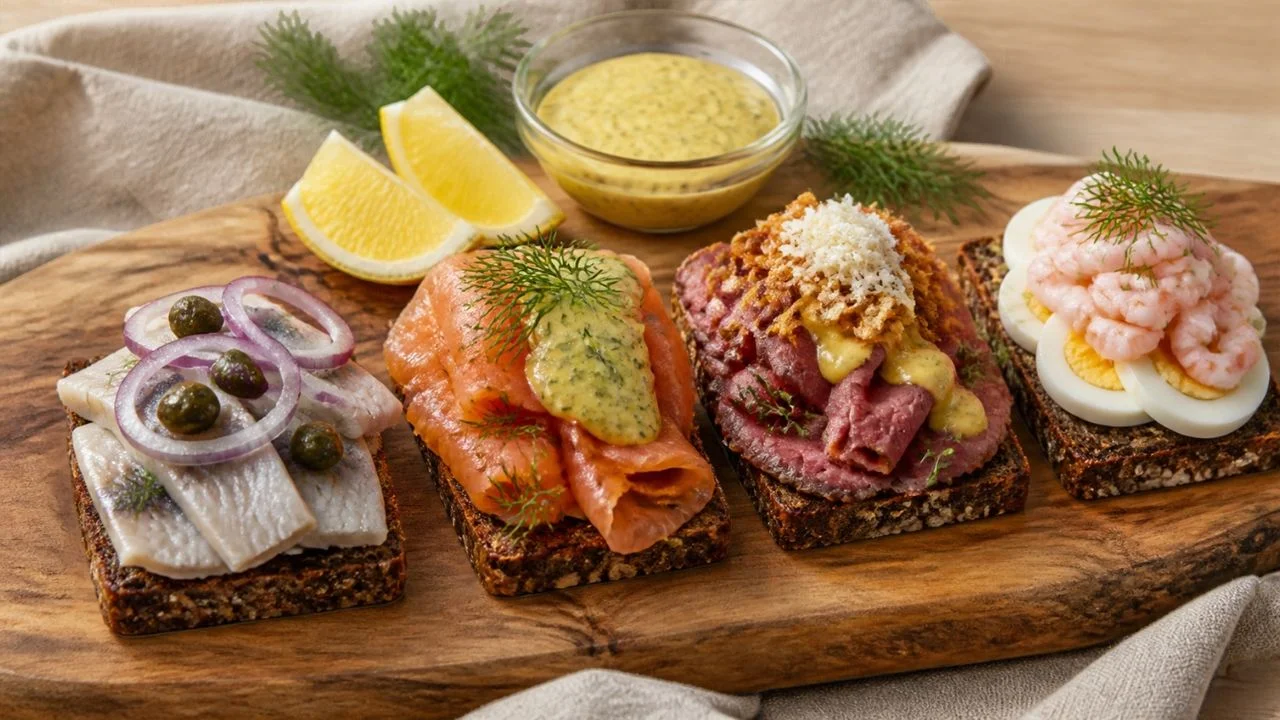
- Herring smørrebrød: cover 4 slices with pieces of herring fillet, then add red onion rings, a few capers and a sprig of dill.
- Gravlax smørrebrød: arrange the salmon in loose folds on 4 slices, add a drizzle of mustard dill sauce, fresh dill and a grind of pepper.
- Roast beef smørrebrød: lay the roast beef in waves on the last 4 slices, add a spoonful of remoulade, crispy onions, a few gherkin slices and a little grated horseradish.
- Arrange the open sandwiches on a board, building height, with generous toppings covering all the bread.
- Serve straight away, with a knife and fork, traditionally starting with the herring, then the fish, then the meat.
Notes
Dark rye bread, a good layer of butter and generous toppings: smørrebrød is the emblem of the Danish lunch. This Danish open sandwich is eaten with a knife and fork and comes in endless variations. In this smørrebrød recipe, we present the 3 great classics, with herring, salmon gravlax and roast beef, plus a homemade remoulade and all our assembly tips.
Smørrebrød, a culinary speciality of Denmark
In Danish, smørrebrød literally means “buttered bread”. It is probably the best-known culinary speciality of Denmark abroad. It started as the packed lunch of workers and farmers, who took their rye bread topped with the previous day’s leftovers. In the 19th century, Copenhagen restaurants turned it into an art, with menus offering dozens of different toppings.
Today, smørrebrød is still the heart of frokost, the Danish lunch. People eat it at the office, at home or at big festive meals, where the open sandwiches follow one another in a set order. It is also an excellent easy Scandinavian lunch recipe: no cooking, simple ingredients and a result that always impresses.
A Danish open sandwich recipe
Smørrebrød is above all an open sandwich recipe: one slice of bread, never covered with a second. The topping is the star. It must be generous, cover all the bread and be beautifully presented. Danes say you should barely see the bread. Smørrebrød is always eaten sitting down, with a knife and fork, not by hand like a sandwich.
Danish dark rye bread for smørrebrød
The essential base is Danish dark rye bread for smørrebrød, rugbrød. It is a dense, slightly sour sourdough rye bread packed with seeds and baked in a tin. It is cut into thin slices, about 1 cm. Its compact crumb holds wet toppings without going soggy. If you can’t find it, a German wholegrain rye bread or our ruisleipä, the Finnish rye bread, work very well. For some toppings, such as prawns, white bread, franskbrød, is sometimes used.
Salted butter for smørrebrød
Butter is not a detail: it is the “smør” in smørrebrød. Salted butter for smørrebrød is spread in a generous layer, right to the edges. It adds flavour, but above all it waterproofs the bread, stopping sauces and juices from soaking the crumb. For meat toppings, some Danes replace the butter with lard, fedt.
How to assemble smørrebrød
Here is how to assemble smørrebrød the Danish way. Butter the slice right to the edges. Lay the main element so it covers all the bread: fish, meat or egg. Then add a sauce, followed by something crunchy or tangy: onion, capers, gherkins, crispy onions. Finish with a fresh touch, such as dill, chives or cress. Play with height and colour, folding slices of salmon or meat rather than laying them flat.
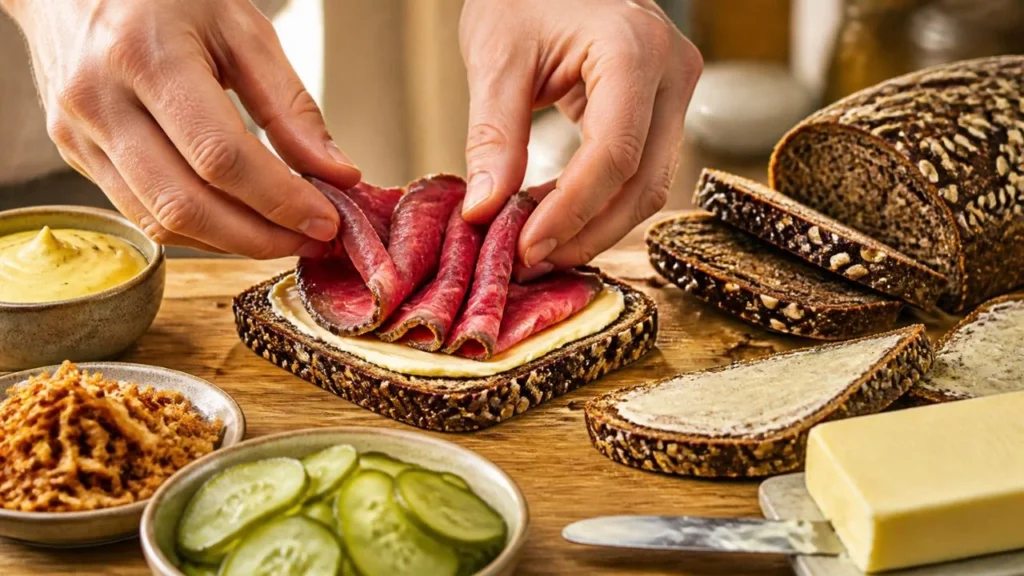
At the table, there is a set order: you start with herring, continue with other fish, then move on to meat, and sometimes finish with cheese. Ideally, each open sandwich is eaten on a clean plate.
Pickled herring smørrebrød
Pickled herring smørrebrød is the most traditional of all. It is called sild. Herring pickled in vinegar, with onion or spices, is laid on the buttered bread with red onion rings, capers and a sprig of dill. It can also be served with a curry sauce, a version much loved in Denmark. At a festive meal, it always comes first.
Salmon gravlax smørrebrød
Salmon gravlax smørrebrød is a big favourite. Salmon cured with salt, sugar and dill is arranged in loose folds, then drizzled with mustard dill sauce. You can make our salmon gravlax yourself or use smoked salmon, which is also very common on smørrebrød. A grind of pepper and a few sprigs of dill are all you need to finish.
Roast beef smørrebrød with crispy onions
On the meat side, roast beef smørrebrød with crispy onions is a must. The very thin slices of pink beef are topped with remoulade, crispy fried onions, gherkin slices and a little grated horseradish. This mix of tender, crunchy and tangy makes it one of the Danes’ favourite smørrebrød.
Danish remoulade recipe
This Danish remoulade recipe has nothing to do with French celeriac remoulade. It is a yellow sauce made with mayonnaise, chopped gherkins, capers and mustard, flavoured with curry. A hint of turmeric gives it its lovely golden colour. It goes with roast beef, but also with chips and breaded fish. Made the day before, it is even better.
Spices for smørrebrød
The spices for smørrebrød are subtle, to let the ingredients shine. Curry and turmeric colour the remoulade. Freshly ground black pepper lifts the salmon and the meat. Caraway often flavours rye bread and some herrings. Dill is the king of herbs on smørrebrød, along with chives. A few pink peppercorns can add a modern touch. To discover more pairings, see our spice guide.
Vegetarian smørrebrød
Vegetarian smørrebrød is more and more common in Copenhagen cafés. Try slices of cooked potato with mayonnaise, chives and crispy onions: it is actually a classic, kartoffelmad. Roasted beetroot with dill cream and walnuts works very well. A soft-boiled or sliced hard-boiled egg with cress and radish is another safe bet. Keep the same rule: buttered bread, a generous topping, some crunch and some freshness.
Our tips for perfect smørrebrød
Slice the bread thinly so it doesn’t dominate the topping. Take the butter out ahead of time so it spreads without tearing the crumb. Prepare all the toppings before you start assembling, then put everything together at the last minute so the bread stays firm. For a buffet, allow 2 to 3 open sandwiches per person, and vary the colours on the board.
Frequently asked questions about smørrebrød
Can you make smørrebrød ahead?
It is best to assemble them at the last minute. You can, however, prepare the remoulade, the onions and all the toppings a few hours before.
What can you use instead of Danish rye bread?
A dense wholegrain rye bread, German style, is the best substitute. Avoid light breads, which go soggy under the topping.
What to drink with smørrebrød?
In Denmark, it is traditionally served with a cold lager and, on special occasions, a small glass of caraway akvavit. Sparkling water with lemon or a craft apple juice are perfect for an alcohol-free lunch.
Is smørrebrød eaten hot?
It is mostly eaten cold. Some toppings are served warm, such as liver pâté or breaded fish fillets, but the bread stays cold.