Pastéis de nata (Portuguese custard tarts)
Ingredients
Method
- For the syrup, bring the water, sugar, cinnamon stick and lemon zest to the boil, then boil for 3 minutes. Remove the cinnamon and zest.
- Whisk the flour into 100 ml of cold milk. Heat the rest of the milk, pour it onto the flour while whisking, return to the pan and thicken for 2 minutes over a medium heat, whisking constantly.
- Pour the hot syrup in a thin stream onto the custard while whisking, leave to cool for 15 minutes, then whisk in the egg yolks and strain.
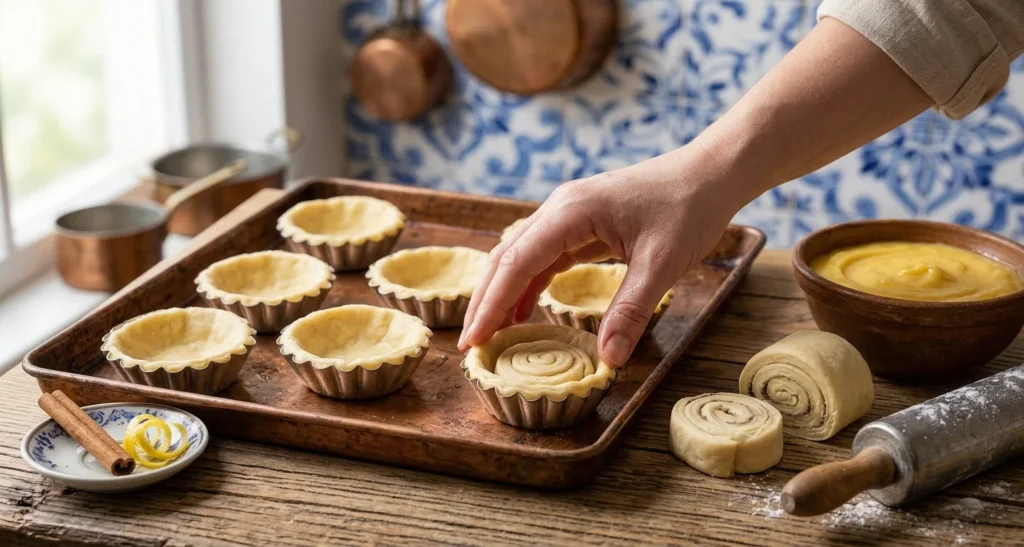
- Roll the puff pastry into a tight log and cut it into 12 slices. Lay each slice flat in a buttered tin and press it out with a wet thumb, from the centre to the edges, until it comes slightly above the rim.
- Preheat the oven to its maximum, 250 to 280 °C, with the baking tray inside. Fill the tins three-quarters full with custard.
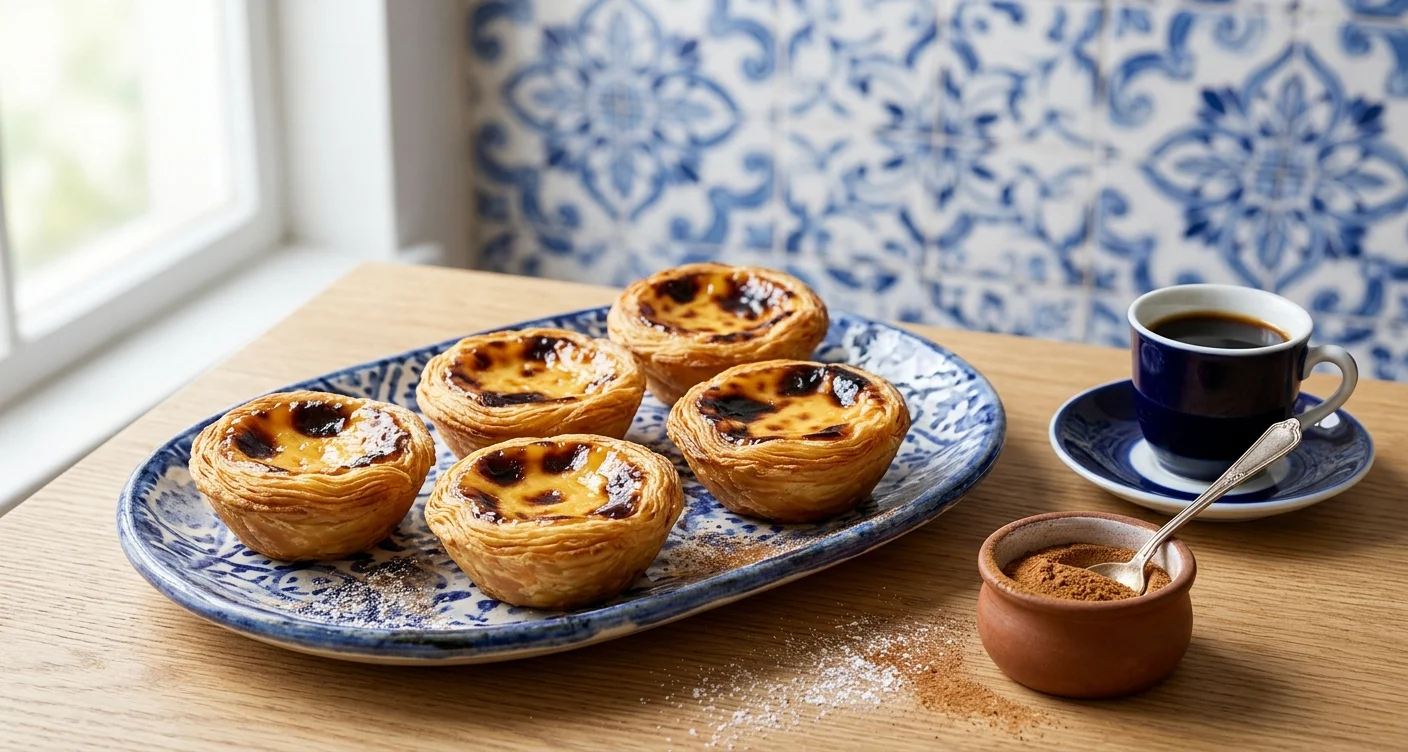
- Bake for 12 to 15 minutes at the top of the oven, until the pastry is golden and the custard speckled with brown. Leave to cool slightly and serve dusted with cinnamon and icing sugar.
Notes
Crisp puff pastry, silky custard and caramelised spots: pastéis de nata are Portugal’s sweetest symbol. Here is our traditional pastéis de nata recipe, with a cinnamon and lemon syrup, that works in a home oven.
The history of pastéis de nata
Pastéis de nata come from Portuguese convents, where large amounts of egg whites were used to starch linen. The leftover yolks went into pastries. After the convents closed in the 19th century, the recipe of the Jerónimos Monastery in Belém, near Lisbon, was taken over by a nearby bakery that has sold these tarts since 1837.
Pastéis de Belém or pastéis de nata?
Pastéis de Belém are the tarts sold by the historic Belém bakery, whose recipe is still secret. Pastéis de nata is the general name for these tarts, made in every pastry shop in Portugal. So they are the same cakes, but only those from Belém carry that name.
An easy pastéis de nata recipe
Our easy pastéis de nata recipe uses shop-bought all-butter puff pastry. It gives a very good result and saves several hours. The real secret lies elsewhere: how you roll the pastry and the very hot oven.
Rolling the puff pastry into a log
For really crisp Portuguese custard tarts, roll the pastry into a tight log, like a Swiss roll, then cut it into slices. Laid flat in the tin and pressed out with your thumb, these slices create the thin spiral layers typical of the tart’s edge.
Cinnamon and lemon syrup
The custard for pastéis de nata is made with an infused sugar syrup. Water and sugar boil with a cinnamon stick and lemon zest, then the syrup is poured onto a milk custard lightly thickened with flour. The egg yolks go in last, once the mixture has cooled a little.
Vanilla or cinnamon?
The classic Portuguese recipe flavours the custard with cinnamon and lemon, and more cinnamon is dusted on just before serving. Some bakeries add a vanilla pod to the milk. Both are good, but cinnamon gives the most authentic taste.
Which pastéis de nata tin?
The traditional pastéis de nata tin is a small individual aluminium or stainless steel tin, about 7 cm across. Failing that, a metal muffin tin works very well. Avoid silicone, which doesn’t conduct enough heat to brown the pastry.
How to bake pastéis de nata
To bake pastéis de nata well, the oven must be as hot as possible. Portuguese bakeries bake at nearly 300 °C in professional ovens. At home, set your oven to its maximum, between 250 and 280 °C, with the tray inside, and put the tins at the top. The brown spots appear after 12 to 15 minutes.
Pastéis de nata in a Thermomix
In a Thermomix, cook the syrup for 5 minutes at 100 °C on speed 1 with the cinnamon and zest, then set aside. Put the milk and flour in the bowl and cook for 7 minutes at 90 °C on speed 4. Add the syrup in a thin stream on speed 3, let it cool, then add the yolks for 20 seconds on speed 3. Fill the tins and bake as in the recipe.
Pastéis de nata with shortcrust pastry
You can make pastéis de nata with shortcrust pastry, but it isn’t quite the same. The pastry is more crumbly and thicker, without the crisp layers of puff pastry. It is a decent fallback, closer to a custard tartlet.
Egg-free pastéis de nata?
Pastéis de nata are by nature an egg yolk recipe. There is a non-traditional egg-free version, with a custard thickened with cornflour and coloured with a pinch of turmeric. It is handy for allergies, but the texture is less rich.
Freezing pastéis de nata
Pastéis de nata are best eaten warm, on the day. To freeze them, let them cool and put them in an airtight box for up to 1 month. Reheat them from frozen for 5 to 8 minutes at 200 °C: the pastry turns crisp again.
Pastéis de nata calories
One pastel de nata contains about 225 kcal, with 4 g of protein. The puff pastry and sugar provide most of the calories. It is a treat to enjoy one at a time, with a coffee.
What to serve with pastéis de nata
In Portugal they are eaten warm with a small strong coffee, a bica, dusted with cinnamon. If you like egg custards, also try our crema catalana, their Spanish cousin, or churros for another Iberian treat. Our spice guide helps you vary the flavours of your desserts.
Frequently asked questions
Why does my custard overflow in the oven?
The tins are too full. Fill them only three-quarters: the custard puffs up a lot in the very hot oven, then sinks as it cools.
Why don’t my pastéis have brown spots?
The oven isn’t hot enough. Turn it up to the maximum, preheat it for at least 20 minutes with the tray inside, and put the tins at the top. You can finish with 1 minute under the grill, keeping a close eye on them.