Bitterballen (Dutch beef croquette balls)
Ingredients
Method
- Put the beef, onion, bay leaf and a teaspoon of salt in the cold water. Bring to a simmer and cook covered for 2 hours 30 minutes, until the meat shreds with a fork.
- Drain the meat, keeping the broth, and strain it. Shred the beef very finely with two forks.
- Melt the butter, add 60 g flour and stir for 2 minutes. Gradually whisk in 400 ml hot broth until you get a very thick sauce. Add the squeezed gelatin if using.
- Stir in the meat, nutmeg, parsley, salt and pepper. Spread the ragout in a dish, cover directly on the surface and refrigerate at least 3 hours, ideally overnight.
- With two spoons or damp hands, shape 3 cm balls. Roll them in flour, then beaten egg, then breadcrumbs. Repeat egg and breadcrumbs for a double coating.
- Heat the oil to 180 °C (350 °F). Fry the bitterballen in small batches for 3 to 4 minutes until deep golden. Drain on paper towels.
- Serve right away with sharp mustard and wooden picks.
Notes
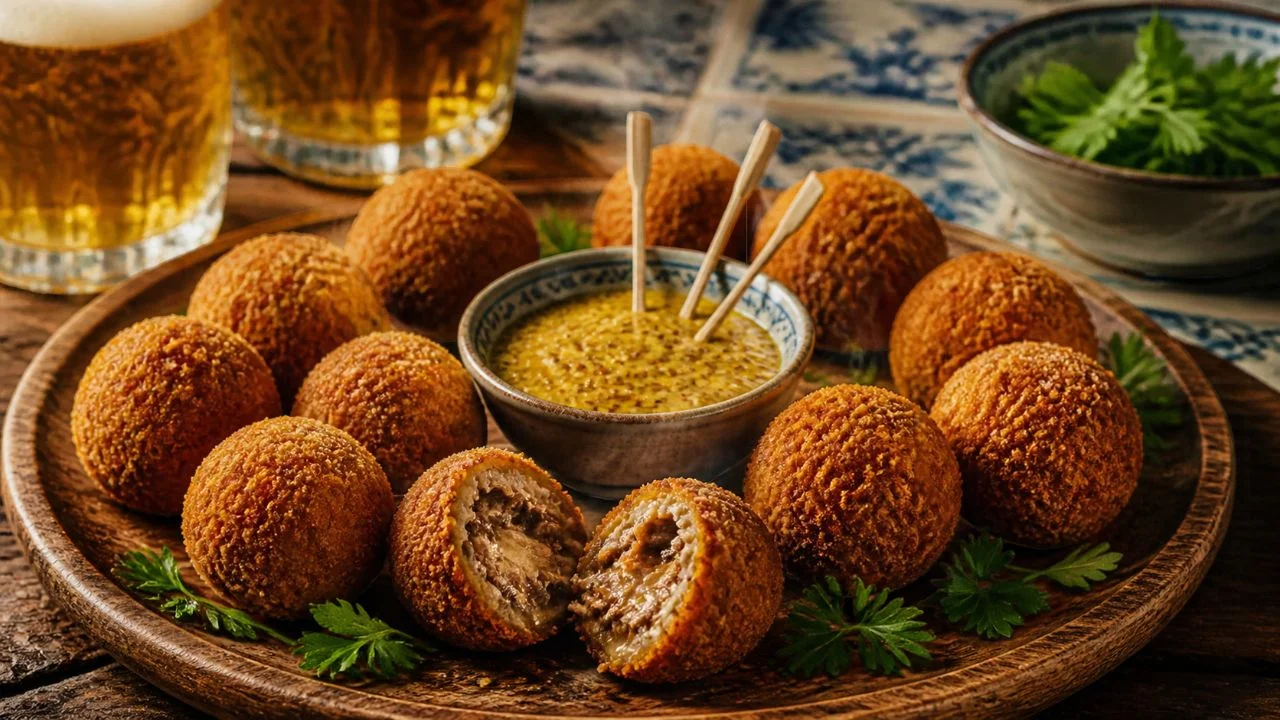
A golden crust that crackles between your teeth, a piping hot, melting beef ragout center and a dab of sharp mustard: bitterballen are the Dutch favorite snack at the café, the bar or at home. These little balls are the ultimate Dutch meat croquettes, served by the plateful with a glass of beer. Here is our complete bitterballen recipe, with the thick shredded beef ragout, the double breading and tips for cooking them in a deep fryer, oven or air fryer.
Bitterballen, the Dutch bar snack
Bitterballen are THE Dutch bar snack. Their name does not mean “bitter balls”: it comes from bitters, the herbal liqueurs and gin (jenever) people used to drink at aperitif time. These little croquettes were part of the bittergarnituur, the selection of bites served with bitters, alongside cubes of cheese and sausage. They appeared in the 19th century as an elegant way to use leftover stewed meat, bound in a thick sauce.
A Dutch appetizer recipe
Today it is the best-known Dutch appetizer recipe. In Amsterdam’s “brown cafés,” people order a portie bitterballen of 6, 8 or 12 balls with a little pot of mustard. At home, they are served for birthdays, football matches or King’s Day. If you love Dutch food, discover our poffertjes and stroopwafels for the sweet side. And when it gets cold, the Dutch sit down to a bowl of erwtensoep, the split pea soup with smoked sausage.
How to make bitterballen
Here is how to make bitterballen in four steps. First, simmer the beef for a long time, then shred it. Next, make a very thick ragout with a roux and the cooking broth. Let it set in the fridge for several hours, then shape balls and bread them twice. Finally, fry them for a few minutes in hot oil. The recipe takes time but little active work, and it can be prepared well ahead.
Shredded beef for croquettes
The secret of a good croquette is very tender shredded beef. Choose a braising cut rich in collagen: chuck, shank or short rib. After 2 hours 30 minutes of gentle simmering with an onion and bay leaf, the meat falls apart on its own. Shred it very finely, almost into threads: that gives the typical melting texture. Don’t throw away the cooking broth: it is what gives the ragout all its flavor.
The meat ragout for croquettes
The heart of bitterballen is a meat ragout for croquettes thickened with a roux, which the Dutch simply call ragout. Make a roux with butter and flour, add the hot broth and you get a sauce so thick it almost stands on its own. The ratio matters: 60 g of flour for 400 ml of broth. Professionals often add two sheets of gelatin, which make the ragout very firm when cold and even more molten once fried. Let it chill overnight in the fridge: once cold, it shapes without sticking.
A melting beef croquette recipe
The whole point of this melting beef croquette recipe is the contrast between the golden crust and the creamy, almost runny center. To get it right, season the ragout well (it loses flavor as it cools) and don’t make the balls too big: 3 cm is enough, otherwise the center stays cold while the outside is already golden. Careful: straight out of the fryer, the center is scalding, so let them rest a minute before biting!
Spices for bitterballen
Spices for bitterballen are subtle but essential. Grated nutmeg is the classic spice of Dutch ragouts: it gives the warm, slightly woody note you recognize right away. A pinch of mace, its outer layer, strengthens that aroma. Freshly ground black pepper lifts everything, and flat-leaf parsley adds freshness. Some add a dash of Worcestershire sauce or a pinch of mild curry powder. More ideas in our spice guide.
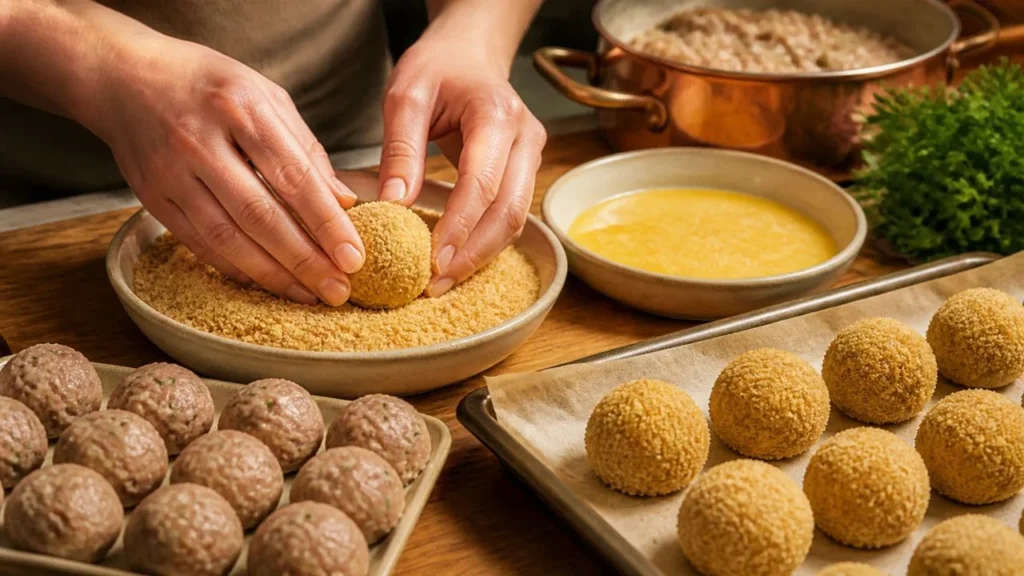
Crispy breading for bitterballen
Crispy breading for bitterballen comes from double breading: flour, beaten egg, breadcrumbs, then egg and breadcrumbs again. This double layer forms a solid shell that keeps the ragout from leaking into the oil. Tradition uses very fine breadcrumbs. For extra crunch, you can use Japanese panko for the second layer, even if it is not the Dutch way. Work with slightly damp hands to shape the balls without sticking.
Bitterballen vs kroket
In the Netherlands, people distinguish between bitterballen vs kroket. The ragout is the same, but the shape changes. The kroket is a large cylindrical croquette about ten centimeters long, often eaten in a bread roll with mustard at lunch or from the country’s famous automat walls. The bitterbal is a small round ball made for snack time, picked up with a toothpick. With this recipe you can make both.
Sauce for bitterballen
The sauce for bitterballen is almost always mustard, and a sharp one. In the Netherlands, they serve Zaanse mosterd, a grainy yellow mustard, hot and slightly sweet. Elsewhere, whole-grain mustard or Dijon mustard work perfectly. For a milder version, mix mustard with a spoonful of honey, or offer curry mayonnaise. You dip just the tip of the bitterbal in the mustard, then bite.
Bitterballen in the oven or air fryer
Deep-frying is the traditional method, but you can make bitterballen in the oven or air fryer. In the air fryer, spray the balls with a little oil and cook 10 to 12 minutes at 200 °C (400 °F), shaking the basket halfway. In the oven, 15 minutes at 220 °C (425 °F) on an oiled tray, turning once. Either way, cook them still frozen: the ragout melts more slowly and the breading has time to brown. The crust will be a bit less even than deep-fried, but nicely crisp.
Storing and freezing bitterballen
For storing and freezing bitterballen, it is best to freeze them raw, right after breading. Place them on a tray without touching, freeze for 2 hours, then bag them. They keep 3 months and can be fried straight from frozen, adding a minute of cooking. The ragout alone keeps 2 days in the fridge. Already fried bitterballen can be reheated in the oven but lose some crispness.
Frequently asked questions about bitterballen
Why do my bitterballen burst in the oil?
The ragout was not cold enough or the breading had a gap. Put the balls in the freezer for 30 minutes before frying and do a careful double coating.
Can you make vegetarian bitterballen?
Yes. Replace the beef with very finely chopped sautéed mushrooms and the beef broth with a strong vegetable broth.
What drink goes with bitterballen?
An ice-cold lager is the classic pairing. Traditionalists serve them with a small glass of jenever.