Soft pretzels with coarse salt (Laugenbrezel)
Ingredients
Method
- Mix the flour, the yeast dissolved in the water, sugar, salt and butter. Knead for 10 minutes: the dough should be firm, smooth and barely sticky.
- Cover and leave to rise for 45 minutes at room temperature.
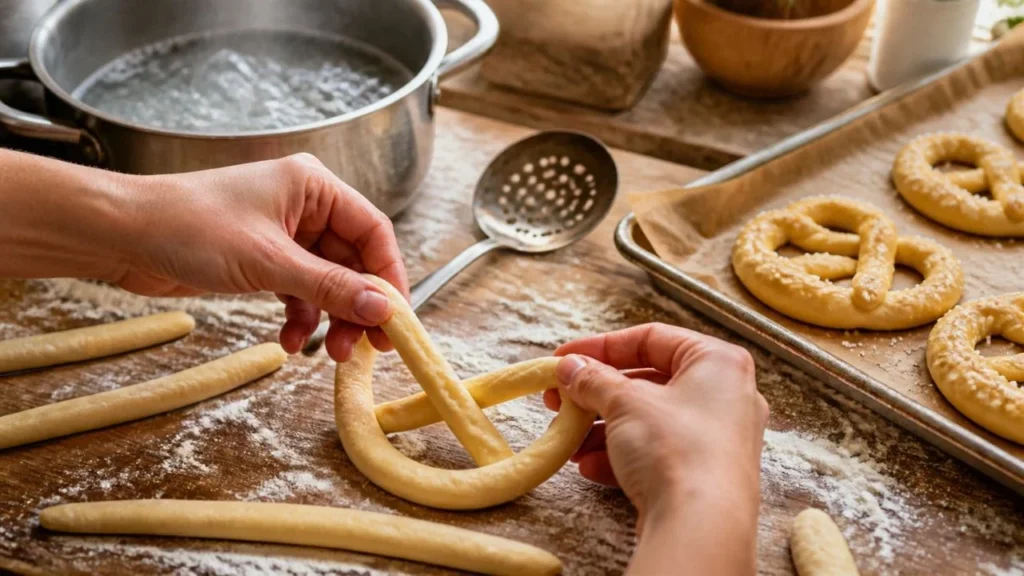
- Divide into 8 pieces of 100 g. Roll each into a 60 cm rope, thick in the middle and thin at the ends.
- Shape the knot: form a U, twist the ends twice and fold them down onto the belly. Place on a tray and chill uncovered for 30 minutes so the surface dries.
- Preheat the oven to 220 °C (425 °F). Bring the water to a simmer with the baked soda. Dip each pretzel for 20 to 30 seconds, lift out with a skimmer and place on a lined baking sheet.
- Slash the belly with a knife, sprinkle with coarse salt and bake for 15 to 18 minutes, until the crust is deep mahogany and shiny.
Notes
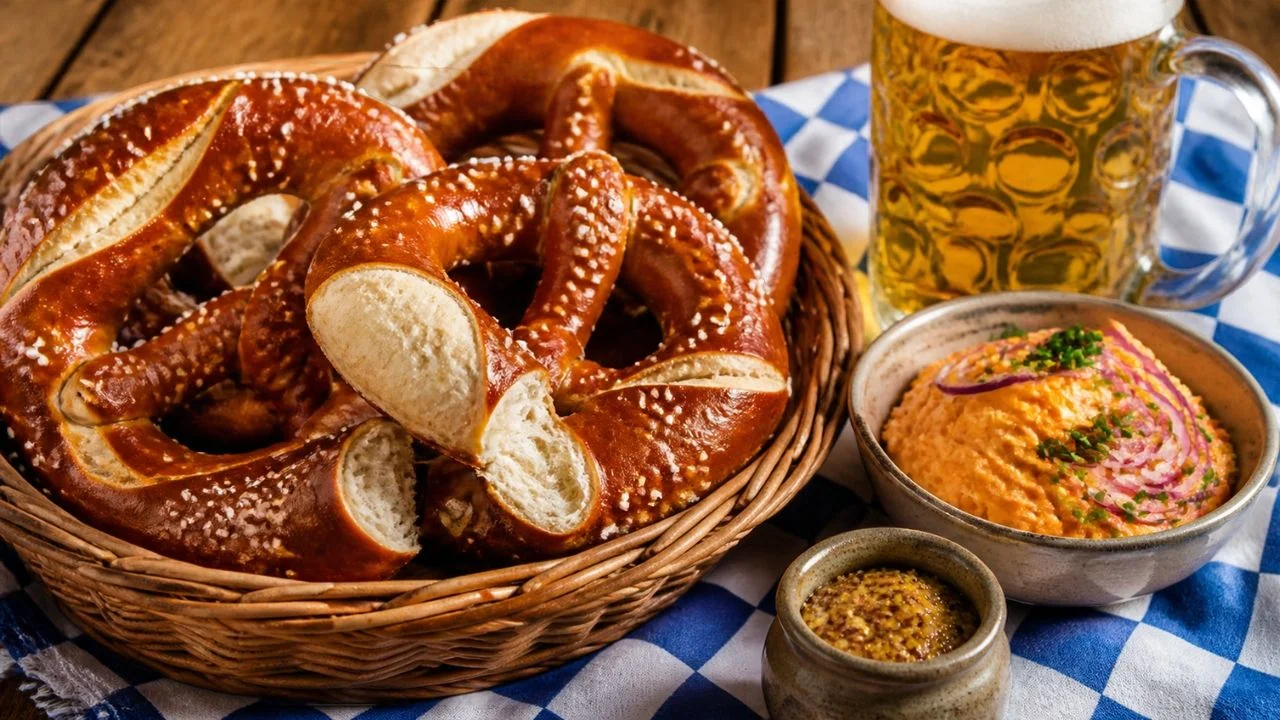
A thin, shiny mahogany crust, crunchy flakes of coarse salt, a fine, tight white crumb and that unique flavour you find in no other bread: the pretzel is the star of bakeries in Alsace and southern Germany. Making it at home is easier than it looks. Here is our soft pretzel recipe, with how to shape the knot, the secret of the alkaline bath and the best dips.
The pretzel, a German and Alsatian specialty
The pretzel was born in the monasteries of the German-speaking world in the Middle Ages; its knot is said to represent arms crossed in prayer. It became the emblem of German bakers and still hangs above their shops. In Alsace, Swabia and Bavaria it is eaten at breakfast, split and buttered, as a snack, or with a beer. The word “pretzel” comes from the German Brezel: German immigrants took it to the United States, where it also names the small, dry, crunchy pretzels sold in bags. This recipe is the original soft German pretzel.
Pretzel dough
Pretzel dough, Laugenteig in German, is a firm bread dough with little water and a touch of butter. It is not an enriched brioche dough. It gives a fine, even, tight crumb that contrasts with the crust. Knead for a good 10 minutes until smooth and supple. For a sourdough version, replace half the yeast with 100 g active starter and reduce the flour and water by 50 each: slower rise, deeper flavour.
How to shape a pretzel
Roll the dough into a 60 cm rope: thick in the middle for the “belly”, very thin at the ends for the “arms”. Lay it in a U, take both ends, twist them twice, then fold them down onto the belly and press lightly. Then chill the pretzels uncovered: the surface dries a little, which makes dipping easier.
The baking soda bath
The secret of a pretzel is its bath. German bakeries dip pretzels for a few seconds in a food-grade lye solution, the Lauge. This very alkaline solution transforms the surface of the dough and gives the brown, shiny crust and unique taste. Lye is dangerous to handle. At home, use baked baking soda: spread it on a tray and bake for 1 hour at 150 °C. It becomes more alkaline and gives a much darker crust than raw baking soda. Sprinkle coarse salt right after the bath, while the surface is still wet: large crystals that don’t melt in the oven.
Spices and dips for pretzels
Besides coarse salt, you can sprinkle caraway, sesame or poppy seeds. Sweet paprika is essential in Obatzda, the Bavarian dip of mashed camembert, butter, onion and paprika served in every beer garden. Sweet Bavarian mustard is the other classic, and a pretzel with butter is simply delicious. More ideas in our spice guide.
Cheese pretzels and pretzel burgers
For cheese pretzels, sprinkle grated Emmental instead of salt right after the bath. The same dough makes pretzel rolls (Laugenbrötchen): shape 90 g balls, dip, slash a cross, salt and bake 18 minutes. Perfect as burger buns, served with Kartoffelsalat or next to a Berlin currywurst.
Soft like a bakery pretzel
Three rules: well-kneaded dough, a very hot oven and a short bake. Take the pretzels out as soon as the crust is mahogany; overbaked, they dry out. If you love northern European breads, also try our Danish rugbrød. From Italy, rosemary focaccia is the other great bread to share as an appetizer.
Storing homemade pretzels
Pretzels are best the same day: overnight the salt draws moisture and the crust softens. Freeze them without salt in a closed bag and reheat 5 to 8 minutes at 180 °C after lightly moistening and salting them.
Pretzel FAQ
Can I skip the bath?
You’ll get a pale knot-shaped bread without the characteristic taste. The bath is essential.
Why are my pretzels pale?
The bath wasn’t alkaline enough. Use baked baking soda and leave them 30 seconds in the bath.
Can I make the dough the day before?
Yes. After shaping, chill the pretzels uncovered overnight and dip them the next day.