Poffertjes (Dutch mini pancakes)
Ingredients
Method
- Dissolve the yeast in 100 ml lukewarm milk with the sugar and let stand 5 minutes until foamy.
- In a bowl, mix both flours and the salt. Add the egg, the yeast milk, then the rest of the milk little by little, whisking, until you have a smooth, fairly runny batter.
- Cover with a tea towel and let rise 1 hour in a warm place: the batter should show small bubbles on the surface.
- Stir the batter gently and pour it into a squeeze bottle (or a piping bag).
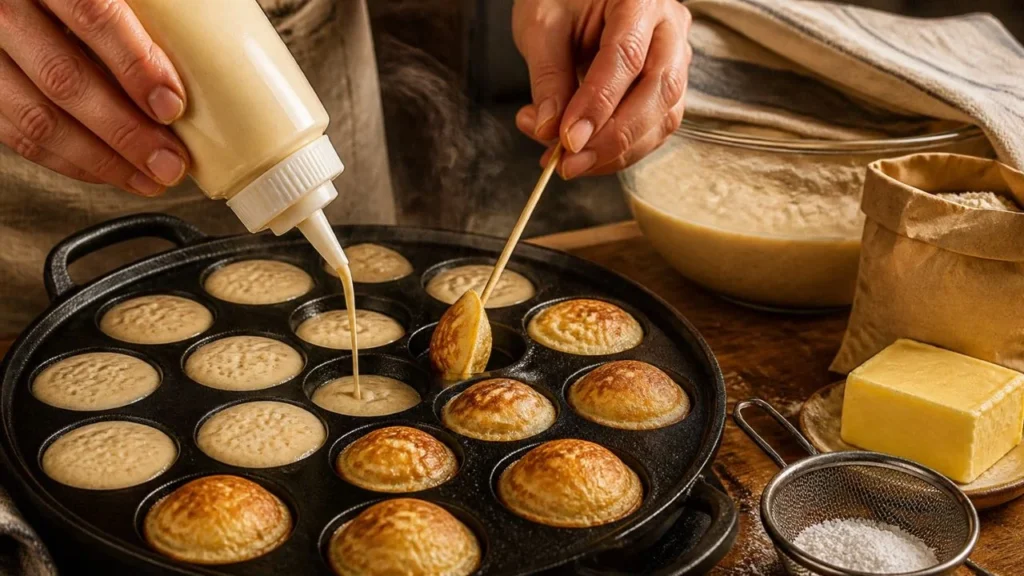
- Heat the poffertjes pan over medium heat and brush each cavity with a little melted butter. Fill the cavities three-quarters full.
- As soon as the bottom is golden and the top starts to dry (about 1 minute), flip each poffertje with a wooden skewer or fork. Cook 30 seconds to 1 minute more.
- Serve right away on a plate with a knob of butter and plenty of powdered sugar. Repeat with the rest of the batter.
Notes
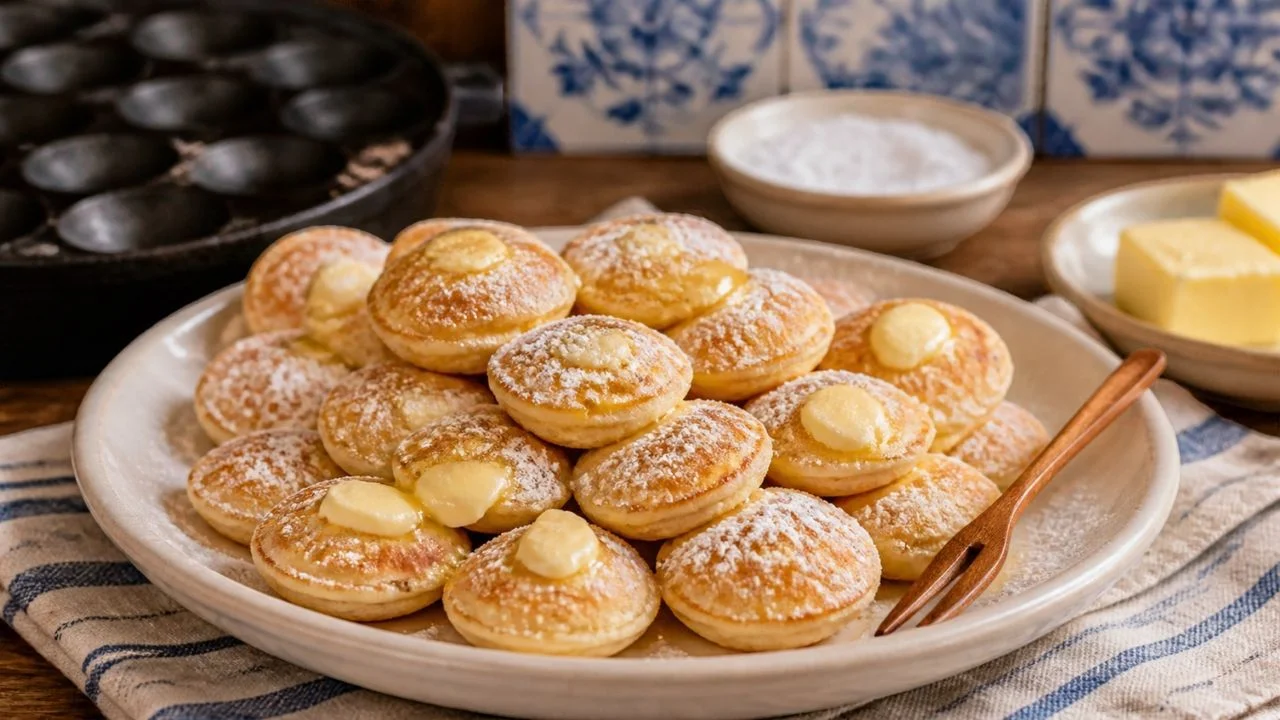
Small, soft, slightly puffed and served piping hot with a knob of butter melting under a snowfall of powdered sugar: poffertjes are the Dutch people’s favorite treat. These Dutch mini pancakes are sold by the dozen at markets and fairs, cooked to order on large cast-iron plates. Here is our complete poffertjes recipe, with the real yeasted buckwheat batter, the dimpled pan and all the tips to get them right, even without a special pan.
Poffertjes, a Dutch pastry specialty
Poffertjes were born in the Netherlands several centuries ago. Legend has it they started as a version of communion wafers made with buckwheat flour, a cheap grain that grew well in the country’s poor soils. Little by little, they became a true Dutch pastry specialty. In the 19th century, poffertjes stalls, the poffertjeskramen, set up at every fair, often run by families who handed down the trade. Their name is said to come from the verb poffen, “to puff”, because the yeasted batter puffs up slightly as it cooks.
A traditional Dutch snack
Even today, poffertjes are the ultimate traditional Dutch snack. People eat them in winter at Christmas markets, in spring at fairs, and all year round at home on Sunday afternoons. Kids adore them, and this puffed mini pancake recipe is perfect for a birthday or an afternoon with friends. They look a bit like Danish æbleskiver, but those are fully round balls made with beaten egg whites, while poffertjes stay flat underneath and slightly domed on top, with a yeasted batter that tastes of buckwheat.
How to make poffertjes
Here is how to make poffertjes in three stages. First, make a milk batter with baker’s yeast and two flours. Then let it rise for an hour so it becomes light and bubbly. Finally, cook it in minutes in a well-buttered dimpled pan, flipping each mini pancake with a skewer. It takes two or three batches to get the hang of it, then everything goes very fast: a 25-cavity pan fills and empties in three minutes.
A yeasted poffertjes batter, not sourdough
You often read about “sourdough poffertjes batter“, but the traditional recipe uses no sourdough: it rises with baker’s yeast, fresh or dry. That is what gives poffertjes their airy crumb and slight brioche flavor, very different from a pancake made with baking powder. Dissolve the yeast in a little lukewarm milk (never hot: above 40 °C / 104 °F it dies), then let the batter rise for an hour, covered. If you are in a hurry, 30 minutes is enough, but the poffertjes will be a little less fluffy.
Buckwheat flour for poffertjes
The secret of the authentic taste is buckwheat flour for poffertjes, the Dutch boekweitmeel. It is used half and half with wheat flour: wheat brings softness, buckwheat a slightly nutty flavor and a lovely golden color. Ready-made mixes sold in the Netherlands often contain buckwheat too. If you don’t have any, the recipe works with 250 g of wheat flour alone, but it loses some character.
The poffertjes pan
The poffertjes pan (poffertjespan) is a cast-iron or aluminum pan with small shallow cavities, 4 to 5 cm across. Cast iron is ideal because it holds steady heat and gives a beautiful color. Before first use, season it: grease it with butter or oil, heat it empty for a few minutes, then wipe it. After that, wash it only with hot water, no soap, so it stays non-stick.
Poffertjes without a special pan
No dedicated pan? You can make poffertjes without a special pan. A mini blini pan works very well. A takoyaki pan or æbleskiver pan does too, as long as you only fill the cavities halfway to keep a flat shape. And in a simple non-stick skillet, drop small spoonfuls of batter well apart: you will get perfectly round mini pancakes, less puffed but just as good.
The squeeze bottle trick for poffertjes
To fill 25 cavities in seconds, nothing beats a squeeze bottle for poffertjes batter, the soft bottle with a spout also used for sauces. It lets you portion each cavity neatly without spilling. Otherwise, a piping bag, a clean plastic bottle with a hole in the cap or a small spoon will do. To flip poffertjes, a wooden skewer or a two-pronged fork is the pros’ tool.
Poffertjes toppings
The classic poffertjes topping could not be simpler: a knob of butter on the still-hot pile and a generous layer of powdered sugar. The butter melts and mixes with the sugar into a soft glaze. At markets they are served in portions of 10, 15 or 20 in a cardboard tray with a small wooden fork. At home, you can vary with maple syrup, chocolate spread, fresh strawberries and whipped cream, or a drizzle of stroop, Dutch sugar beet syrup. The same syrup also fills stroopwafels, the famous Dutch caramel waffle cookies.
Spices for poffertjes
The original recipe contains no spices, but a few spices for poffertjes add a cozy touch, especially in winter. A pinch of Ceylon cinnamon in the powdered sugar, a hint of grated nutmeg in the batter, or homemade vanilla powdered sugar (powdered sugar blended with a dried vanilla pod) bring back holiday flavors. Find more ideas in our spice guide.
Poffertjes in the Thermomix
For poffertjes in the Thermomix, put the milk, yeast and sugar in the bowl and heat 2 minutes at 37 °C, speed 2. Add the flours, egg and salt, then mix 30 seconds at speed 5. Let the batter rise for an hour right in the closed bowl, then pour it into the squeeze bottle. Cooking is still done in the pan.
Our tips for perfect poffertjes
Heat the pan well before the first batch, over medium heat and no higher: too hot, it burns the bottom before the center is cooked. Brush the cavities with butter again every two batches. Don’t fill the cavities to the brim, or the poffertjes overflow and stick together. Flip them as soon as the top loses its shine. And serve them right away: a poffertje is eaten hot, straight from the pan.
Frequently asked questions about poffertjes
Can you make the batter ahead?
Yes. After rising, the batter keeps up to 12 hours in the fridge, well covered. Stir it and let it come back to room temperature for 20 minutes before cooking.
Can you freeze poffertjes?
Yes, once cooked and cooled, flat on a tray and then in a bag. Reheat them for a few minutes in the oven at 180 °C (350 °F) or in a dry pan.
Can you make gluten-free poffertjes?
Yes. Buckwheat is gluten-free: replace the wheat flour with rice flour, or make them 100% buckwheat. They will be a little denser but very flavorful.
What is the difference between poffertjes and pancakes?
American pancakes rise with baking powder and are cooked as large rounds. Poffertjes are tiny, raised with baker’s yeast, often made with buckwheat, and cooked in a dimpled pan that gives them their puffed shape.