Kanelbullar (Swedish cinnamon buns)
Ingredients
Method
- Make the dough: dissolve the yeast in the lukewarm milk. Add the sugar, salt and cardamom, then the flour little by little. Knead for 5 minutes, add the soft butter in pieces and knead for another 8 to 10 minutes, until the dough is smooth, supple and comes away from the sides of the bowl.
- Cover with a tea towel and leave to rise for 1 hour in a warm place, until doubled in size.
- Make the filling: mix the very soft butter, brown sugar and cinnamon into a smooth paste.
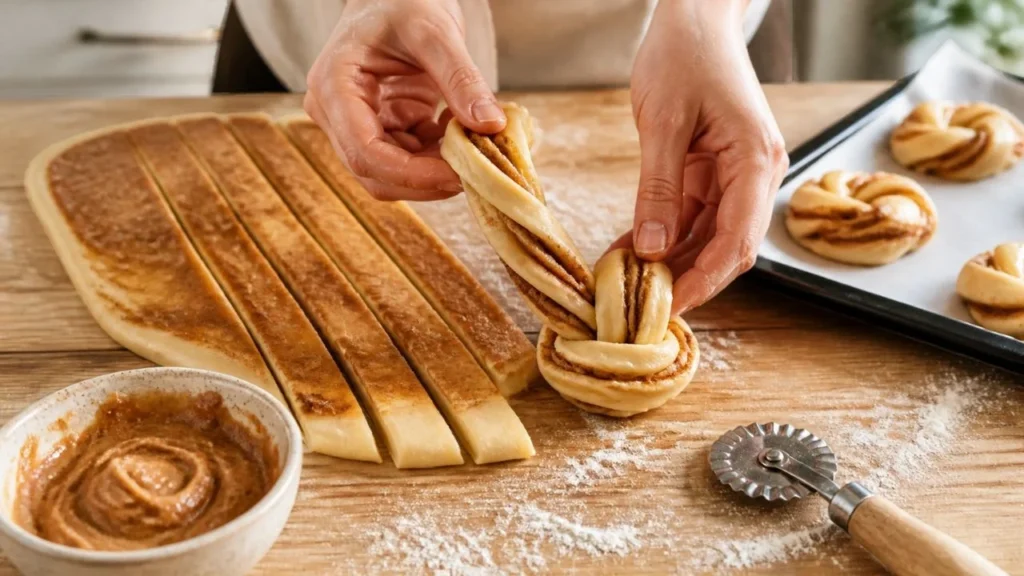
- On a floured surface, roll out the dough into a rectangle of about 30 × 50 cm (12 × 20 in). Spread the filling over the whole surface, then fold the dough in three lengthwise, like a letter, to get a strip about 10 × 50 cm (4 × 20 in).
- Cut the strip into 20 ribbons about 2.5 cm (1 in) wide. Twist each ribbon, wrap it twice around two fingers, then tuck the end into the centre to form a knot. Place the knots on two baking sheets lined with baking paper.
- Cover and leave to rise for another 45 minutes. Preheat the oven to 220 °C / 425 °F (fan 200 °C).
- Brush the buns with beaten egg, sprinkle with pearl sugar and bake one tray at a time for 10 to 12 minutes, until golden. Leave to cool on a rack, covered with a tea towel so they stay soft.
Notes
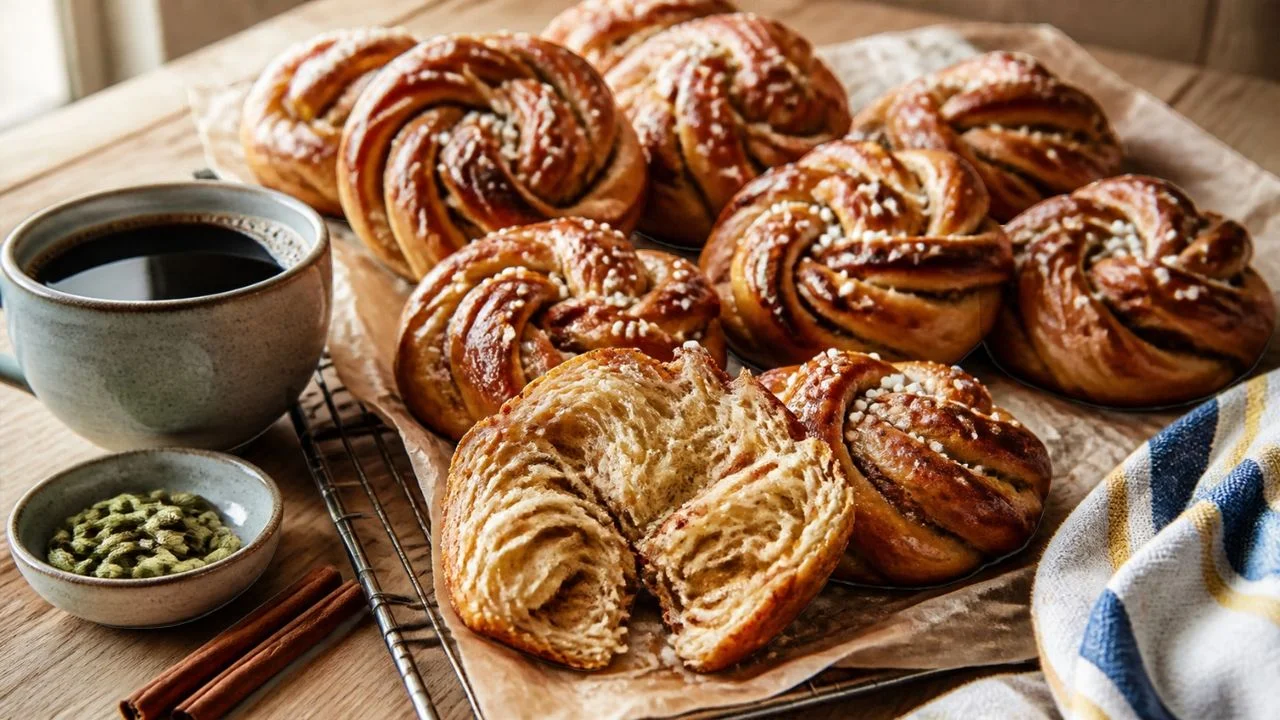
A soft, stretchy bun, the scent of cardamom, a melting cinnamon centre and crunchy sugar on top: the kanelbulle is Sweden’s favourite treat. These Swedish cinnamon buns are shaped into knots or swirls and go with every coffee break. In this kanelbullar recipe, we show you step by step how to make a really soft dough, how to tie the traditional knots and how to store them.
Kanelbulle, a cinnamon and cardamom bun
In Swedish, kanel means “cinnamon” and bulle means “bun”; the plural is kanelbullar. It is a cinnamon and cardamom bun: cardamom flavours the dough, while cinnamon hides in the butter filling. Kanelbullar appeared in Sweden in the 1920s, when butter, sugar and white flour became more affordable. Today they are everywhere: in bakeries, cafés, petrol stations and every kitchen. They even have their own national day, Kanelbullens dag, every 4 October.
A recipe for soft kanelbullar
The secret of soft kanelbullar comes down to three things. First, knead for a long time: the dough must become smooth and elastic, which gives it its stretchy crumb. Second, respect both rises: 1 hour for the dough, then 45 minutes for the shaped buns. Finally, bake briefly in a hot oven: 10 to 12 minutes is enough. An overbaked bun becomes dry. As soon as they come out of the oven, cover the kanelbullar with a tea towel: the steam keeps them tender.
An easy Scandinavian bun recipe
New to baking? Kanelbullar are an excellent easy Scandinavian bun recipe. The dough contains no eggs and nothing complicated: milk, yeast, butter, sugar, flour and cardamom. It can be kneaded by hand or in a stand mixer. The only step that needs a little attention is the shaping. If the knots seem daunting, you can make swirls instead: simply roll up the filled dough into a log, cut it into 3 cm slices and place them in paper cases, as is often done in Sweden.
How to tie kanelbullar: shaping the knots
Wondering how to shape kanelbullar into knots? It takes three steps. Roll out the dough, spread it with cinnamon butter, then fold it in three like a letter. Cut this thick strip into ribbons 2.5 cm wide. Take a ribbon, twist it to reveal the filling, wrap it twice around two fingers, then tuck the end underneath into the centre. Your first knots may not be perfect, but they will be delicious, and rising and baking fix a lot.
Swedish vs American cinnamon rolls: what’s the difference?
People often talk about Swedish cinnamon rolls, but the kanelbulle has little in common with the American cinnamon roll. The cinnamon roll is a large rolled bun, baked tightly packed in a dish and topped with cream cheese or icing sugar frosting. The kanelbulle is smaller, less sweet and has no frosting: it is simply glazed with egg and sprinkled with pearl sugar. Above all, its dough contains cardamom, which the cinnamon roll does not. And compared with its Finnish cousin, the korvapuusti, the kanelbulle stands out mainly for its shape: a knot or swirl in Sweden, a squashed “ear” in Finland.
Spices in Swedish buns
The spices in Swedish buns are an inseparable duo: cardamom and cinnamon. Sweden is one of the biggest consumers of cardamom in Europe, and almost all its pastries contain it. To learn all about this spice, its varieties and its benefits, read our article on cardamom. In the filling, Ceylon cinnamon gives a mild, refined taste, while cassia is more powerful: choose according to your taste with our article on cinnamon.
Ground cardamom in bun dough
Adding ground cardamom to bun dough is what makes the difference between a kanelbulle and an ordinary cinnamon bun. Its fresh, lemony, slightly camphor-like aroma spreads through the whole crumb. For the best result, open green pods and crush the small black seeds in a mortar just before using them: ground cardamom quickly loses its aroma. Allow about 20 pods for two teaspoons. Swedes like their kanelbullar well spiced, but if you are new to this spice, start with just one teaspoon.
Pearl sugar for kanelbullar
The finishing touch is pearl sugar for kanelbullar, called pärlsocker in Sweden. These large, opaque white sugar grains don’t melt in the oven: they stay crunchy on the golden bun. You can find it in baking shops or online, sometimes sold as nib sugar. Sprinkle it right after the egg glaze so it sticks well. Otherwise, use flaked almonds or brush the buns with a little sugar syrup as they come out of the oven, as some Swedish bakeries do.
The Swedish coffee break: fika
You can’t talk about kanelbullar without talking about the Swedish coffee break, fika. Fika is much more than a coffee: it’s a moment to slow down, alone or with friends, with a hot drink and something sweet. At work, many Swedish companies have a fika in the morning and in the afternoon. The kanelbulle is its undisputed king. For a homemade fika, serve your buns warm with filter coffee or tea, and add a slice of gooey chocolate cake or a few biscuits. The other star of fika? Kladdkaka, the gooey Swedish chocolate cake.
IKEA kanelbullar and the homemade recipe
For many people, their first kanelbulle was eaten at the IKEA restaurant or Swedish food shop. So many look for an IKEA-style kanelbullar recipe. Our recipe is not the store’s own, but it gives you exactly what people love in these buns: a soft cardamom crumb, a melting cinnamon filling and the crunch of pearl sugar. Homemade and eaten warm, they are in a different league. And for a truly Swedish meal, serve them as dessert after our köttbullar, the Swedish meatballs.
Storing and freezing kanelbullar
When it comes to storing and freezing kanelbullar, you have two options. Baked and cooled buns freeze very well in a sealed freezer bag for up to 3 months. To serve, let them thaw for 1 hour at room temperature, then warm them for 5 minutes in the oven at 150 °C (300 °F): they will be soft again. You can also freeze the raw knots, right after shaping, on a tray and then in a bag. On the day, let them thaw and rise for 2 to 3 hours, glaze them and bake as usual.
Frequently asked questions about kanelbullar
Why are my kanelbullar dry?
They were overbaked or the dough had too much flour. Take them out as soon as they are golden and cover them with a tea towel so they cool without drying out.
Can I make the dough the day before?
Yes. After kneading, let the dough rise slowly overnight in the fridge, in a covered bowl. The next day, take it out 30 minutes before rolling it out.
The filling leaks during baking, is that normal?
A little butter caramelising on the tray is normal and delicious. To limit leaks, use very soft but not melted butter, and tie the knots tightly.