Tourtou from Corrèze (buckwheat yeast pancakes)
Ingredients
Method
- Dissolve the yeast in a glass of lukewarm water taken from the 600 ml.
- In a bowl, mix the buckwheat flour, wheat flour and salt. Make a well, pour in the dissolved yeast, then the rest of the lukewarm water little by little, whisking, until you have a smooth, thick batter.
- Cover with a tea towel and leave to rest for 1½ hours in a warm room: the batter rises and covers itself with small bubbles.
- Heat a cast-iron pan over medium heat and grease it lightly with butter or lard.
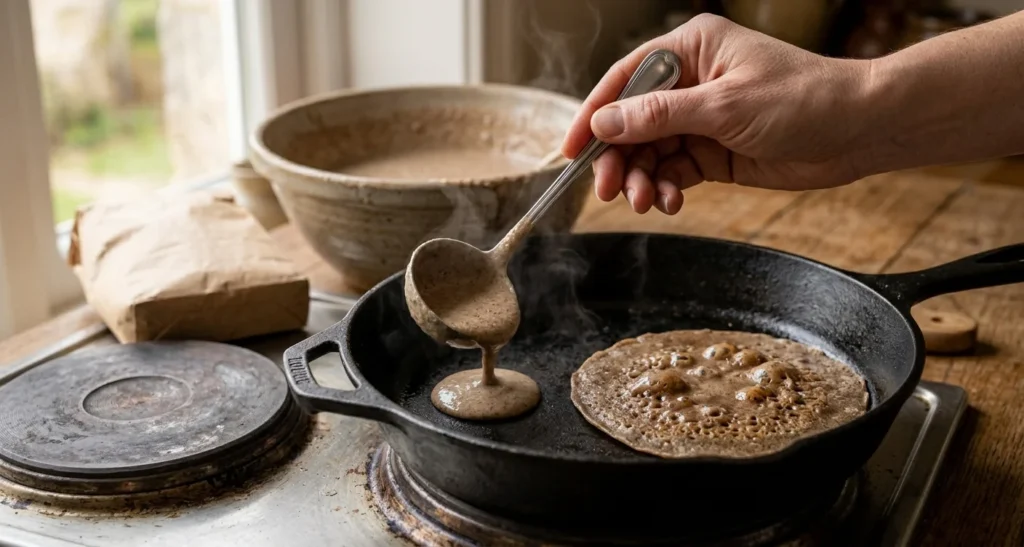
- Pour in a small ladle of batter and barely spread it: the tourtou must stay thick. Cook for 2 to 3 minutes, until the top is covered with small holes and almost dry.
- Turn the tourtou over and let it brown for 1 minute. Keep the tourtous warm under a tea towel and serve them warm.
Notes
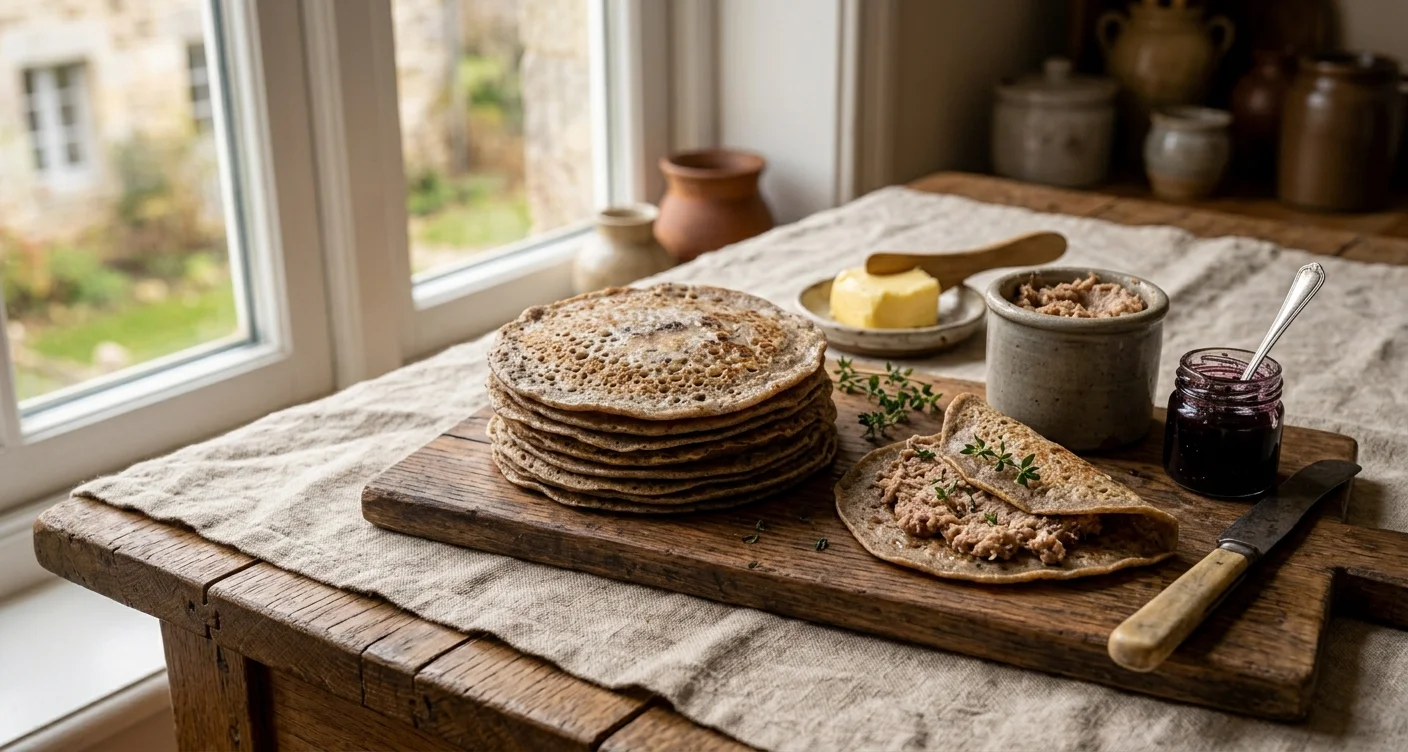
Thick, soft and covered with little holes, the tourtou from Corrèze is the buckwheat pancake of Corrèze and the Limousin, in central France. Unlike the Breton crêpe, its batter is raised with baker’s yeast. Here is our tourtou recipe, just as it is still made on the farms of the Millevaches plateau.
The history of the traditional Limousin tourtou
The traditional tourtou was born on the poor, acidic soils of the Limousin, where wheat grew badly. Farmers grew buckwheat instead, a hardy crop that needs very little. For centuries, buckwheat tourtous replaced bread in peasant families. They were eaten in the morning with milk, at lunchtime with soup, or in the evening with a little bacon.
Today the tourtou has become a true speciality of Corrèze. You will find it at local markets, village fairs and country inns, where it often comes with a plate of charcuterie. Some mills in the region still grind their own buckwheat flour.
The tourtou recipe step by step
What makes a tourtou is its batter. Buckwheat flour, a little wheat flour, salt and lukewarm water are mixed together, then yeast is added. After resting for 1½ hours, the batter has risen and is covered with bubbles. As it cooks, these bubbles burst and give the tourtou its typical little holes. These French buckwheat pancakes are then cooked in a frying pan, like a thick crêpe.
How to make soft tourtous
To make perfect tourtous, remember three things. First, the water must be lukewarm, never hot, so as not to kill the yeast. Next, let the batter rest in a warm room, away from draughts. Finally, hardly spread the batter in the pan: a tourtou must stay thick to be soft inside.
Tourtou batter with yeast
The yeast is what sets the tourtou apart from all other buckwheat pancakes. Fresh baker’s yeast makes the batter rise gently and gives it an airy texture, close to that of an American pancake. You can replace it with 7 g of dried baker’s yeast. In some families, a pinch of bicarbonate of soda is added just before cooking for even more bubbles.
Cooking tourtous in a cast-iron pan
A cast-iron pan is the best way to cook tourtous at home. Cast iron holds the heat well and gives a lightly golden crust without burning. In the past, people used a large iron pan set on the embers of the fireplace. Grease the pan with a little butter or lard, using kitchen paper, before each tourtou.
Toppings for buckwheat tourtous
Tourtous are eaten plain and warm, or with a topping. The most classic version is the tourtou with rillettes, a French potted pork spread: spread the rillettes on the still-warm tourtou, fold it in half and eat it with your fingers. For a sweet version, tourtous are delicious with butter and honey, bilberry jam or chestnut spread, two great products of the Limousin. In the past, they were also dipped in vegetable soup.
Tourtous as an appetiser
For an appetiser, make small tourtous the size of a blini. Top them with herb cream cheese and smoked salmon, or with rillettes and a twist of freshly ground black pepper. You can also spread the topping on a large tourtou, roll it up tightly and cut it into slices: you get pretty pinwheels to serve on cocktail sticks. For more seasoning ideas, see our spice guide.
Gluten-free tourtous
Buckwheat contains no gluten. For gluten-free tourtous, simply replace the wheat flour with the same amount of buckwheat flour. Choose a certified gluten-free flour, as buckwheat is often milled in mills that also process wheat. The batter is a little more fragile: make smaller tourtous and turn them carefully.
The difference between a tourtou and a Breton galette
What is the difference between a tourtou and a Breton galette? Both are made with buckwheat flour, but the Breton galette contains neither yeast nor wheat flour: it is a batter of water, salt and buckwheat, spread very thinly on a flat griddle. The tourtou is raised with yeast, thicker, softer and full of little holes. The Breton galette is filled while it cooks, whereas the tourtou is topped once cooked.
Tourtou: calories
For 6 people, or 2 tourtous each, count about 250 kcal per serving, with 8 g of protein and 4 g of fibre, without toppings. Buckwheat is rich in fibre and magnesium, which makes the tourtou a filling snack.
Storing and reheating tourtous
Tourtous keep for 2 days wrapped in a clean tea towel or in an airtight box. To reheat them, warm them for 1 minute on each side in a hot pan, without fat. They also freeze very well, separated by sheets of baking paper.
More pancakes and flatbreads from around the world
Love pancakes? Also try our crêpes Suzette, lefse, the Norwegian potato flatbread, placki, Polish potato pancakes, or pannukakku, the Finnish oven pancake. For a meal from south-west France, serve your tourtous with a bowl of tourin, the garlic soup of Périgord. In the same farmhouse spirit, also try farçous from Aveyron, golden chard and herb fritters.
Frequently asked questions
Can I make tourtou batter the day before?
Yes. After mixing, cover the bowl and keep it in the fridge overnight. Take the batter out 1 hour before cooking so that it comes back to room temperature. It will have a slightly stronger, very pleasant flavour.
Are tourtous eaten hot or cold?
They are best warm, while still soft. Cold, they are still good topped with rillettes or jam, just as farmers used to eat them in the fields.