Frikadeller (Danish meatballs)
Ingredients
Method
- In a bowl, mix the ground meat with the salt until it becomes slightly sticky (1 to 2 minutes).
- Add the grated onion, egg, flour, pepper, nutmeg and allspice. Mix well.
- Pour in the sparkling water little by little while mixing: the mixture should be soft, almost like thick mashed potatoes, but not runny.
- Cover and let rest 30 minutes in the fridge: the flour swells and the mixture holds together better.
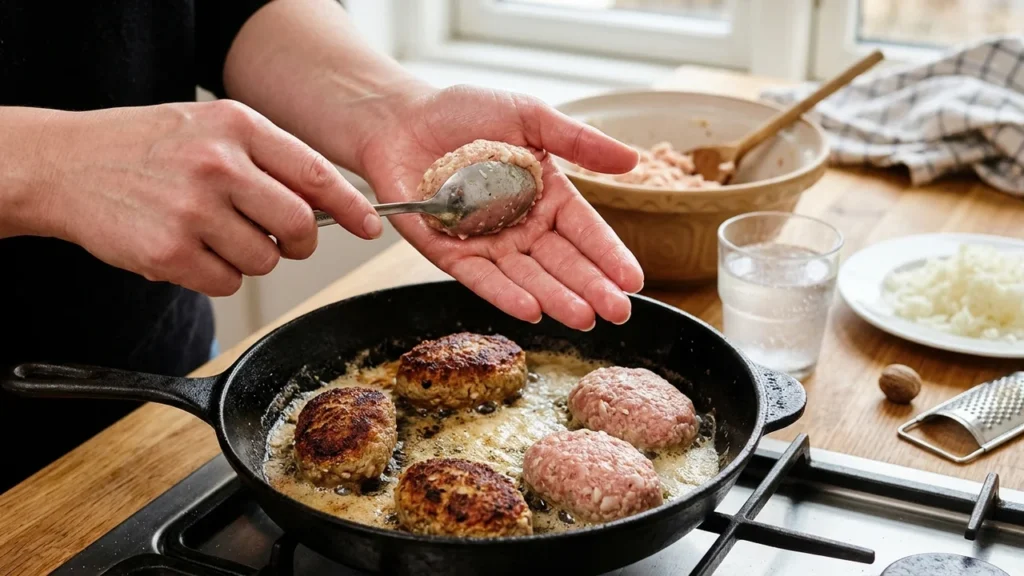
- Melt the butter in a large skillet over medium heat until foaming. With a tablespoon dipped in the butter, scoop a portion and shape it into an oval against the palm of your hand.
- Place the frikadeller in the pan without crowding. Brown them 6 to 8 minutes per side, flattening them very slightly, until deep brown and cooked through (72 °C / 160 °F).
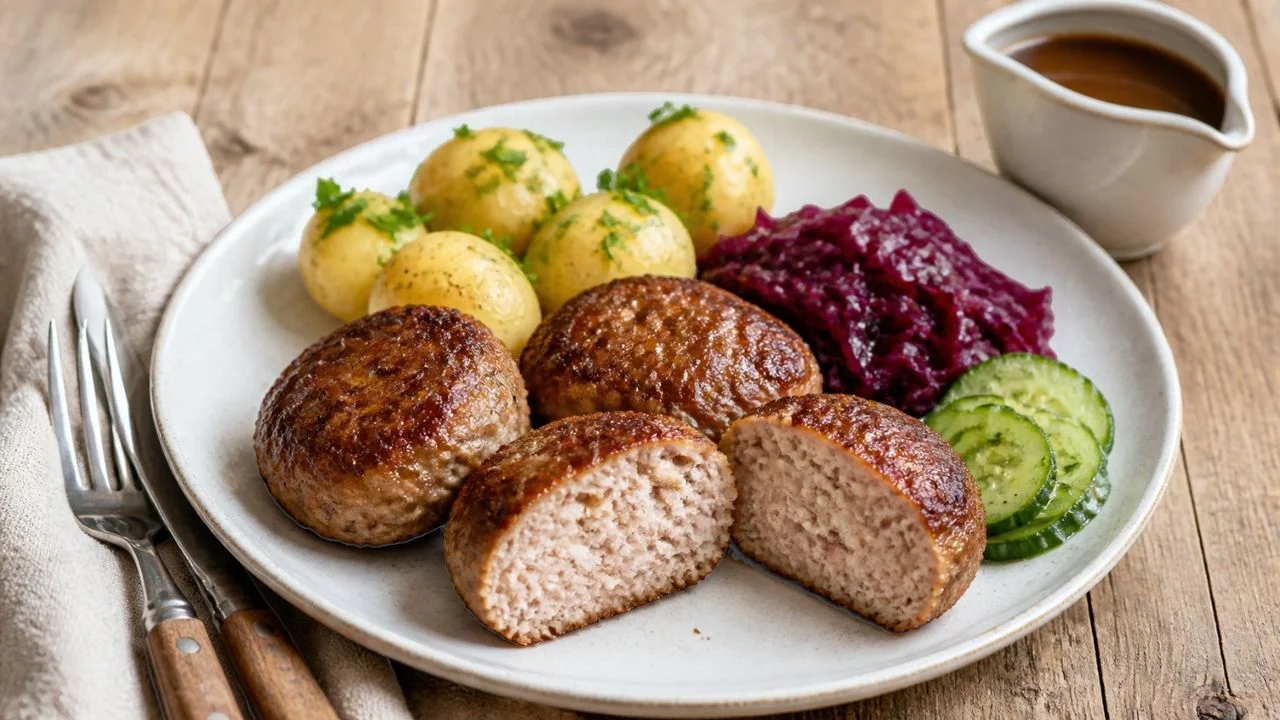
- Serve hot with potatoes, brown gravy and red cabbage, or cold on rye bread.
Notes
Browned in butter, tender inside and with a recognizable oval shape: frikadeller are the Danes’ favorite family dish. These Danish meatballs made with pork and veal take just minutes to prepare and are simply pan-fried. In this frikadeller recipe, we give you the right meat mix, the sparkling water trick, the spices, the classic side dishes and our tips for perfect results every time.
Frikadeller, a Danish meat specialty
Ask Danes about their favorite dish and frikadeller almost always top the polls. This is the most popular Danish meat specialty, served for weeknight dinners, in canteens, at festive buffets and even in the next day’s lunchbox. The word probably comes from the French “fricadelle”, via German, and since the 18th century it has meant these pan-fried ground meat patties.
Every family has its own recipe: more or less onion, milk or sparkling water, breadcrumbs or flour. But the shape always stays the same: an oval, slightly flattened ball shaped with a spoon.
A Scandinavian pan-fried meat patty
The frikadelle is a true Scandinavian pan-fried meat patty, one of the pillars of Nordic comfort food. Unlike other meatballs, it is never simmered in sauce: it is simply browned in butter, which gives it a caramelized brown crust and a tender interior. Any sauce is served on the side.
How to make frikadeller
Here is how to make frikadeller in four simple steps. Start by mixing the meat with the salt: this makes the mixture slightly sticky and helps it hold together. Then add the grated onion, egg, flour and spices, followed by the liquid little by little. Let the mixture rest, then shape and brown the patties in butter. Allow about 35 minutes of work, plus resting time.
Ground meat for frikadeller
The traditional ground meat for frikadeller is a half-and-half mix of pork and veal. In Denmark, it is sold ready-mixed as hakket svine- og kalvekød. Pork brings juiciness and flavor, veal adds finesse. You can replace the veal with ground beef: the result will be slightly firmer. Choose meat that is not too lean, around 10 to 15% fat, or the meatballs will be dry.
A pork and veal patty recipe
This pork and veal patty recipe works for other uses too: mini size for appetizers, as a burger in a bun, or larger for a one-dish meal. Just keep the same proportions for the mixture.
Sparkling water or milk in meatballs?
This is the secret to light frikadeller. Should you use sparkling water or milk in meatballs? Both work. Milk gives a soft, creamy mixture, the grandmother’s version. Sparkling water, increasingly used in Denmark, adds tiny bubbles that make the mixture airier. Many cooks use half and half. Either way, add the liquid little by little with the flour: the mixture should be soft but keep its shape in the spoon.
The traditional frikadeller recipe
In the traditional frikadeller recipe, the meatballs are not rolled between your hands. You take a tablespoon, dip it in the hot butter in the pan, scoop a portion of the mixture and give it an oval shape by smoothing it against the palm of your hand. Then you place it straight into the pan. The butter-dipped spoon stops the mixture from sticking. The frikadeller then cook gently, 6 to 8 minutes per side, until deep brown.
Spices for frikadeller
The spices for frikadeller are simple: grated onion, salt and pepper, preferably white, are the base. A pinch of grated nutmeg adds the warm touch found in many Nordic meatballs. Allspice is an optional extra, to be used lightly. For more ideas, see our spice guide.
Frikadeller vs köttbullar: what’s the difference?
People often compare frikadeller vs köttbullar, yet they are two very different dishes. Swedish köttbullar are small, perfectly round, often made with beef and pork, and served with a cream sauce and lingonberry jam. Danish frikadeller are bigger, oval, made with pork and veal, and simply pan-fried. Their Norwegian neighbors, kjøttkaker, are large beef patties simmered in brown gravy. Three countries, three ways to cook ground meat.
Frikadeller side dishes
The most classic frikadeller side dishes in Denmark are boiled potatoes, brown gravy (brun sovs) and sweet-and-sour red cabbage (rødkål). In summer, they are served with a sweet-and-sour cucumber salad (agurkesalat), pickles, pickled beets or potato salad.
Danish potato salad
Danish potato salad (kartoffelsalat) is made with boiled and cooled new potatoes, mixed with a creamy dressing of crème fraîche and a little mayonnaise, red onion, plenty of chives and fresh dill, and a touch of mustard. It goes perfectly with hot or cold frikadeller at a picnic or barbecue.
Cold frikadeller on smørrebrød
Leftovers are eaten cold! Cold frikadeller on smørrebrød are a Danish lunch classic: slice the meatball, lay it on a buttered slice of rugbrød and add red cabbage or a spoonful of remoulade and a few pickle slices. It is one of the most popular kinds of smørrebrød in the country.
Our tips for perfect frikadeller
Don’t skip the resting time: the mixture holds better when cooking. Grate the onion very finely so it melts into the mixture. Cook a small test patty to check the seasoning before shaping them all. Cook over medium heat, not too high, so the outside browns without burning before the center is done.
Frequently asked questions about frikadeller
Can you bake frikadeller in the oven?
Yes, at 200 °C (400 °F) for about 20 minutes on a buttered tray. They will be less browned than in a pan, but it is practical for large batches.
Can you prepare the mixture ahead?
Yes, up to 12 hours in the fridge, well covered. Mix it again before shaping the meatballs.
Can you freeze frikadeller?
Yes, once cooked and cooled. Reheat them in a pan or in the oven straight from the freezer.
Why do my frikadeller fall apart when cooking?
The mixture is probably too wet or has not rested long enough. Add a spoonful of flour, let it rest 30 minutes in the fridge, and only turn the patties once the first side is well browned: the crust holds them together.