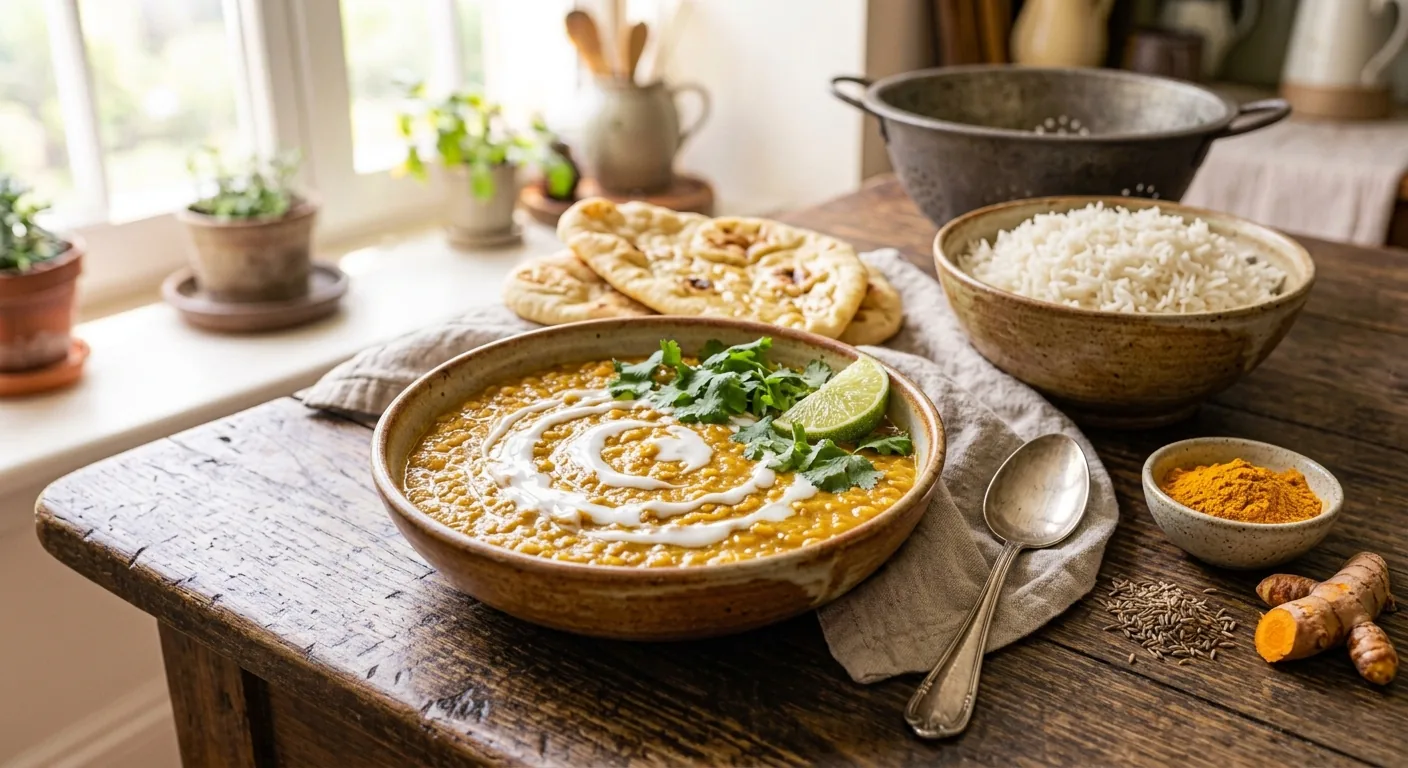
Red lentil dhal with coconut milk
Ingredients
Method
- Rinse the red lentils in a sieve under cold running water until the water runs almost clear.
- Finely chop the onion and garlic, and grate the ginger.
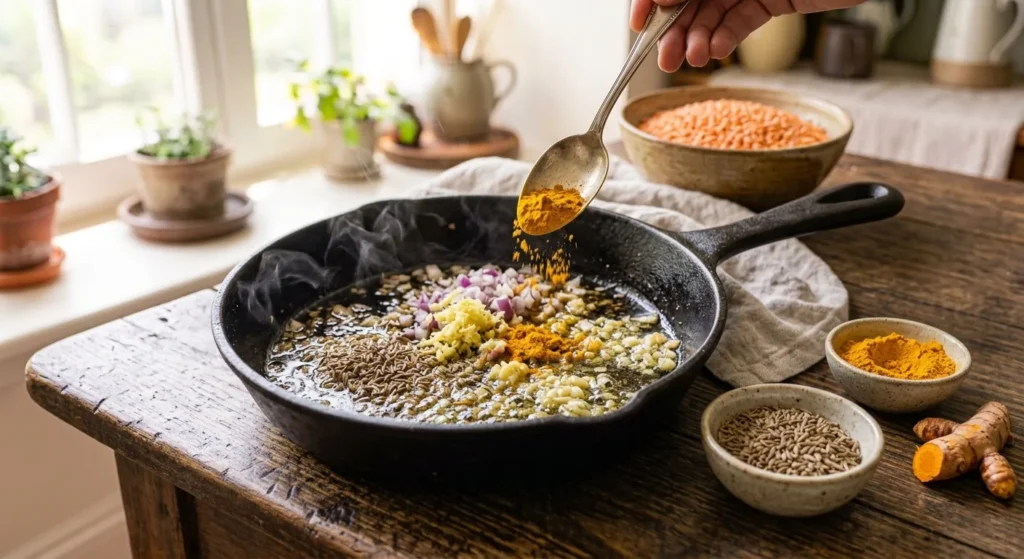
- In a large saucepan, fry the onion in the oil over a medium heat for 5 minutes. Add the garlic, ginger and all the spices and fry for 1 minute, stirring.
- Add the tomato purée, lentils, coconut milk and water. Bring to a simmer.
- Cook over a low heat for 15 to 20 minutes, stirring often, until the lentils are soft and creamy. Add a little water if the dhal gets too thick.
- Season with salt and pepper, stir in the lime juice and serve sprinkled with fresh coriander, with basmati rice or naan bread.
Notes
Mild, creamy and fragrant, red lentil dhal with coconut milk is the ultimate comfort food. In half an hour, a few lentils, some spices and a tin of coconut milk turn into a complete, vegetarian and budget-friendly meal. And of course, here at Curcuma.top (curcuma is French for turmeric), it’s a recipe close to our hearts: turmeric plays a central role. Here is our recipe, the story of this Indian dish and all our tips for getting it right.
What is dhal?
In India, the word dal (also spelled dhal or daal) refers both to split, hulled pulses such as lentils, split peas or mung beans, and to the dish made with them. It is one of the pillars of Indian cooking: many families eat it almost every day, with rice or bread.
There are dozens of different dhals depending on the region and the pulses used. Masoor dal is made with red lentils, the quickest to cook. Coconut milk, meanwhile, is mainly used in the cooking of southern India, for example in Kerala. Our recipe brings these two traditions together in a mild, easy version that has become very popular in Europe.
Red lentils, not like other lentils
Red lentils are hulled lentils, usually split in half. That is what gives them their orange colour and why they cook so quickly: 15 to 20 minutes is enough, with no soaking. As they cook, they break down and become creamy, which is perfect for dhal.
Nutritionally, lentils are rich in plant protein (around 9 grams per 100 grams of cooked lentils), fibre and minerals such as iron. Served with a grain such as rice, they make a complete and filling meal, much loved in vegetarian cooking.
Should you rinse red lentils?
Yes. Rinse them in a sieve under cold running water until the water runs almost clear. This removes surface starch and any dust, and stops the dhal from frothing too much as it cooks.
Turmeric, the essential spice in dhal
In Indian cooking, turmeric goes into almost every dhal. It gives the dish its characteristic golden colour and a mild, slightly earthy flavour. It is joined by other spices: cumin, coriander, garam masala, and sometimes mustard seeds or chilli.
Dhal is also an excellent way to enjoy turmeric every day. Cooked in fat (here oil and coconut milk) and eaten with black pepper, it is better absorbed by the body. We explain why in our article on the health benefits of turmeric. If you have fresh turmeric, you can grate a small piece instead of using ground turmeric: allow about 2 to 3 centimetres of root for a teaspoon of powder, as our guide fresh turmeric, powder or capsules explains.
Our tips for a perfect dhal
Fry the spices in oil
This is the most important step. In India, spices are heated in fat before the other ingredients are added. The heat releases their aromas and completely transforms the flavour of the dish. Fry the onion, then add the garlic, ginger and spices for just one minute, stirring, so they don’t burn.
Don’t forget the tomato
A little tomato (purée or chopped tomatoes) adds a touch of acidity that balances the sweetness of the coconut milk.
Adjust the texture
Dhal thickens as it cools. If you find it too thick, add a little hot water. If it is too runny, let it simmer uncovered for a few more minutes. The ideal texture? A loose purée that coats the back of a spoon.
Finish with lime
A squeeze of lime juice just before serving brings all the flavours to life. It’s a small detail that makes all the difference.
What to serve with dhal?
- Basmati rice, the classic accompaniment.
- Naan or chapatis, for mopping up the sauce.
- A soft-boiled egg or roasted vegetables, for a more substantial plate.
- Fresh coriander and a few toasted cashew nuts, for the finishing touch.
- Plain yoghurt or a cucumber raita, for anyone sensitive to chilli.
Variations
Spinach dhal
Stir in two large handfuls of baby spinach at the end of cooking. It wilts in a minute and adds colour and freshness.
Sweet potato dhal
Add a sweet potato, cut into small cubes, with the lentils. The dish will be sweeter, more orange and even more comforting.
Spicy dhal
Add a finely chopped fresh green chilli with the garlic, or half a teaspoon of Kashmiri chilli powder. For a really fragrant version, finish with a tadka: a few cumin and mustard seeds sizzled in a little hot oil and poured over the dhal just before serving.
Storage
Dhal keeps for 3 to 4 days in the fridge and is often even better the next day, once the spices have had time to develop. It freezes very well for 3 months in individual portions. Reheat it gently with a little water to make it creamy again.
Frequently asked questions
Is dhal vegan?
Yes, our recipe is entirely plant-based and gluten-free. Just check the label on your stock.
Can I use green lentils?
Yes, but they don’t break down as they cook: the dish will be less creamy and will need about 30 to 40 minutes of cooking. And for another pulse that needs no soaking, try our split pea dip with cumin.
Is dhal suitable for children?
Absolutely. Without chilli, it is mild and slightly sweet thanks to the coconut milk. It’s often a dish children love.