Rugbrød (Danish rye bread with seeds)
Ingredients
Method
- The evening before, soak the cracked rye kernels and flaxseeds in 300 ml boiling water. In another bowl, mix the starter, 250 g rye flour and 350 ml lukewarm water. Cover both and leave 12 hours at room temperature.
- The next day, pour the soaker into the starter bowl. Add the remaining flour (250 g), sunflower and pumpkin seeds, dark beer, malt syrup, salt and caraway.
- Mix with a spoon or a wet hand for 5 minutes: the dough is very thick and sticky, like wet concrete. That is normal; it is not kneaded.
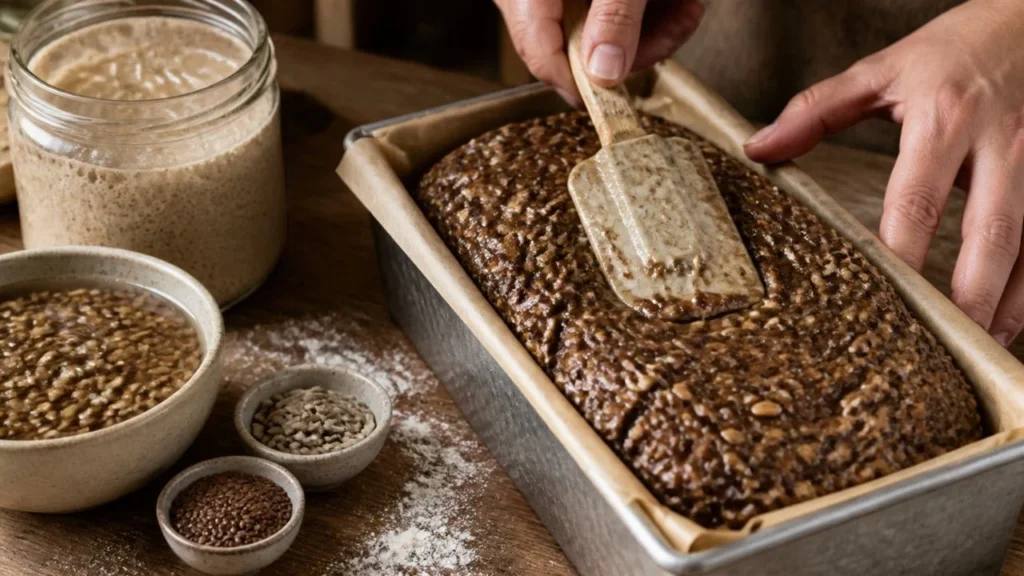
- Oil or line a 2-liter loaf tin with baking paper. Pour in the dough, press it down and smooth the top with a wet spatula. Sprinkle with sunflower seeds and press lightly.
- Cover and let rise 3 to 5 hours at room temperature, until the dough is 1 cm below the rim and small holes appear on the surface.
- Preheat the oven to 180 °C (350 °F). Prick the top with a fork and bake for 1 hour 30 minutes. The bread is done when the core reaches 96 to 98 °C (205 to 208 °F) or a skewer comes out almost dry.
- Unmold, cool on a rack, then wrap the bread in a towel and wait 24 hours before cutting it into thin slices of about 1 cm.
Notes
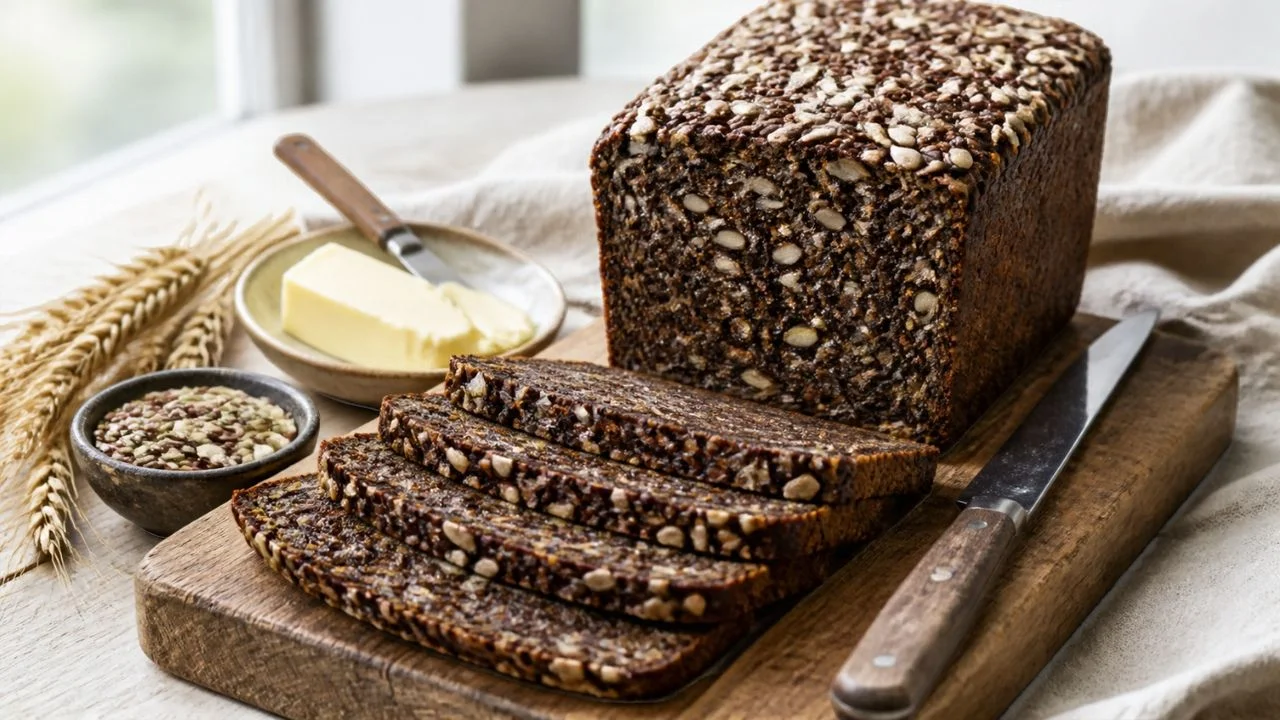
Dense, moist, slightly tangy and full of grains: rugbrød (also written rugbrod) is the bread Danes eat every day. This Danish rye bread with seeds contains almost no wheat flour and is baked in a loaf tin. In this rugbrød recipe, we explain everything: the sourdough starter, resting times, seeds, dark beer and storage, plus a quick version for anyone without a starter.
Rugbrød, the Danish dark sourdough bread
In Denmark, rugbrød simply means “rye bread”. It is a Danish dark sourdough bread, very dark, compact and moist, without the open crumb of a baguette. People eat it at breakfast, lunch and often as an afternoon snack. It is so much part of daily life that Danes living abroad almost always name rugbrød as what they miss most.
It belongs to the large family of Nordic rye breads. Our Finnish ruisleipä is a cousin, but very different: a round flat loaf with a hole in the middle, made only with rye flour. Rugbrød is baked in a rectangular tin and contains plenty of whole grains and seeds.
A dark bread recipe from the far North
Rye grows well in cold, damp climates where wheat struggles. That is why this dark bread recipe from the far North took hold in Denmark as well as Scandinavia, northern Germany and the Baltic countries. For centuries, sourdough rye bread fed farmers and sailors because it keeps for a long time. The seed-rich version, the one found in every Danish bakery today, is more recent.
How to make rugbrød
Here is how to make rugbrød over two days, without a mixer. The evening before, prepare two things: a soaker of rye kernels and flaxseeds in boiling water, and a first mix of starter, rye flour and water. The next day, combine everything with the rest of the flour, the seeds, the salt and the beer. The dough is not kneaded: it is very sticky, almost like a thick cake batter. Pour it into the tin, let it rise, then bake it slowly in a moderate oven.
The rye sourdough starter
The starter is the heart of rugbrød. If you don’t have one, ask a baker for a spoonful, or start your own: mix 50 g whole rye flour and 50 ml lukewarm water in a jar, then add the same amount of flour and water every day. After 4 to 5 days it smells pleasantly sour and bubbles: it is ready. Always keep a little starter aside before making your dough, for the next batch.
Rugbrød sourdough resting time
The rugbrød sourdough resting time is the key to flavor. The first starter mix rests about 12 hours, overnight. Then the dough rises another 3 to 5 hours in the tin. Some bakers extend this last rise to 12 to 24 hours in the fridge for a tangier taste. The longer the fermentation, the more flavorful and digestible the bread.
Seeds for Danish bread
The seeds for Danish bread give rugbrød its unique texture. Cracked rye kernels, soaked the day before, stay slightly chewy. Flaxseeds add moistness, because they swell and hold water. Sunflower and pumpkin seeds add flavor and crunch. You can also use sesame seeds, hemp seeds or rolled oats, keeping roughly the same total weight.
A Scandinavian whole grain seeded bread
With its whole grains and seeds, rugbrød is a true Scandinavian whole grain seeded bread. It is very filling: one or two slices keep you going until the next meal. That is also why it is sliced so thin.
A low GI, high fiber rye bread
Rugbrød is often described as a low GI rye bread, rich in fiber. Whole rye, whole kernels and sourdough fermentation do give a bread with a lower glycemic index than white bread, with plenty of fiber that helps you feel full. It is still bread, to be eaten as part of a balanced diet, but it is one of the most interesting choices at the bakery.
The rugbrød tin
The rugbrød tin is a large, rather tall rectangular loaf tin of about 2 liters (28 x 11 cm). In Denmark, special heavy metal tins are sold, but a regular metal loaf tin works very well. Avoid silicone, which does not give a good crust. Oil it well or line it with baking paper: rye dough sticks a lot.
Dark beer in rye bread
Adding dark beer to rye bread is a Danish tradition. People use hvidtøl, a sweet, low-alcohol dark beer, or a stout. It darkens the crumb, adds a light malty bitterness and feeds the fermentation. Malt syrup or molasses play the same role for color. Without beer, simply use water.
Spices for Danish dark bread
Classic rugbrød contains few spices, but a few spices for Danish dark bread suit it well. Caraway is the most traditional: one teaspoon gives a discreet anise-like aroma. A pinch of cumin or crushed coriander seeds adds a warm note, as in some Eastern European rye breads. Keep it light; the rye flavor should lead. More ideas in our spice guide.
The bread for smørrebrød
Rugbrød is above all the bread for smørrebrød. Its thin, compact slices hold the most generous toppings without going soft. Butter them right to the edge, then top with herring, gravlax or roast beef: you have real smørrebrød. Day to day, Danes also eat it with cheese, liver pâté or even thin slices of chocolate at breakfast.
Storing rugbrød
Storing rugbrød is easy, and one of its big strengths. Thanks to the sourdough and the moist crumb, it hardly dries out. Wrapped in a towel or a bread bag, it keeps 7 to 10 days at room temperature. It also freezes very well, sliced in advance: take slices out one at a time; they thaw in minutes or go straight into the toaster.
Frequently asked questions about rugbrød
Why is my rugbrød gummy in the middle?
Either it is underbaked or it was cut too soon. Check the core temperature (96 to 98 °C) and wait a full 24 hours before slicing.
Can you make rugbrød without sourdough?
Yes, with 7 g dry yeast and a tablespoon of cider vinegar for acidity. The bread will be good, but less flavorful, and it will keep a little less long.
Is rugbrød gluten free?
No, rye contains gluten. It has less than wheat, but this bread is not suitable for people with celiac disease.