Homemade chai latte
Ingredients
Method
- Crush the cardamom pods with the flat of a knife to open them, roughly crush the peppercorns and cut the ginger into thin slices.
- In a saucepan, bring the water to the boil with the cinnamon stick, cardamom, ginger, star anise, cloves and pepper. Simmer for 4 minutes to let the spices infuse.
- Add the tea and sugar and simmer for another 2 minutes.
- Pour in the milk, keeping 50 ml aside for the foam, and heat until it just starts to simmer, without letting it boil.
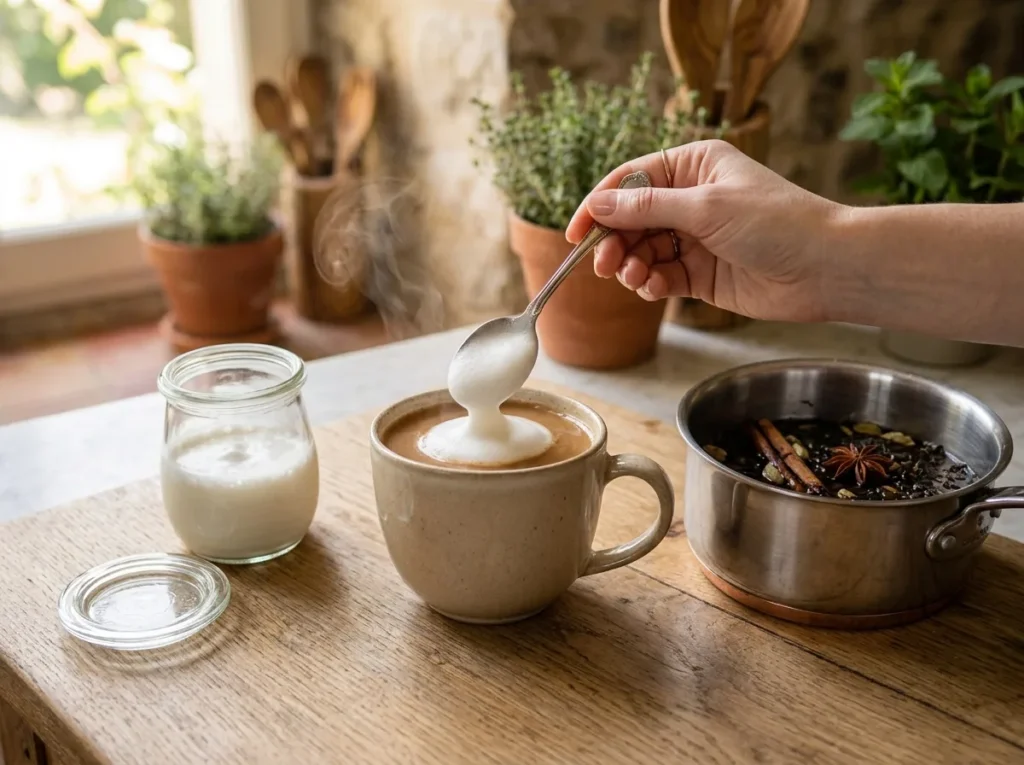
- Meanwhile, heat the reserved milk and froth it: shake it for 30 seconds in a tightly closed jar, or whisk it vigorously.
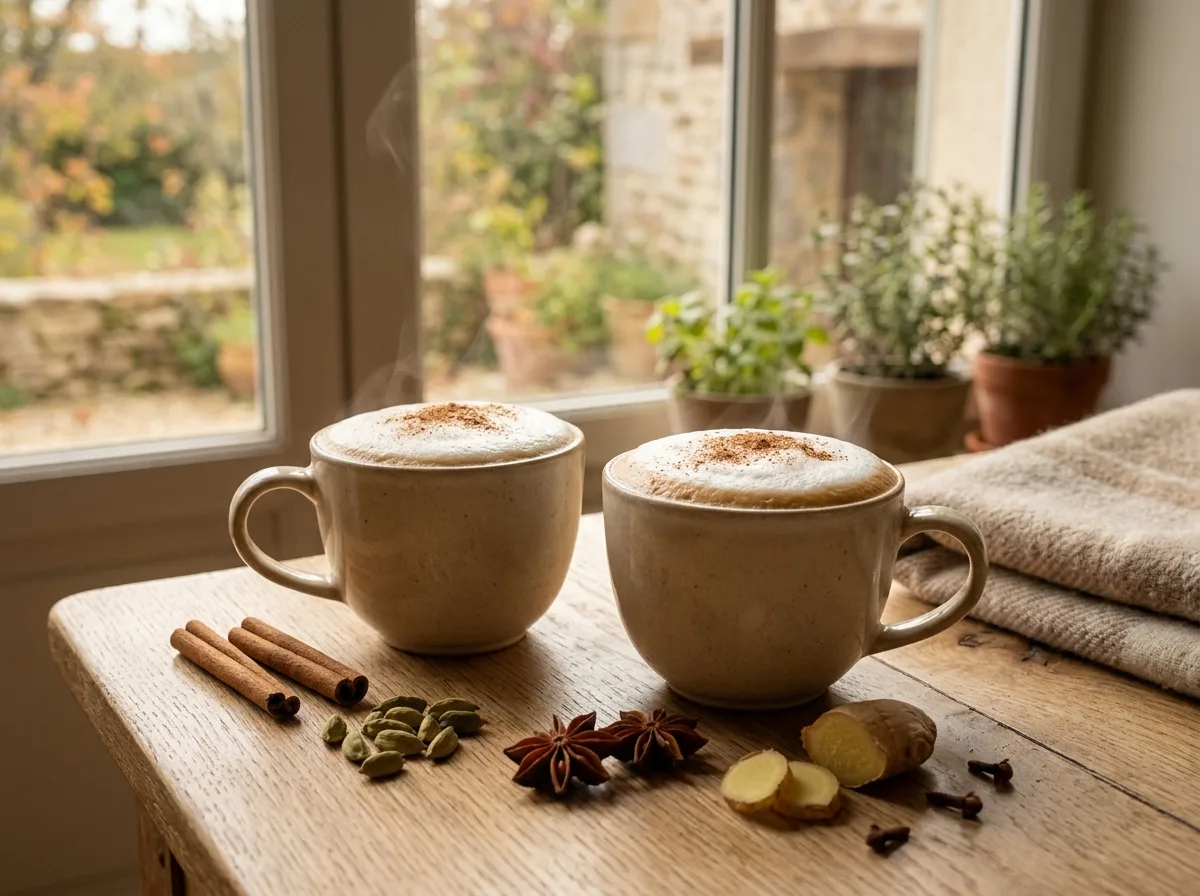
- Strain the chai into two large mugs, spoon the milk foam on top and sprinkle with a pinch of cinnamon.
Notes
Fragrant, mellow and spicy, homemade chai latte is the ultimate comforting hot drink, the one you want to wrap your hands around as soon as the days draw in. Black tea infused with cinnamon, cardamom, ginger and star anise, softened with milk and topped with a light foam: here is our chai latte recipe, ready in 10 minutes. Making your own homemade chai tea is much easier than you might think, and the result is nothing like the powdered mixes, which are often very sweet.
The best chai latte recipe
The secret of a good chai is to infuse the whole spices in boiling water before adding the tea. That gives them time to release their aromas without the tea turning bitter. Our version is a quick and easy chai latte: 2 minutes of preparation and 8 minutes of cooking, with spices you may already have in your cupboard. It is deliberately not too sweet, to let the spices shine: adjust the sugar to taste.
Once you have tried it, you won’t go back to the coffee-shop versions. And you can vary the spices endlessly to create your own blend.
The origins of Indian masala chai
In India, the word chai simply means tea. Traditional masala chai, literally “spiced tea”, is made all over the country: black tea, milk, sugar and a blend of spices are boiled together, then strained and served piping hot in small glasses or clay cups. Street vendors, the chai wallahs, serve millions of cups every day, in railway stations and on every street corner.
Tea growing took off in India in the 19th century, with the great plantations of Assam and Darjeeling. Masala chai as it is drunk today, with milk and sugar, became popular in the 20th century. The chai latte, on the other hand, is a Western version born in coffee shops: more milk, foam on top and a slightly milder taste.
Which spices for an authentic chai?
There is no single blend: every Indian family has its own. Here are the most common chai latte spices, and what each one brings.
- Cinnamon stick: the sweet, warm note, the base of any chai. Choose Ceylon cinnamon, which is more delicate. Find out all about cinnamon.
- Green cardamom: the queen of chai spices, fresh, lemony and slightly camphorous. Open the pods to release the seeds. Our guide to cardamom tells you all about its varieties.
- Fresh ginger: it brings heat and a peppery kick. Sliced or grated, it is far more fragrant than ground ginger. Read our article on ginger.
- Star anise: an aniseed, liquorice-like note, to be used sparingly, as one star is enough. To find out more, here is our guide to star anise.
- Cloves and black pepper: a little heat and depth.
Use whole spices if you can: they are easy to strain out and give a clearer, more fragrant chai than ground spices, which leave a sediment at the bottom of the cup. You will find all these spices and many more in our spice guide. To enjoy them, try our soft pain d’épices recipe.
Which tea for chai?
Chai needs a robust black tea that can stand up to the spices and the milk. Assam, powerful and malty, is the traditional choice in India. A Ceylon tea makes a lighter, fruitier chai. Earl Grey, flavoured with bergamot, adds an original note. For a strong black tea without bitterness, increase the amount of tea rather than the brewing time: two minutes of simmering is enough.
For a caffeine-free version in the evening, replace the black tea with rooibos: you will get a spiced drink that is just as comforting.
How to make the perfect milk foam
How to make a good foam without a machine
You don’t need a coffee machine to get a creamy milk foam. Heat a little milk without letting it boil, pour it into a glass jar, filling it only halfway, screw the lid on tightly and shake vigorously for 30 seconds. The milk doubles in volume and turns frothy. You can also use a small electric whisk or a handheld milk frother, or whisk the milk vigorously in the pan.
Semi-skimmed and whole milk both froth very well. Let the foam rest for a few seconds before spooning it onto the chai: it will be firmer.
A vegan chai latte
For a vegan chai latte, simply replace cow’s milk with a plant-based drink. Oat drink works best: naturally sweet, it froths well and tastes similar to milk. Almond drink adds a delicate note, while soya drink is the richest in protein. Choose “barista” versions if you want a good foam, and heat them gently without letting them boil, as they can split.
Making homemade chai syrup
If you drink chai often, make a homemade chai syrup: then all you have to do is mix it with hot milk. Simmer 250 ml of water with 2 cinnamon sticks, 10 cardamom pods, 5 cm of fresh ginger, 2 star anise, 6 cloves and 10 peppercorns for 10 minutes. Add 4 teaspoons of black tea, leave to infuse for 4 minutes off the heat, then strain. Add 150 g of cane sugar and stir until dissolved.
This syrup keeps for 2 weeks in the fridge in a glass bottle. Allow 3 to 4 tablespoons of syrup for a large mug of hot milk. It is also delicious in coffee, on yoghurt or in pancake batter.
Variations
Iced chai latte
Leave the chai to cool, then serve it over ice with a little cold milk. A refreshing drink for summer.
Turmeric chai latte
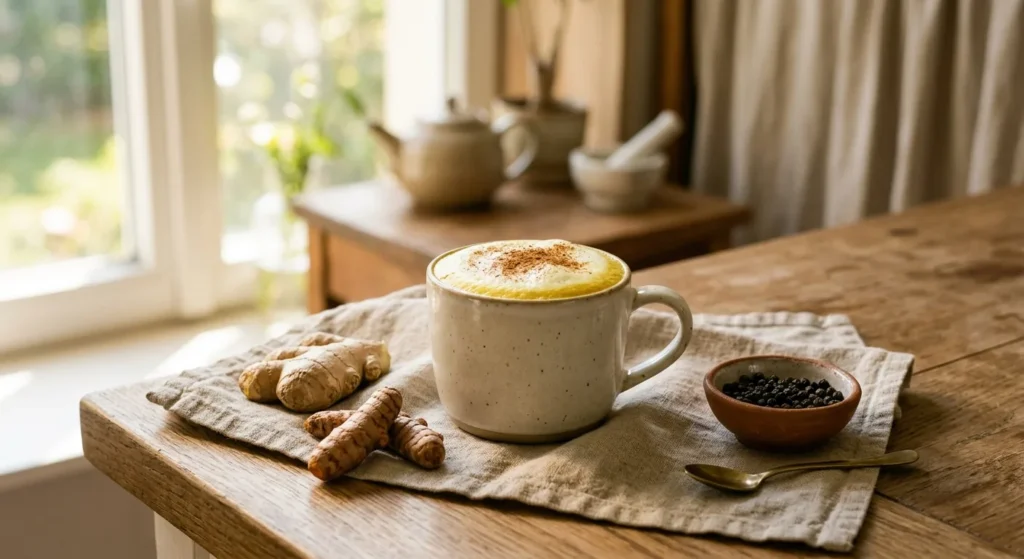
Add half a teaspoon of ground turmeric with the spices: you will get a golden drink, halfway between chai and our turmeric golden milk.
Frequently asked questions
Does chai latte contain caffeine?
Yes, because it is made with black tea. A cup does, however, contain much less than a coffee. In the evening, go for the caffeine-free rooibos version.
What is the difference between chai and chai latte?
Indian masala chai is made by boiling the tea, milk and spices together. Chai latte, a more Western drink, contains more milk and is served with milk foam on top.
Can I use ground spices?
Yes, at a pinch: allow half a teaspoon of ground spice mix per cup. The chai will be a little cloudy, but still fragrant.