Kjøttkaker (Norwegian meatballs in brown gravy)
Ingredients
Method
- In a large bowl, knead the minced beef with the salt for 2 minutes, until the meat becomes sticky. Add the potato starch, pepper, ginger, nutmeg, egg and grated onion, then pour in the cold milk a little at a time, mixing until you have a soft mixture.
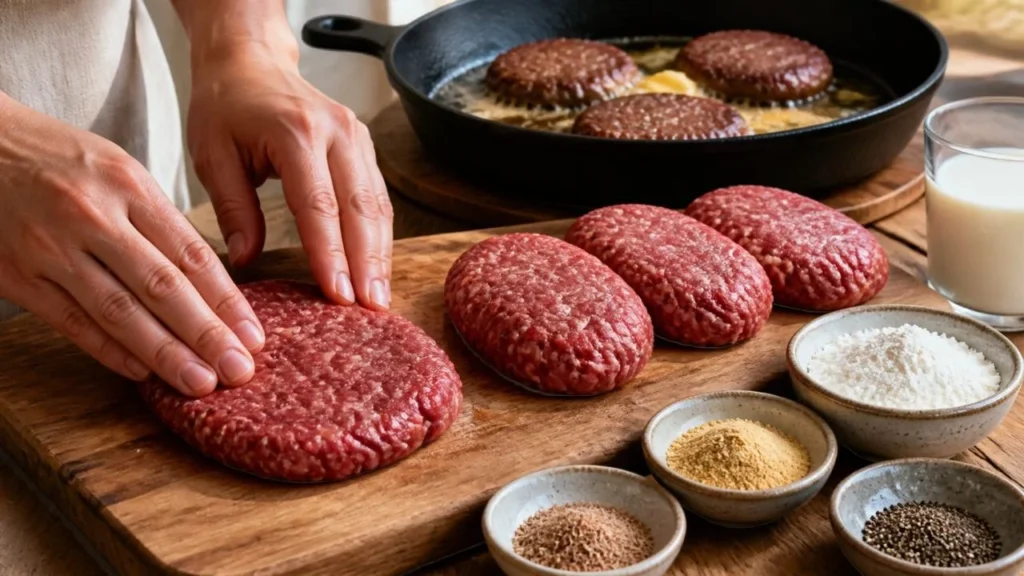
- With wet hands, shape 12 large balls, then flatten them into oval patties about 2 cm thick.
- Melt 30 g butter in a large frying pan over a medium-high heat. Brown the kjøttkaker for 2 to 3 minutes on each side, in batches if needed. Set aside on a plate.
- For the brown gravy, melt 40 g butter in the same pan or a sauté pan. Add the flour and cook for 5 to 8 minutes over a medium heat, stirring constantly, until the roux turns a deep nut-brown.
- Pour in the hot stock a little at a time, whisking to avoid lumps. Let it thicken for 2 to 3 minutes, then taste and adjust the salt and pepper.
- Return the kjøttkaker to the gravy, cover and simmer for 15 minutes over a low heat, until cooked through.
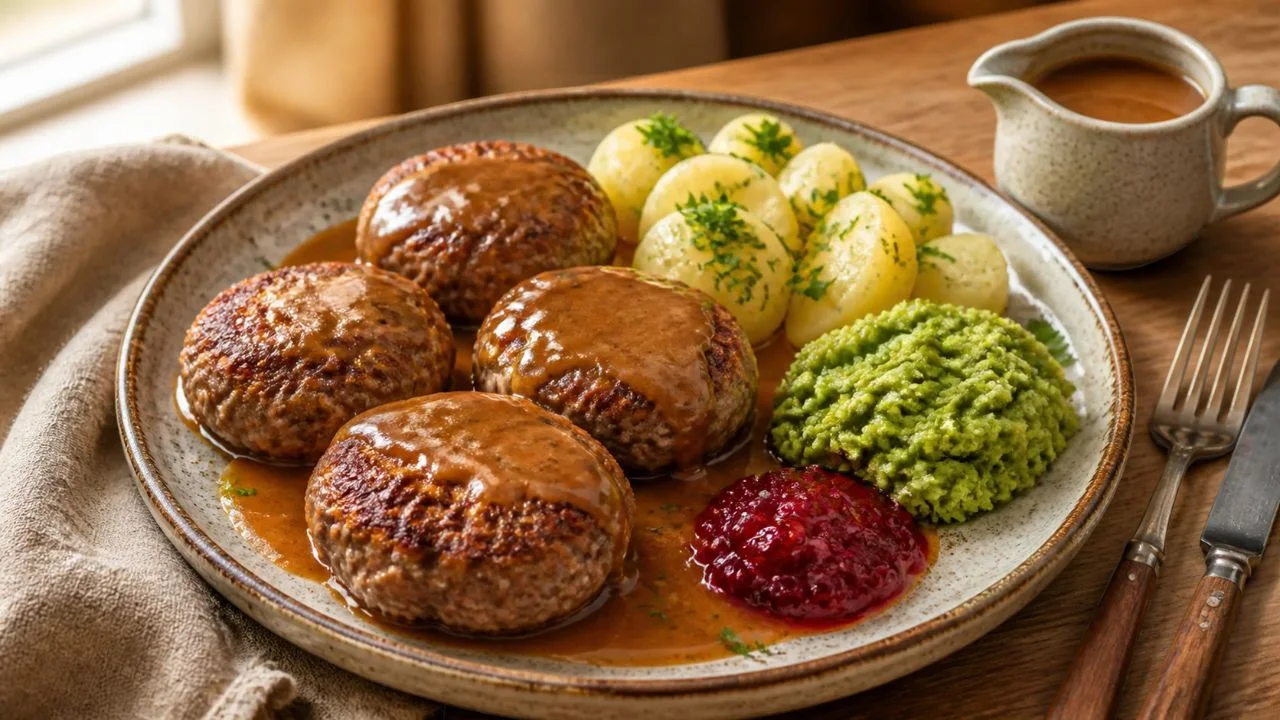
- Serve piping hot with boiled potatoes, mushy peas (ertestuing) and a spoonful of lingonberry jam.
Notes
Big, tender and coated in a richly flavoured brown gravy, kjøttkaker are the great classic of Norwegian home cooking. These Norwegian meatballs, flattened like small burgers, are browned in butter and then simmered in their gravy. In this kjøttkaker recipe, we explain how to make the mixture, which spices to use, how to get the brown gravy right and what to serve with them.
Kjøttkaker, a Norwegian meat speciality
In Norwegian, kjøttkaker literally means “meat cakes”. It is the most popular Norwegian meat speciality in the country, served in school canteens as well as at Sunday dinner. Every family has its own recipe, handed down through the generations. You can even buy them ready-made in Norwegian supermarkets, but nothing beats homemade kjøttkaker.
It is above all a Norwegian family dinner recipe: simple, filling and affordable. In the past, the meat was minced by hand and kneaded for a long time to give it its soft texture. Today, with shop-bought mince, the recipe takes barely an hour.
A traditional kjøttkaker recipe
A traditional kjøttkaker recipe is usually made with beef only. Some families mix beef and pork for a softer, richer mixture. The Norwegian secret lies in the kneading: the meat is first worked with the salt, which makes it sticky and elastic. Then you add the starch, the spices and the cold milk little by little. The mixture should be soft, almost loose, but firm enough to shape.
Potato starch, the secret of tender meatballs
In Norway, people don’t use soaked bread as in Sweden, but potetmel, potato starch. Potato starch in meatballs binds the mixture and holds on to the milk during cooking. The result: very tender kjøttkaker that don’t dry out, even after 15 minutes of simmering. You can replace it with cornflour, but the flavour is slightly less rounded.
How to make kjøttkaker
Here is how to make kjøttkaker with no fuss. Knead the beef with the salt, then work in the starch, pepper, ginger, nutmeg, egg and grated onion. Add the cold milk in several goes. With wet hands, shape 12 large balls and flatten them into oval patties about 2 cm thick. Brown them in butter, make the gravy in the same pan, then let them simmer in it for 15 minutes.
Spices for kjøttkaker
The spices for kjøttkaker are subtle but essential. Nutmeg is the most typical: it brings a warm, gentle note that goes very well with beef. Ground ginger, more surprising, lifts the mixture without making it hot. Black pepper completes the trio. That is why kjøttkaker are often described as nutmeg beef meatballs. To discover more pairings, see our spice guide.
Norwegian brown gravy
Kjøttkaker are unthinkable without their Norwegian brown gravy, brun saus. Its secret is a butter and flour roux cooked for a long time, 5 to 8 minutes, until it turns a deep nut-brown. That is what gives the gravy its colour and slightly toasted flavour. It is then loosened with good hot beef stock. Unlike the Swedish sauce, there is no cream: the gravy is lighter and more robust.
The kjøttkaker finish cooking in the gravy, covered. They soak up its flavour, and the gravy picks up the meat juices. If it gets too thick, add a little stock or water.
Scandinavian meatballs in brown gravy
Kjøttkaker belong to a large family: Scandinavian meatballs in brown gravy. There are similar dishes in Denmark, with frikadeller, and in Sweden, with köttbullar. They all share the same spirit: comforting food made for long winter evenings.
Kjøttkaker vs köttbullar: what’s the difference?
The kjøttkaker vs köttbullar question comes up often. Swedish köttbullar are small and round, the size of a walnut, and often made with a mix of beef and pork and soaked breadcrumbs. They are served with a cream sauce. Norwegian kjøttkaker are much bigger, flattened, usually all beef, bound with potato starch and flavoured with nutmeg and ginger. They simmer in a brown gravy with no cream. Two cousin recipes, but two very different dishes on the plate.
What to serve with kjøttkaker
The sides for kjøttkaker are almost always the same in Norway: boiled or steamed potatoes, mushy peas and a spoonful of lingonberry jam (tyttebær), whose sharpness balances the gravy. Some add boiled carrots or cabbage. Leftovers are happily tucked into a lefse, the Norwegian potato flatbread, for a quick meal.
Ertestuing, Norwegian mushy peas
Ertestuing is the inseparable partner of kjøttkaker. It is often called Norwegian split pea purée, but the classic version is made with dried green peas. Soak them overnight, then cook them for about 1 hour with a pinch of salt and a little sugar, before roughly mashing them with a knob of butter. The quick version uses frozen peas, cooked for 5 minutes and then mashed with butter. Yellow split peas work too, but the colour and flavour change a little.
Kjøttkaker variations
The recipe varies a little between regions and families. In western Norway, some add pork or even minced lamb. Some replace part of the milk with stock for a tastier mixture. Others add a pinch of cloves or allspice, but that is rare. There are also medisterkaker, pork patties served at Christmas, and karbonader, minced beef patties with onions. Finally, fiskekaker are the fish version: the same flattened shape, but a white fish mixture, and a recipe in its own right.
Our tips for perfect kjøttkaker
Use very cold milk: it blends in better and makes the mixture more tender. Wet your hands to shape the patties so the mixture doesn’t stick. Don’t flatten them too much: 2 cm thick is enough to keep them juicy. Finally, never press the kjøttkaker with the spatula while they cook, or you will squeeze out their juices.
Frequently asked questions about kjøttkaker
Can you make kjøttkaker ahead?
Yes, they are even better reheated. They keep for 2 days in the fridge in their gravy and freeze very well for 3 months.
Do you need an egg in kjøttkaker?
It isn’t essential: the starch is enough to bind the mixture. The egg simply makes it easier to shape, which is why we add it here.
Can you cook kjøttkaker in the oven?
Yes. Brown them for 10 minutes at 220 °C, then finish cooking them for 15 minutes in the brown gravy, on the hob or in an ovenproof dish.