Labneh with sumac
Ingredients
Method
- Mix the yoghurt with the salt.
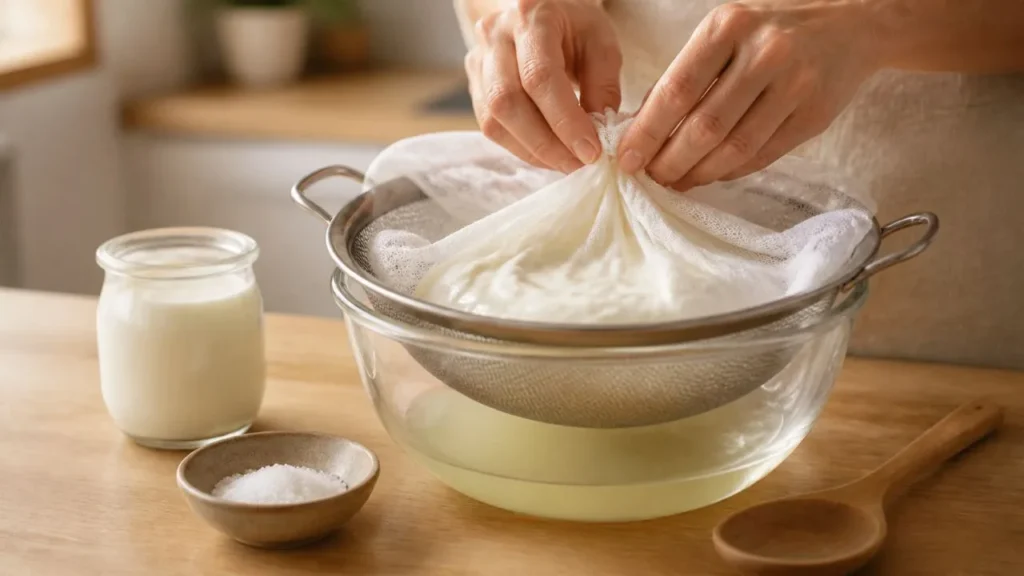
- Set a colander over a bowl and line it with cheesecloth, a thin clean tea towel or 2 layers of kitchen paper. Pour in the yoghurt.
- Fold the cloth over the top, cover and place in the fridge. Leave to strain for 24 hours: 12 hours for a creamy, spreadable labneh, 36 to 48 hours for a very firm labneh.
- Empty the whey that drips into the bowl from time to time (keep it, see the notes).
- Turn the labneh out into a shallow dish and spread it with the back of a spoon, making hollows.
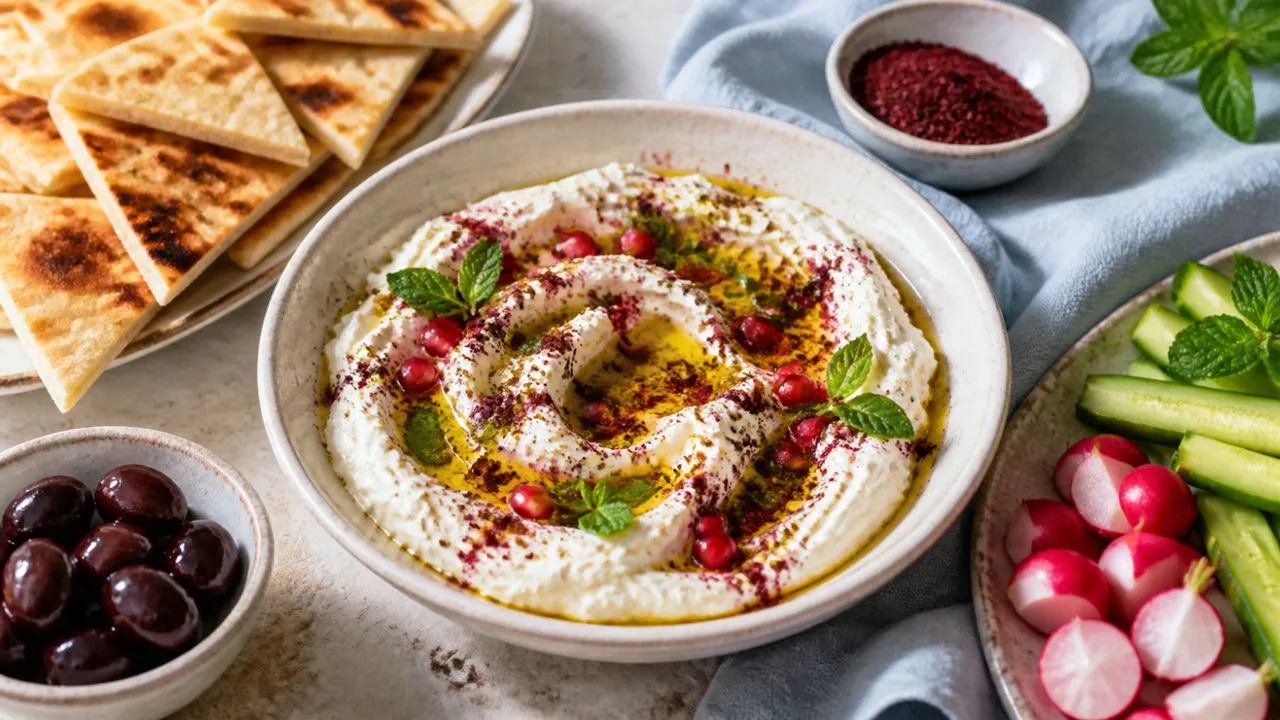
- Drizzle with olive oil, sprinkle with sumac and za’atar, scatter with shredded mint and serve well chilled with pitta bread.
Notes
Creamy, fresh and gently tangy, labneh with sumac is one of the stars of the Lebanese table. This soft cheese made from strained yoghurt needs just two ingredients and a little patience. Spread on a plate, drizzled with olive oil and sprinkled with red sumac, it becomes an irresistible dip for pitta bread or crunchy vegetables. Our sumac labneh takes 10 minutes to prepare: the fridge does the rest.
Labneh recipe with sumac, step by step
This labneh recipe comes down to three steps. You salt the yoghurt, leave it to strain for a day in a cloth in the fridge, then serve it with olive oil and spices. The result is a thick cream, halfway between yoghurt and soft cheese, with a light and very refreshing tang.
The salt is not just there for flavour: it helps the yoghurt release its whey and gives labneh its dense texture. Half a teaspoon per kilo is enough.
How to make homemade labneh the easy way
Homemade labneh needs no special equipment. A colander, a bowl and a clean cloth are all it takes. Cheesecloth (a fine cotton gauze) is ideal, but a thin tea towel rinsed well, with no smell of detergent, or two layers of kitchen paper work perfectly well.
Labneh with Greek yoghurt or sheep’s milk yoghurt: which to choose?
Labneh made with Greek yoghurt is the easiest to get right. Greek yoghurt is already partly strained: it gives a thick labneh faster and a better yield, about 650 g from 1 kg of yoghurt. Choose it plain and full-fat for a really creamy result.
Sheep’s milk yoghurt gives a milder, more fragrant labneh, close to the one eaten in Lebanon. It releases more whey: expect only 450 to 500 g of labneh per kilo. A classic plain cow’s milk yoghurt works too, with a yield of about half. Just avoid sweetened, flavoured or starch-thickened yoghurts, which don’t strain well.
How to make labneh: the straining time
To know how to make labneh just the way you like it, it all comes down to the straining time, always in the fridge:
- 12 hours: a soft, creamy labneh, perfect as a dip or spread.
- 24 hours: the classic texture, as thick as cream cheese. This is the one in our recipe.
- 36 to 48 hours: a firm labneh that can be shaped into balls.
Remember to empty the bowl from time to time: the yoghurt should never sit in its whey. And above all, don’t throw it away! This pale yellow liquid, rich in protein and live cultures, can replace water or milk in bread dough, pancakes or a smoothie.
Serving it: labneh, olive oil and sumac
The trio of labneh, olive oil and sumac is a classic. Spread the labneh in a shallow dish, then make little grooves with the back of a spoon. Pour in a generous drizzle of extra virgin olive oil, which settles into them, and sprinkle with sumac. A few fresh mint leaves or a handful of pomegranate seeds add freshness and colour.
Choose a good-quality fruity olive oil: here it is an ingredient in its own right, not just a dressing.
Sumac: the spice and how to use it
Sumac is a deep red spice made from dried, ground berries. Its flavour is tangy and lemony, without the heat of chilli. When it comes to how to use this spice, it works best as a finishing touch, sprinkled at the last moment, since cooking softens its tang. In Lebanon it goes on salads such as fattoush with sumac, on onions, grilled meats, eggs and of course on labneh, whose natural tang it highlights.
Sumac and za’atar: the perfect pair to lift labneh
Labneh with za’atar is the other great classic. Za’atar is a blend of dried herbs (thyme, wild oregano), toasted sesame seeds and sumac. Sprinkled with a little extra sumac, it brings an herby, toasty note that perfectly complements the tang of the labneh. For breakfast, the Lebanese eat it just like this, with olives, tomatoes, cucumber and warm bread.
Labneh, the star of the Lebanese mezze
Lebanese labneh (also spelled labne or labaneh) is eaten all over the Levant, from Lebanon to Syria, Jordan and Palestine. Straining yoghurt was originally a way to make it keep longer. Once well strained, it is even rolled into small balls and stored in a jar of olive oil: this is labneh mkabbaleh, which keeps for about two weeks in the fridge.
Labneh: what to serve it with?
What to serve labneh with? Here are our favourite ideas:
- With pitta bread, warm or toasted, cut into triangles for dipping.
- With raw vegetables: cucumber and carrot sticks, radishes, cherry tomatoes, as a labneh and sumac dip for drinks.
- With falafel, such as our oven-baked chickpea falafel, instead of a yoghurt sauce.
- With grilled meats, skewers or our sumac chicken (musakhan).
- For breakfast, on toast with a drizzle of honey and a few walnuts.
An easy Lebanese mezze at home
For an easy Lebanese mezze, labneh is the ideal choice: it is made the day before and needs no cooking. Surround it with a few small dishes to share: a fattoush, falafel, olives, raw vegetables and another spread, such as our split pea and cumin spread. Add warm pitta bread and your table is ready.
A fresh spread for drinks
Summer or winter, labneh makes a fresh spread for drinks, more original than a cream cheese dip. It changes with the seasons: with chopped fresh herbs (mint, parsley, dill) and garlic in summer, with walnuts and a drizzle of honey in autumn, with pomegranate seeds for the holidays. Serve it well chilled, straight from the fridge.
The benefits of labneh
When it comes to benefits, labneh has a lot going for it. As it loses its whey, the yoghurt becomes more concentrated: labneh contains about twice as much protein as plain yoghurt, around 8 to 10 g per 100 g depending on the yoghurt used. It also loses part of its lactose, which drains away with the whey, so it is often easier to digest. Made with a live yoghurt, it remains a fermented dairy product that carries the yoghurt’s cultures.
It is, however, richer in fat than yoghurt, since the fat is concentrated too. For a lighter version, use 2% Greek yoghurt: the labneh will be a little less creamy, but still delicious.
Frequently asked questions
Can labneh be strained at room temperature?
It is better to strain it in the fridge. In Lebanon it is sometimes done in a cool room, but the cold limits the growth of unwanted bacteria and keeps the labneh fresh-tasting, without too much sourness.
My labneh is too firm, what can I do?
Add a spoonful or two of yoghurt or whey and stir: it will soften again.
Can I make plant-based labneh?
Yes, with plain unsweetened soy yoghurt, strained the same way. The result is more neutral in flavour: be a little more generous with the sumac, lemon and herbs.