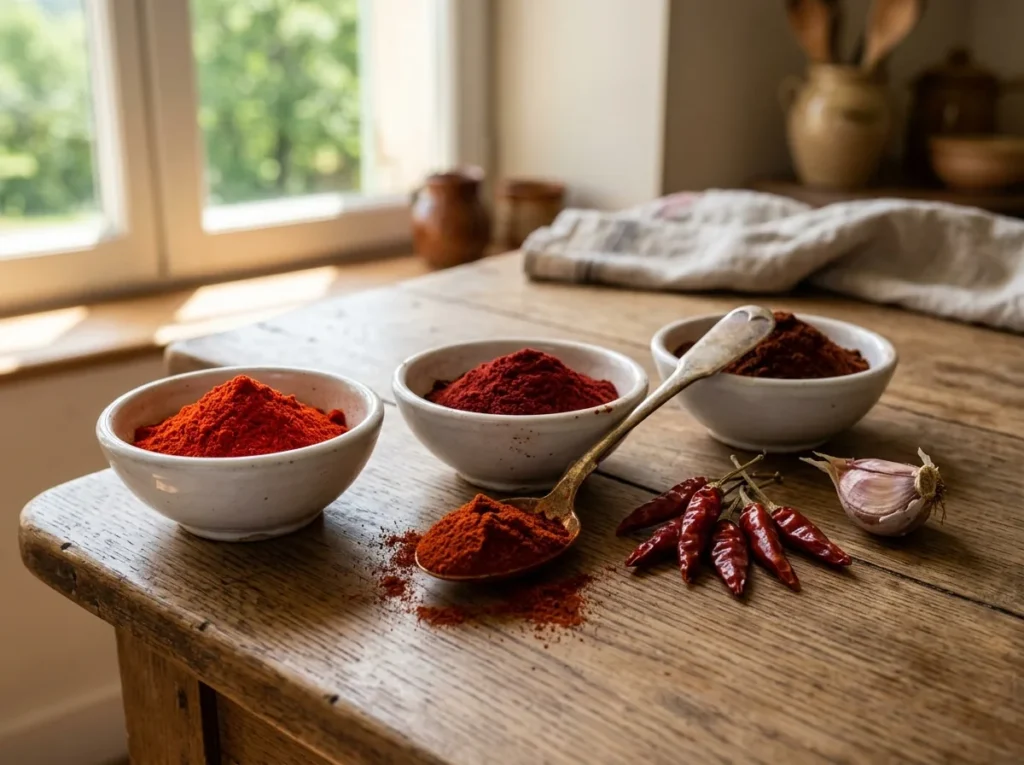
With its bright red color, paprika is probably the quickest way to make a plate look good. We sprinkle it over deviled eggs, hummus or potatoes, and it is the soul of Hungarian goulash as well as Spanish patatas bravas. But that one simple word covers some very different powders: sweet, hot, smoked, Hungarian or Spanish. In this guide, we look at the health benefits of paprika, explain how to choose between sweet, hot and smoked paprika and how it differs from Espelette pepper and cayenne, then head into the kitchen with our tips and recipe ideas.
What exactly is paprika?
Paprika is a powder made by drying and then grinding the red fruits of certain varieties of chili pepper (Capsicum annuum), the same species as the bell pepper. These plants belong to the nightshade family (Solanaceae), like tomatoes and potatoes. Depending on the varieties chosen and how they are prepared, you get a sweet, hot or smoked powder.
Chili peppers come from the Americas. They reached Spain after the voyages of Christopher Columbus, at the end of the 15th century, then spread across Europe. Over the centuries they became a true national spice in Hungary, so much so that the word “paprika” itself comes from Hungarian. Today, Spain and Hungary are still the two great names in European paprika.
Its color comes from natural pigments in the carotenoid family, mainly capsanthin. Any heat it has comes from capsaicin, found in very different amounts depending on the peppers used: almost none in sweet paprika, much more in hot paprika.
Sweet, hot or smoked paprika: what’s the difference?
Paprika is classified by two criteria: its heat (sweet or hot) and its drying method (in the sun, with hot air or over smoke). The table below compares the main types of paprika with two chili powders that are often confused with them.
| Powder | Origin and production | Heat | Best for |
|---|---|---|---|
| Sweet paprika | Mild peppers dried and ground, without smoke | None to very mild | Color and mildness: eggs, sauces, vegetables |
| Hot paprika | Blend that includes hotter peppers | Medium | Goulash, marinades, spicy dishes |
| Smoked paprika (pimentón de la Vera) | Peppers dried over oak wood smoke, in Spain | Sweet, bittersweet or hot | Patatas bravas, chorizo, grilled vegetables |
| Hungarian paprika | Szeged and Kalocsa, dried without smoke, several grades | From very mild to hot | Goulash, chicken paprikash |
| Espelette pepper | Basque Country, a single local variety, PDO | Mild, fruity | Basque cooking, fish, eggs |
| Cayenne pepper | Small, very hot chilies, ground | Very hot | A pinch for a kick, chili |
Smoked vs sweet paprika
Sweet paprika mainly brings color and a gently sweet, bell pepper flavor. Smoked paprika has a bold wood-fire taste that brings to mind barbecue or chorizo. They aren’t really interchangeable: a pinch of smoked paprika is enough to transform a lentil soup or roasted chickpeas, while sweet paprika stays in the background. If a recipe simply says “paprika”, it usually means sweet paprika.
Hot or spicy paprika: how to tell them apart?
On labels, “hot”, “spicy”, picante (in Spanish) or erős (in Hungarian) all mean the same thing: paprika with a bite. It is still much milder than cayenne pepper. If you’re wary of heat, start with sweet paprika and add a touch of hot paprika to adjust.
Pimentón de la Vera, Spanish smoked paprika
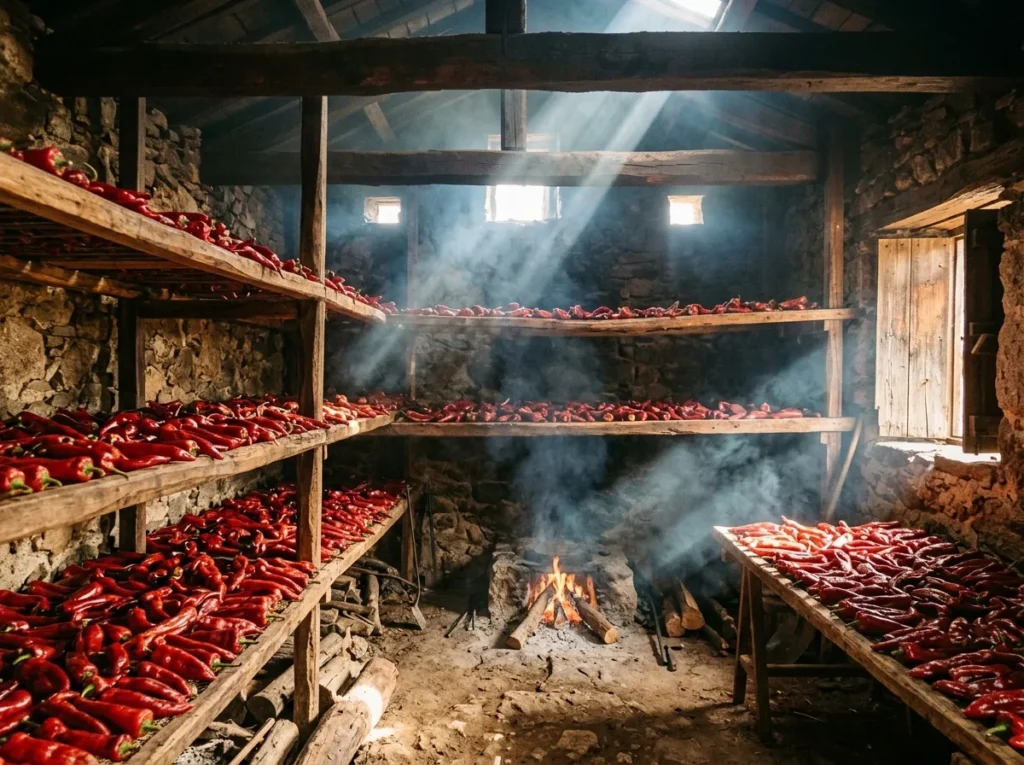
Pimentón de la Vera comes from the La Vera district in Extremadura, in western Spain. In the European Union it is protected by a Protected Designation of Origin (PDO). Its secret: the peppers are dried slowly, for around ten days, over oak wood fires, then finely ground on stone mills. This drying gives it its distinctive smoky taste and deep red color.
It comes in three versions: dulce (sweet), agridulce (bittersweet, mildly hot) and picante (hot). You’ll often spot it by its small metal tin. In Spanish cooking it is essential for chorizo, Galician-style octopus and patatas bravas.
Hungarian paprika
In Hungary, paprika is a national affair. The two most famous regions are Szeged and Kalocsa, in the south of the country, and the ground paprika from each holds a European Protected Designation of Origin. Unlike pimentón de la Vera, Hungarian paprika isn’t smoked: it is air-dried, which keeps its fruity, sweet taste of ripe bell pepper.
Hungarians distinguish several grades, from the mildest to the hottest. The most common are különleges (“special”), very mild and bright red, édesnemes (“noble sweet”), the one used most every day, and erős (“hot”). It’s what gives goulash and paprikás csirke, chicken paprikash, their color and flavor.
A fun fact: it was from Szeged peppers that the Hungarian scientist Albert Szent-Györgyi managed to extract large amounts of vitamin C in the 1930s, work that earned him the Nobel Prize in Medicine in 1937. A word of caution, though: it’s the fresh pepper that is very rich in vitamin C. Drying destroys most of it.
Paprika vs Espelette pepper: what’s the difference?
Espelette pepper is also a Capsicum annuum, but a single local variety grown in about twenty villages in the French Basque Country. It is protected by a PDO. The peppers are dried and then ground, giving an orange-red powder with a fruity aroma, slightly hotter than sweet paprika but never fiery.
You can think of it as paprika’s Basque cousin. In practice, Espelette pepper is used at the end of cooking or at the table, like black pepper, for its aroma. Paprika is used in larger amounts, for the color and flavor of a slow-cooked dish. If you don’t have any Espelette pepper, a mix of sweet paprika and a tiny pinch of cayenne makes a decent stand-in.
Paprika vs cayenne pepper
Both powders are red, but their strength is worlds apart. The heat of chili peppers is measured on the Scoville scale: sweet paprika sits right at the bottom, often under 500 units, while cayenne pepper commonly reaches 30,000 to 50,000 units, dozens of times more. Use a spoonful of cayenne instead of a spoonful of paprika, and for many people the dish becomes inedible! So cayenne is used by the pinch, to add a kick, while paprika goes in by the spoonful, for color and flavor.
Paprika health benefits
Paprika is first and foremost a spice: we eat a few grams a day at most. Still, it is interesting from a nutritional point of view. Keep in mind that in Europe, no health claim is authorized for paprika. Here’s what we know.
Paprika: vitamins and antioxidants
- Vitamin A: paprika is rich in beta-carotene, which the body converts into vitamin A. One teaspoon (about 2 g) covers roughly 5% of an adult’s daily needs.
- Vitamin E: it also contains a notable amount for a spice.
- Antioxidant carotenoids: capsanthin, zeaxanthin and lutein give it its color. They have antioxidant properties, studied mainly in the lab. Lutein and zeaxanthin also play a role in eye health, although the amount in a pinch of paprika is modest.
- Vitamin C: contrary to popular belief, paprika powder contains little, because drying destroys it. For vitamin C, you’re better off munching on a raw red bell pepper.
These pigments are fat-soluble: they dissolve in fat. A drizzle of olive oil therefore helps the body absorb them, and at the same time brings out paprika’s color and flavor.
Paprika for weight loss: fact or myth?
You often read that paprika helps you lose weight thanks to capsaicin, the molecule behind the heat. Studies show that capsaicin can very slightly increase energy expenditure and the feeling of fullness, but the effect is small, in the range of a few dozen calories a day. Above all, sweet paprika contains almost none. So paprika won’t make you lose weight on its own.
Its value lies elsewhere: it adds lots of flavor and color for almost no calories. It makes roasted vegetables, legumes or poultry appetizing without a rich sauce, and helps you cut back on salt. To check where you stand with your weight, you can use our BMI calculator.
Paprika: side effects and precautions
In cooking amounts, paprika suits almost everyone. There are a few precautions, though:
- Sensitive stomach: hot paprika can make heartburn, reflux or an ulcer worse. Choose sweet paprika instead.
- Allergy: although rare, an allergy to chili and bell peppers does exist. People affected should avoid all forms of paprika.
- Hemorrhoids and irritable bowel: the hot versions can increase discomfort in some people.
- Quality: like other spices, paprika can be contaminated by molds that produce toxins. The European Union sets strict limits and checks imports. Buy it from reliable sources and store it somewhere dry.
Paprika during pregnancy
During pregnancy, paprika used in cooking is not a problem, and sweet paprika can even help add flavor while using less salt. The only caveat concerns hot paprika and very spicy dishes: they can make heartburn worse, which is common in late pregnancy. Listen to your digestive comfort. Capsaicin supplements, on the other hand, are not recommended during pregnancy without medical advice.
How to use paprika in cooking
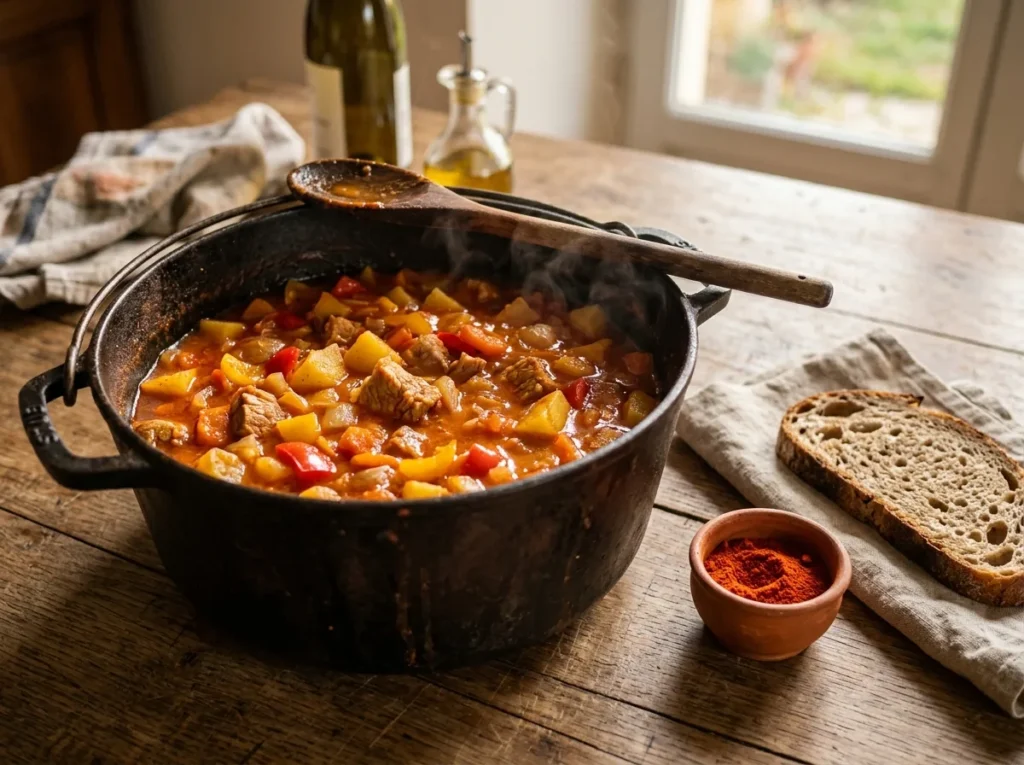
Paprika is easy to use, as long as you know one trap: it burns very quickly. Over high heat, the sugary powder caramelizes in seconds and turns brown and bitter. Here are our tips:
- In a stew, sauté the onions first, then take the pan off the heat for about ten seconds, stir the paprika into the fat and add the liquid right away. That’s the Hungarian goulash technique.
- As a finish, sprinkle it over hummus, eggs, soup or yogurt, with a drizzle of olive oil.
- In a marinade, mix it with oil, garlic and lemon for vegetables, tofu, chicken or fish.
- In the oven, it gives a wonderful color to roasted potatoes, cauliflower or chickpeas.
- How much to use: allow about 1 teaspoon of sweet paprika per person in a stew, and barely a pinch of hot or smoked paprika, adjusting to taste.
Paprika recipes: our ideas
Paprika travels from Central Europe to Spain by way of North Africa. Here are a few ideas to make the most of it:
- Hungarian goulash: a beef and onion stew, very generous with sweet paprika.
- Chicken paprikash (paprikás csirke): chicken simmered in a paprika and sour cream sauce.
- Patatas bravas: roasted potatoes with a tomato sauce flavored with smoked pimentón.
- Roasted chickpeas: baked with olive oil, smoked paprika and a pinch of salt, for snacking.
- Legumes: a pinch of smoked paprika in a lentil soup, or on our baked chickpea falafel.
- Deviled eggs: a dusting of sweet paprika on top, for color.
- Shakshuka: eggs poached in a tomato and bell pepper sauce with cumin and paprika.
Paprika and turmeric: a colorful duo
Paprika and turmeric have a lot in common: both are coloring spices, mild with little heat, and their pigments are released in fat. Together they give a very appetizing orange hue to roasted vegetables, soups and tofu or poultry marinades, and you’ll find them side by side in many curry and tagine blends. Try, for example, adding a teaspoon of sweet paprika to our chickpea, spinach and turmeric pan-fry. And to learn all about turmeric, discover its health benefits.
How to store paprika
Paprika is one of the most delicate spices: its color and aroma fade quickly with light, heat and air. To keep it for a long time:
- Store it in a tightly closed jar or tin, ideally opaque, away from light.
- Keep it away from the stovetop and oven. In very warm kitchens, some people even keep it in the fridge, in a well-sealed jar to keep out moisture.
- Once opened, it is best within 6 months to 1 year.
- Trust its color: good paprika is bright red. If it turns brownish and has almost no smell, it will no longer add color or flavor. It isn’t dangerous, but it’s time to replace it.
Paprika, cumin, pepper: everyday spices
Along with a few other spices, paprika is at the heart of a well-stocked spice rack. In a shakshuka or a chili, it’s never far from cumin; in a marinade, it pairs with black pepper, ginger or a hint of cinnamon for a tagine. To learn all about these spices, explore our guides to cumin, black pepper, ginger and cinnamon.
Read next: our complete guide to saffron, the red gold of spices and paprika’s partner in a good paella. And to flavour tea, coffee and buns, discover cardamom, the queen of spices. And for mulled wine, slow-cooked stews and Christmas pomanders, discover cloves. Not forgetting nutmeg, the secret of a good béchamel and mashed potatoes. And for gentle heat, discover Espelette pepper, the pride of the Basque Country. Finally, for a gentle lemony note, try coriander seeds, perfect in vegetables à la grecque.
Paprika FAQ
Is paprika good for you?
Yes, in cooking, paprika is part of a healthy diet: it is rich in carotenoids, provides a little vitamin A and E, and lets you add flavor while using less salt. Its specific health effects have been little studied in humans.
Is paprika spicy?
Sweet paprika has little or no heat. Only hot paprika and some picante pimentóns are spicy, and they are still much milder than cayenne pepper.
What can I use instead of smoked paprika?
Mix sweet paprika with a tiny pinch of chipotle chili, which is smoked too, if you have some. Otherwise, sweet paprika on its own works, just without the smoky note.
Why has my paprika turned brown?
It has aged or been exposed to light and heat. Its pigments have broken down. It isn’t dangerous, but it has lost its color and aroma.
This article is for general information only and does not replace the advice of a doctor, midwife or pharmacist.