Chickpea, spinach and turmeric pan-fry
Ingredients
Method
- Rinse the chickpeas and dry them thoroughly in a clean tea towel. Slice the onion and chop the garlic.
- Heat 2 tablespoons of olive oil in a large frying pan over a medium-high heat. Add the chickpeas and brown them for 6 to 8 minutes, stirring from time to time. Set them aside on a plate.
- Pour the rest of the oil into the same pan and fry the onion for 3 minutes, until soft.
- Add the garlic, turmeric, cumin, paprika and pepper. Stir for 30 seconds to 1 minute, without letting the spices burn.
- Return the chickpeas to the pan, then add the spinach a handful at a time. Stir for 1 to 2 minutes, until just wilted.
- Season with salt, drizzle with lemon juice and serve straight away, with rice, toast or a spoonful of yoghurt.
Notes
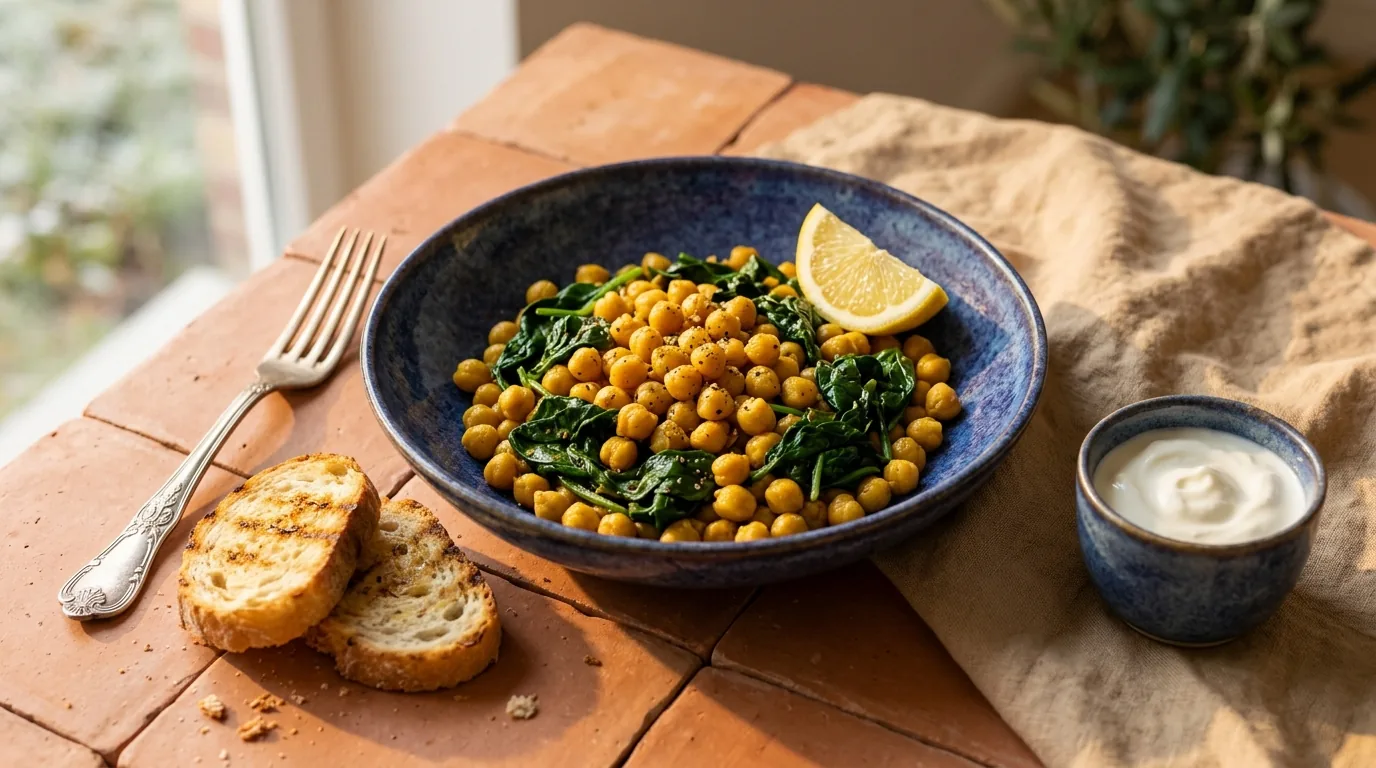
Here is a complete, plant-based dish ready in 25 minutes that has everything it takes to become a midweek dinner classic: a chickpea, spinach and turmeric pan-fry. Chickpeas are browned in olive oil with garlic, cumin and turmeric, then baby spinach wilts down in two minutes, and a squeeze of lemon finishes it all off. The result is golden, fragrant and filling, and it only needs one frying pan.
A dish that travels from India to Andalusia
Chickpeas and spinach are paired in several of the world’s cuisines. In India and Pakistan, chana saag combines chickpeas (chana) and leafy greens (saag) in a spiced sauce in which turmeric and cumin play a leading role. At the other end of the Mediterranean, in Seville, espinacas con garbanzos is an iconic tapa: chickpeas and spinach seasoned with cumin and paprika, bound with fried bread and garlic pounded together, a recipe often linked to the heritage of Moorish Andalusia.
Our version borrows a little from both: the golden spices of India, and the olive oil, garlic and paprika of Spain. It is an everyday recipe, simple and without a sauce, that keeps the crispness of the chickpeas and the freshness of the spinach.
The chickpea, an everyday pulse
The chickpea is one of the oldest cultivated plants. It was domesticated around 10,000 years ago in the Near East, in the region known as the Fertile Crescent, then spread all around the Mediterranean and as far as India, which is now the world’s largest producer.
Like all pulses, it is rich in plant protein and fibre, which makes it very filling. Paired with a grain (rice, bread, bulgur wheat), it makes a balanced, meat-free meal.
In this recipe, we use cooked chickpeas, from a tin or a jar, to save time. Remember to keep the liquid from the tin: this is aquafaba, which whisks up like egg whites and is used to make our aquafaba chocolate mousse. And if you prefer your chickpeas fresh and crunchy, try our chickpea, feta and cucumber salad, ideal in summer. For nibbles or stuffed into a pitta, try our herby chickpea croquettes.
Nicely browned chickpeas
The secret of this pan-fry is slightly crispy chickpeas. Rinse them, then dry them thoroughly in a clean tea towel: water stops them from browning. Then fry them over a medium-high heat for 6 to 8 minutes, stirring from time to time, until their skins colour and crack slightly.
Spinach, fresh and tender
Here we use baby spinach, sold in bags or loose, which doesn’t need its stalks removing. It wilts in one to two minutes in the hot pan. Don’t be surprised by the volume: 300 g of raw spinach fills a large bowl, but cooks down to almost nothing.
Contrary to popular belief, spinach is not an exceptionally rich source of iron, and the iron it contains is poorly absorbed by the body, partly because of the oxalic acid it contains. It is still worthwhile for its vitamin K, vitamin B9 (folate) and fibre. The squeeze of lemon juice added at the end isn’t only there for flavour: its vitamin C helps the body absorb plant-based iron better, from both the spinach and the chickpeas.
You can also use frozen whole-leaf spinach: defrost it and squeeze it firmly in your hands to remove the water before adding it.
Turmeric and pepper, the essential duo
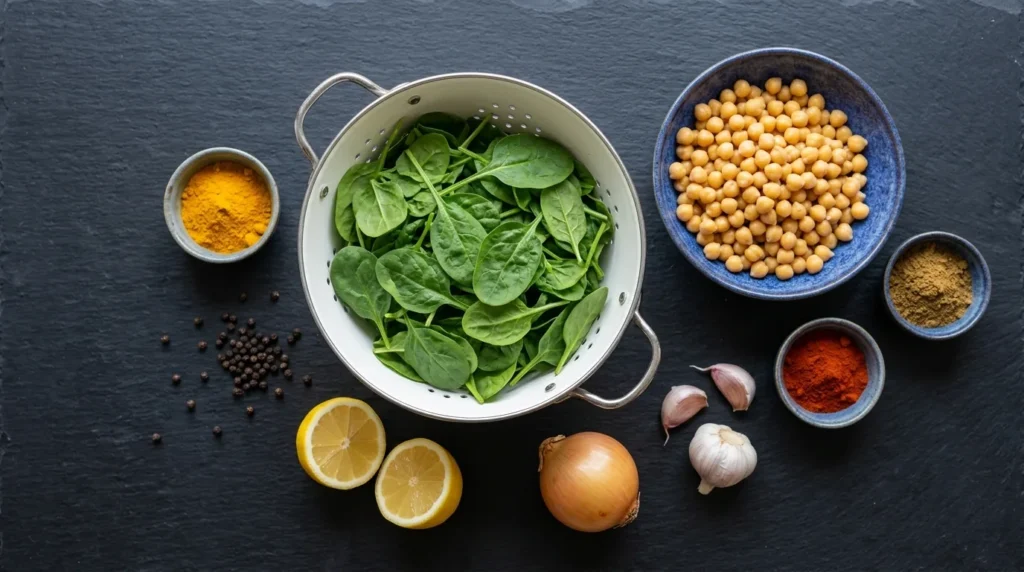
Turmeric gives this chickpea and spinach pan-fry its lovely golden colour and a warm, slightly bitter, earthy flavour. But to make the most of curcumin, its main active compound, two things matter.
Some fat
Curcumin dissolves in fat, not in water. Frying turmeric in olive oil, as in this recipe, helps release it and makes it easier for the body to absorb.
A pinch of black pepper
Black pepper contains piperine, a molecule that slows down the elimination of curcumin by the liver and gut. A frequently cited study showed that curcumin combined with piperine was much better absorbed than turmeric taken on its own. That is why turmeric and pepper almost always go together in our recipes. To understand all this in detail, read our article on the health benefits of turmeric, and to choose the right spice, our guide to fresh turmeric, powder or capsules.
Add the turmeric at the same time as the garlic and cumin, and fry it for just 30 seconds to 1 minute: if it burns, it turns bitter.
Getting the spices right
One teaspoon of turmeric for four people is enough: any more and its bitterness takes over. Cumin brings warmth, and smoked paprika a slightly toasted note reminiscent of the Andalusian version. If you don’t have smoked paprika, sweet paprika will do. And for a spicier dish, add a pinch of Espelette pepper (a mild Basque chilli) or chilli flakes at the same time as the other spices.
What to serve with this pan-fry
- Basmati rice or bulgur wheat, for a complete vegetarian meal.
- Warm flatbread or slices of toasted country bread, like Seville tapas.
- A soft-boiled or poached egg on top.
- A spoonful of Greek yoghurt or skyr, for freshness.
- Crumbled ewe’s milk cheese or feta, for a salty touch.
It can also be served alongside white fish or grilled chicken. And for an all-golden menu, start with our red kuri squash and chestnut soup and finish with a golden milk.
Variations
Creamy coconut milk version
Add 150 ml of coconut milk before the spinach and leave to simmer for 5 minutes. You will get a dish closer to a curry, to serve with rice. If you like this kind of dish, try our red lentil dhal with coconut milk too.
With tomatoes
Add two diced tomatoes or 200 g of chopped tomatoes after the spices, and let them cook down for 5 minutes before adding the spinach.
With other leafy greens
Swap the spinach for shredded kale, chard or even radish or beetroot leaves. Tougher leaves need a few extra minutes of cooking.
Storage
The pan-fry keeps for 2 to 3 days in the fridge in an airtight container. Reheat it in a frying pan with a drizzle of oil to bring back a little crispness to the chickpeas. It can also be eaten cold, as a salad, with an extra squeeze of lemon: perfect for a packed lunch.
Frequently asked questions
Can I use dried chickpeas?
Yes. Soak 200 g of dried chickpeas for 12 hours, then cook them for about 1 to 1½ hours in unsalted water, until tender. You will get about 480 g of cooked chickpeas.
Is this recipe vegan?
Yes, as it stands, it contains no animal products. It is also naturally gluten-free if you serve it with rice rather than bread.
Does turmeric stain?
Yes, a lot. Use a wooden spoon that you keep for spices, and quickly rinse pale worktops. On your hands, a little lemon juice helps remove the colour.