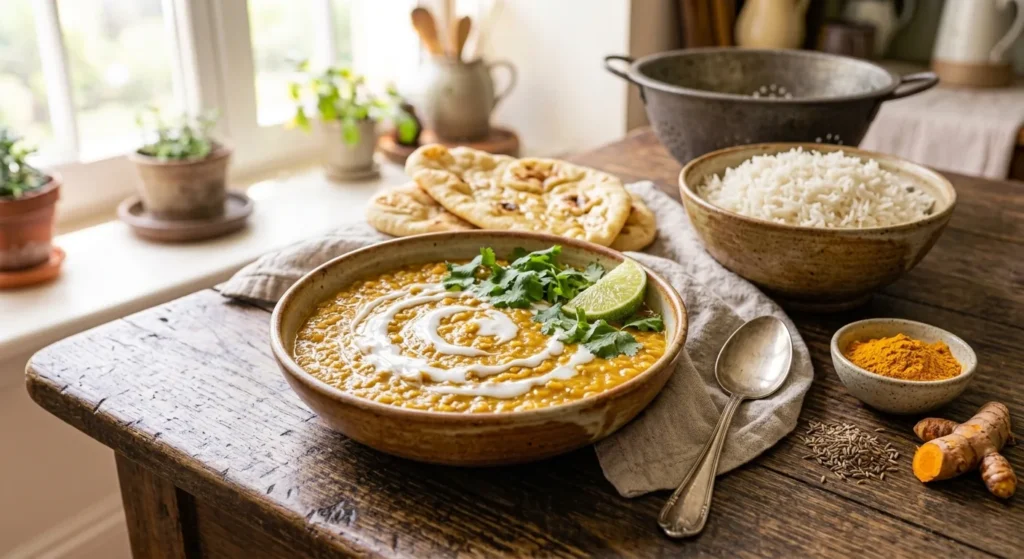
Vegetable curry with coconut milk
Ingredients
Method
- Peel the sweet potato and carrots. Cut the sweet potato into 2 cm cubes, the carrots into rounds, the cauliflower into small florets, the courgette into half-moons and the pepper into strips.
- Finely slice the onion, chop the garlic and grate the ginger.
- In a large casserole dish, heat the oil and sizzle the cumin seeds for 30 seconds. Add the onion and fry for 5 minutes over a medium heat.
- Add the garlic, ginger and curry powder and fry for 1 minute, stirring, until the spices smell fragrant without burning.
- Add the sweet potato, carrots and cauliflower and stir well to coat them in the spices. Pour in the tomatoes, coconut milk and water, season with salt and bring to a simmer.
- Cover and simmer over a low heat for 15 minutes. Add the courgette, pepper and peas and cook for a further 10 minutes, until the vegetables are tender.
- Off the heat, stir in the spinach, which will wilt in 1 minute, then the lime juice. Adjust the salt and season with black pepper.
- Serve sprinkled with fresh coriander, with basmati rice or naan bread.
Notes
Colourful, mild and comforting, vegetable curry with coconut milk is the perfect dish for eating plenty of vegetables without even noticing. Sweet potato, cauliflower, carrots, courgette and spinach simmer in a smooth coconut milk sauce, fragrant with curry powder and ginger. It’s a vegetarian, budget-friendly and easy dish that grown-ups and children alike will enjoy. Here is our recipe, which vegetables to choose depending on the season and all our tips for a successful curry.
Vegetable curry, a simple and complete dish
In India, vegetable curries are made every day with whatever the market has to offer: potatoes, cauliflower, aubergines, spinach, peas or okra. Every family has its own recipe and its own spices. Our version, with coconut milk, is inspired by the cooking of southern India and South-East Asia, where coconut softens the spices and makes a creamy sauce.
Served with basmati rice, this curry makes a complete and filling meal. The vegetables provide fibre, vitamins and minerals, the coconut milk adds creaminess, and the spices bring plenty of flavour, which means you can use less salt. To find out all about this spice blend, what goes into it and its variations, read our guide to curry.
Which vegetables to put in a curry?
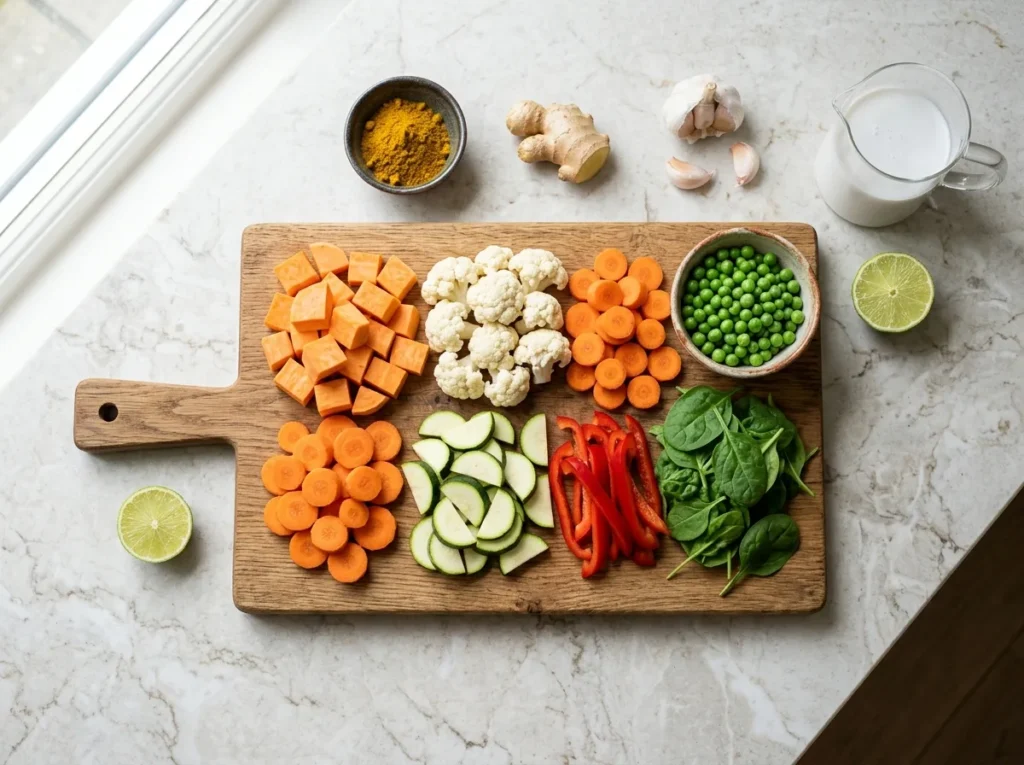
Almost any vegetable works in a curry. The rule is simple: add the firm vegetables, which need longer cooking, first, then the tender vegetables towards the end of cooking, so they stay soft without falling apart.
- Firm vegetables, at the start: sweet potato, potato, carrot, cauliflower, pumpkin, butternut squash, parsnip.
- Tender vegetables, halfway through: courgette, pepper, aubergine, green beans, peas, broccoli.
- Leaves, at the end: spinach, chard, kale. They wilt in a minute off the heat.
Follow the seasons: in summer, go for courgette, aubergine, pepper and fresh tomato; in autumn and winter, pumpkin, butternut squash, cauliflower and spinach. It’s also an excellent recipe for using up the vegetables in the fridge.
The secret: frying the spices properly
The difference between a bland curry and a fragrant one comes down to the first few minutes. Spices release their aromas in hot fat. So start by sizzling the cumin seeds in the oil, then fry the onion, and add the curry powder with the garlic and fresh ginger for one minute, stirring. The powder loses its raw taste and the whole kitchen smells wonderful.
Be careful not to burn the spices, or they will turn bitter. If the pot starts to stick, add a spoonful of water. Curry powder contains turmeric, which gives the sauce its lovely golden colour. Cooked in fat with a pinch of black pepper, it is better absorbed by the body, as we explain in our article on the health benefits of turmeric.
A mild curry for the whole family, or a spicier one
Our recipe is deliberately mild, so that children will enjoy it too. With mild curry powder, the dish isn’t spicy at all and the coconut milk gives it a slightly sweet note. For a spicier version, choose a hot curry powder or a madras curry powder, or add a finely sliced green chilli with the garlic. You can also put chilli on the table separately, so everyone can adjust it to their taste.
What to serve with vegetable curry?
The great classic is basmati rice, which soaks up the sauce perfectly. Allow about 60 to 75 g of uncooked rice per person. Naan, the soft Indian flatbreads, are also delicious for mopping up the sauce. For a change, try quinoa, bulgur wheat or even plain wheat tortillas.
A spoonful of plain yoghurt or plant-based yoghurt, a few toasted cashew nuts and plenty of fresh coriander add a touch of freshness and crunch.
Variations
Vegetable and chickpea curry
Add 250 g of cooked, drained chickpeas at the same time as the courgette. The dish will be higher in protein and even more filling. And if you like chickpeas, try our pan-fried chickpeas with spinach and turmeric too.
Vegetable curry without coconut milk
Replace the coconut milk with 500 ml of vegetable stock and, off the heat, stir in four tablespoons of plain yoghurt or oat cream. The sauce will be lighter and tangier.
With lentils
Add 100 g of rinsed red lentils with the firm vegetables, plus an extra 200 ml of water. They will thicken the sauce. For a dish made entirely with lentils, try our red lentil dhal with coconut milk.
Storage
Vegetable curry keeps for 3 days in the fridge in an airtight container, and it is often even better the next day, once the spices have had time to flavour the sauce. It freezes very well for 3 months, ideally without the spinach, which you can add when reheating. Reheat it gently with a little water.
Frequently asked questions
Is vegetable curry vegan?
Yes, our recipe is entirely plant-based and naturally gluten-free. Just check the labels on your curry powder and stock, which may contain wheat or celery.
Can I use frozen vegetables?
Yes, it’s very handy. Add them straight from frozen, without thawing, and cook for a few extra minutes.
My curry is too runny, what can I do?
Let it simmer uncovered for a few minutes, or mash a few pieces of sweet potato into the sauce: it will thicken naturally.