Small, hard, mustard-coloured seeds that smell of maple syrup and curry, and taste bitter when you bite into them raw: fenugreek is unlike any other spice. Used since ancient times in Egypt, India and around the Mediterranean, it is now back in the spotlight, both in the kitchen and on the wellness shelves. In this guide, we look at the health benefits of fenugreek and at what science really says about them, particularly for blood sugar, weight gain, hair and breastfeeding. We then explain how to use its seeds, powder and leaves in cooking, before finishing with the precautions you should know about.
What exactly is fenugreek?
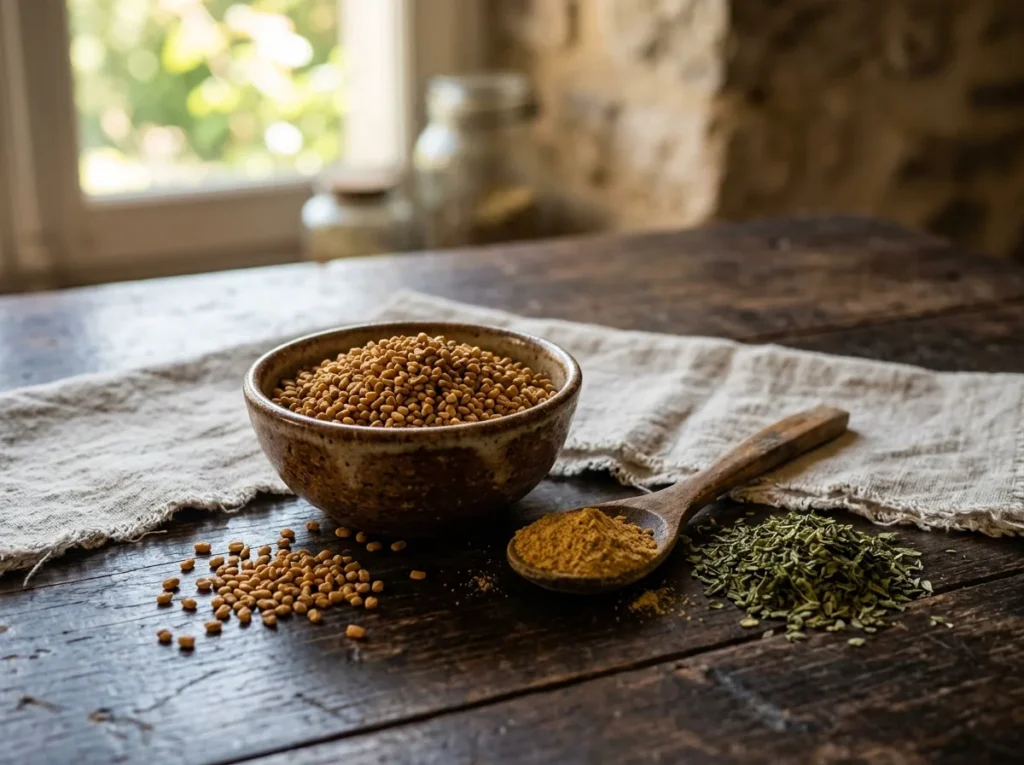
Fenugreek (Trigonella foenum-graecum) is an annual plant in the Fabaceae family, like lentils, chickpeas and peanuts. Its name comes from the Latin foenum graecum, “Greek hay”: the Romans used it as fodder for livestock. Its thin, pointed pods contain around ten small, angular, hard, yellowish-brown seeds, and these are what we use as a spice. Its leaves, fresh or dried, are edible too.
Native to the Near East and the Mediterranean basin, fenugreek has been grown for thousands of years: it has been found at archaeological sites in ancient Egypt. Today India is by far the world’s largest producer, especially the state of Rajasthan. It is also known as methi in India and as helba in North Africa and the Middle East.
What does fenugreek taste like?
Bitten into raw, a fenugreek seed is very bitter and slightly floury. But once heated, toasted or cooked in a dish, fenugreek changes completely: it develops notes of maple syrup, burnt caramel, celery and curry. In fact, it is responsible for much of the “curry” aroma of shop-bought curry powders.
This sweet smell comes mainly from a compound called sotolon, which is present in large amounts in the seeds. Sotolon is so potent that it can sometimes be detected in sweat and urine after eating a lot of fenugreek. It is also used as a flavouring to imitate maple syrup.
The health benefits of fenugreek
Fenugreek seeds are rich in soluble fibre, mainly a mucilage called galactomannan, which swells on contact with water. They also provide protein, iron, magnesium and plant compounds studied for their possible effects: saponins (including diosgenin), trigonelline and a rare amino acid, 4-hydroxyisoleucine.
In traditional medicine, both Indian and Arabic, fenugreek has long been used for digestion, appetite, milk supply and vitality. Modern studies focus mainly on its effect on blood sugar and cholesterol. The results are encouraging on some points, but the trials are often small and of uneven quality. Remember that in Europe, no health claim is authorised for fenugreek: it must not be presented as a medicine.
Fenugreek and blood sugar
This is the most studied effect. Fenugreek fibre slows down the digestion of sugars, and 4-hydroxyisoleucine may improve the response to insulin. Several meta-analyses, which pool the available clinical trials, report a modest drop in fasting blood sugar and sometimes in HbA1c in people with type 2 diabetes or prediabetes. These studies generally used large doses, from 5 to 25 g of powdered seeds a day, far beyond culinary use.
Fenugreek is in no way a substitute for treatment. On the contrary, in someone already taking diabetes medication, high doses can make blood sugar drop too low. If you have diabetes and are thinking of taking fenugreek regularly, talk to your doctor first.
Fenugreek for weight gain
In North Africa and the Middle East, fenugreek has a reputation for “putting on weight”: it used to be given to thin or convalescent people, and it is still an ingredient in traditional preparations meant to add curves. This reputation comes mainly from its effect on appetite: its bitter, aromatic taste is said to stimulate the desire to eat, like a natural aperitif.
On the science side, there is no solid evidence that fenugreek on its own makes you gain weight or muscle. Some studies even suggest the opposite: its fibre, which swells in the stomach, may increase the feeling of fullness. If you are trying to gain weight, the most effective approach is still a richer diet and more frequent meals, ideally with the help of a dietitian. Fenugreek can then flavour those meals, nothing more.
Fenugreek and breastfeeding
Fenugreek is one of the most widely used plants in the world to stimulate milk production: it is said to be a galactagogue. It is found in many breastfeeding teas. Yet studies are few and small, and their results contradictory: some report a slight increase in milk supply, others no effect at all.
You should also know about its possible effects on mother and baby: a maple syrup smell in sweat, urine and sometimes the baby itself, digestive upset, and a risk of lower blood sugar. The safest way to increase milk supply is still frequent, effective feeds. Before taking fenugreek while breastfeeding, ask your midwife, your doctor or a lactation consultant for advice.
Fenugreek for hair
In India and North Africa, fenugreek is a classic of homemade hair care: masks made with fenugreek powder, soaked seeds ground into a paste, or infused oil. Rich in mucilage, it leaves hair feeling coated and shiny, and many people use it against hair loss and for hair growth.
The scientific evidence, however, is very limited: one small, older study tested a fenugreek-based supplement for hair loss, with encouraging results but no solid proof. As a mask, fenugreek remains a pleasant natural treatment, worth trying without expecting miracles.
Fenugreek hair mask: soak 2 tablespoons of seeds in water overnight. The next day, blend them with a little of their soaking water, and optionally a spoonful of olive oil or plain yoghurt, to make a paste. Apply to your hair and scalp, leave for 30 minutes, then rinse thoroughly and shampoo. Rinse carefully: the smell of fenugreek can linger in your hair. Do a patch test on a small area of skin first if you are allergic to legumes.
How to use fenugreek seeds
Fenugreek seeds are very hard, so you don’t eat them as they are. Here are four ways to prepare them:
- Toasted: dry-roast them in a pan for 1 to 2 minutes, until they turn slightly brown and smell of maple syrup. No longer: over-toasted, they become very bitter. Then grind them in a mortar or a coffee grinder.
- Fried in oil: in Indian cooking, they are fried for a few seconds in hot oil or ghee at the start of the recipe, along with other whole spices. This is the tadka, or tempering.
- Soaked: left overnight in water, they swell, soften and become gelatinous. They are then added to curries, dhals or hair masks.
- As a decoction: boiled for a few minutes in water to make a tea.
Fenugreek is powerful: allow half a teaspoon to one teaspoon of seeds for a dish serving four. Too much will make the dish bitter.
Cooking with fenugreek
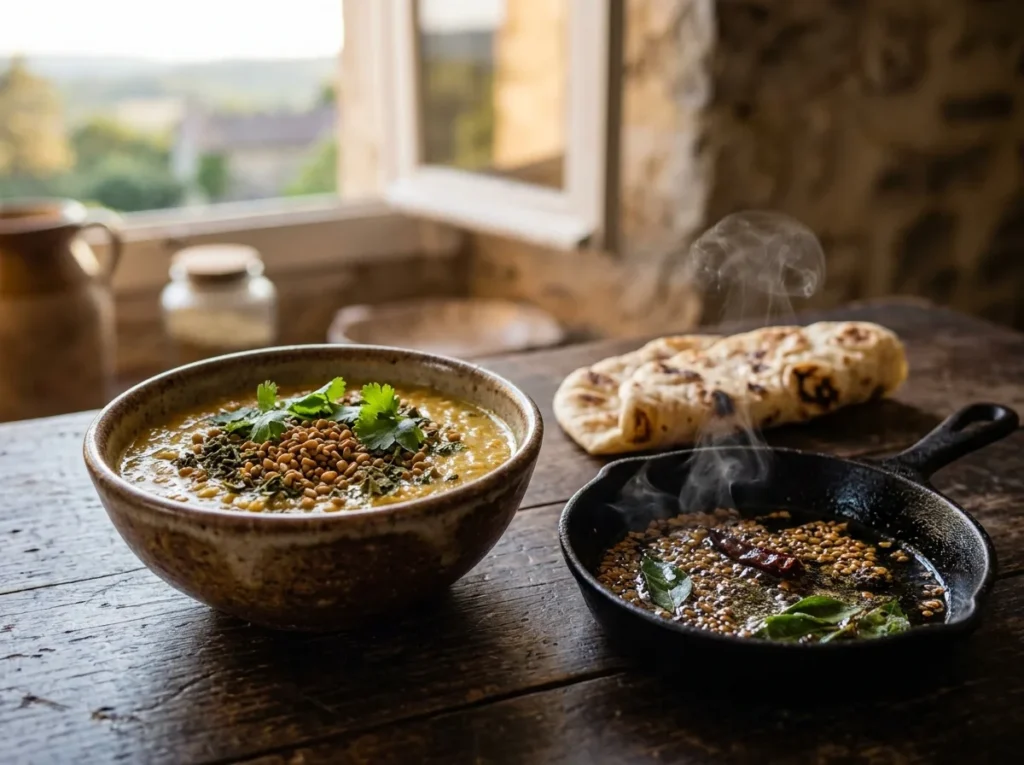
Fenugreek is a key spice in many cuisines:
- In India, it flavours curries, South Indian sambar and mango or lemon pickles, and it is part of panch phoron, the Bengali blend of five whole spices, with cumin, nigella, mustard and fennel.
- In the French Caribbean, it is one of the spices in colombo, with coriander, cumin, turmeric and mustard.
- In Ethiopia, it goes into berbere, a spicy chilli blend.
- In Yemen, hilbeh is a frothy sauce made from soaked, whipped fenugreek, served with bread.
- In Armenia and Turkey, a fenugreek paste called çemen coats the cured meat known as pastırma.
At home, try it in a red lentil and coconut milk dhal: fry half a teaspoon of seeds in oil with the onion before adding the lentils. It goes very well with root vegetables, potatoes, spinach, lentils, tomatoes, chicken and lamb. A pinch of ground fenugreek in bread or flatbread dough also adds a warm and very unusual note.
Dried fenugreek leaves (kasuri methi)
Dried fenugreek leaves, called kasuri methi in India, are a well-kept secret of Indian cooking. They are less bitter than the seeds, with a scent somewhere between celery, freshly cut hay and maple syrup. They are what gives butter chicken and many restaurant curries their distinctive flavour.
To use them, rub a tablespoon between your palms over the pan at the end of cooking, then let it simmer for another two or three minutes. They also flavour flatbreads, tomato sauces, potato dishes and stir-fried vegetables. Fresh leaves, harder to find, are cooked like spinach, for example with potatoes in aloo methi.
Fenugreek powder
Fenugreek powder is the most convenient form: it is easy to find and can be stirred straight into curries, soups, marinades and spice blends. It is also the base for hair masks and many food supplements.
As always with spices, it loses its aroma quickly. The best option is to buy whole seeds and grind them yourself after a light toasting: the difference in flavour is clear. If you buy powder, choose small packets and replace them often.
Fenugreek tea
Fenugreek tea is a traditional drink, used for digestion and as a tonic. Because the seeds are hard, it is better to make a decoction than a simple infusion.
For 1 cup:
- 1 teaspoon fenugreek seeds
- 250 ml water
- Optional: a slice of lemon, a thin slice of ginger, a teaspoon of honey or a pinch of cinnamon
Method: lightly crush the seeds in a mortar. Put them in a small saucepan with the cold water, bring to the boil, then simmer gently for 5 minutes. Cover, leave to infuse for another 5 minutes off the heat, strain and drink warm. The taste is slightly bitter and reminiscent of maple syrup: lemon and honey soften it nicely. One cup a day is enough; avoid this tea during pregnancy.
Sprouted fenugreek
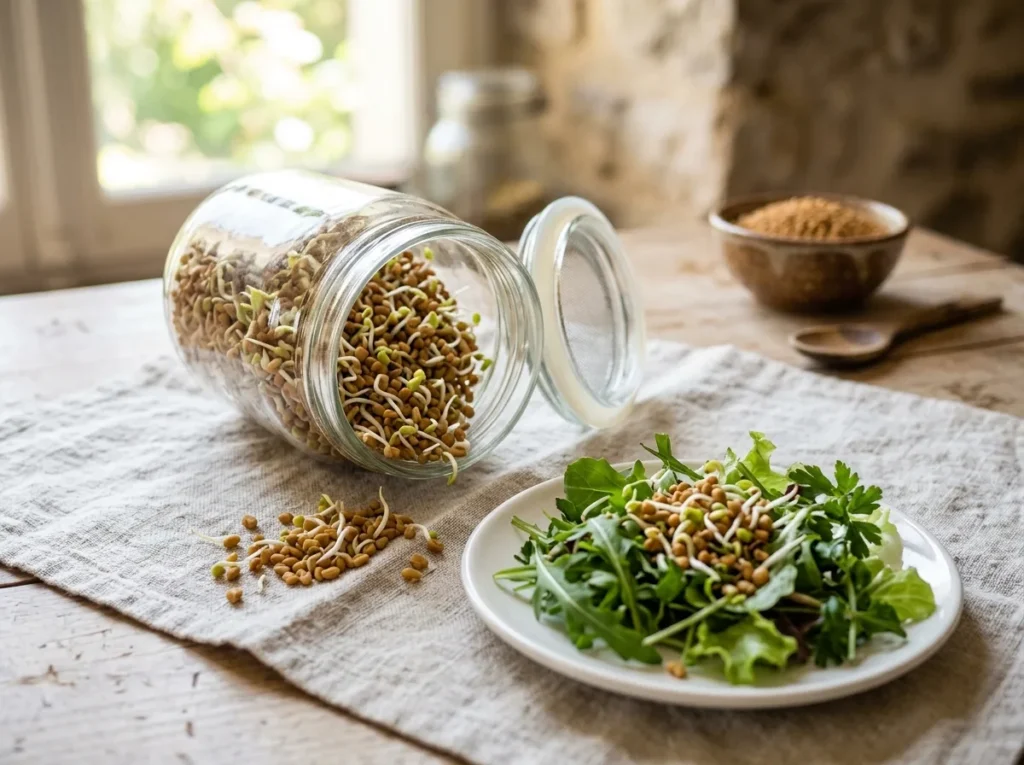
Fenugreek seeds sprout very easily, in just a few days. Fenugreek sprouts are less bitter than the dry seeds, crunchy and slightly sweet. Sprouting also makes their nutrients easier to absorb.
- Soak 2 tablespoons of seeds in water for 8 to 12 hours.
- Drain them and place them in a sprouter or a jar covered with gauze, tilted upside down.
- Rinse them with fresh water morning and evening.
- After 3 to 5 days, when the sprouts are about 1 cm long, they are ready. Rinse them one last time and keep them in the fridge for 2 to 3 days.
Add them to salads, sandwiches, curries at the end of cooking or on top of a soup. One important precaution: buy seeds sold for sprouting, which are tested for this use. In 2011, fenugreek seeds contaminated with a dangerous bacterium, E. coli, caused a serious outbreak in Germany and France through sprouted seeds. Pregnant women, young children, older people and vulnerable people should avoid raw sprouts, or cook them.
Where to buy fenugreek
Fenugreek is easy to find:
- In Indian grocery shops, under the name methi: seeds, powder and dried kasuri methi leaves, often at low prices.
- In Middle Eastern and North African grocery shops, under the name helba, mainly as seeds and powder.
- In organic and health food shops, in the bulk or spice section, and sometimes with the sprouting seeds.
- In herbalists and pharmacies, for teas and supplements.
- From specialist spice merchants and online, where you will find better-quality seeds.
In supermarkets, you sometimes find it in the spice aisle, but more often in the form of curry powder, of which it is an ingredient.
Fenugreek side effects
In cooking, at the usual amounts, fenugreek is very well tolerated. At higher doses, as supplements, large amounts of powder or repeated cups of tea, it can cause:
- a maple syrup smell in sweat and urine, harmless but surprising;
- digestive upset: bloating, wind, diarrhoea, nausea;
- a drop in blood sugar, especially in people being treated for diabetes;
- allergic reactions, rare but possible, sometimes serious.
If you notice any of these effects, reduce the dose or stop, and talk to your doctor or pharmacist.
Fenugreek contraindications
Fenugreek in culinary amounts is suitable for almost everyone. However, high doses, supplements and regular courses are not recommended in several situations:
- Pregnancy: fenugreek is thought to stimulate contractions of the uterus, and animal studies have raised concerns. No supplements or teas during pregnancy; a pinch in a curry poses no known problem.
- Legume allergy: people allergic to peanuts or chickpeas may also react to fenugreek, which belongs to the same family.
- Diabetes under treatment: risk of hypoglycaemia with diabetes medication or insulin.
- Anticoagulants: fenugreek may increase the effect of some blood-thinning medicines; ask your doctor for advice.
- Children: no supplements without medical advice.
How to store fenugreek
Keep the seeds, powder and dried leaves in airtight jars, away from light, heat and moisture. Whole seeds keep for one to two years, powder for about six months and dried leaves for a year. For the leaves, crush a pinch between your fingers: if they barely smell of anything any more, it is time to replace them.
Fenugreek and its fellow spices
Fenugreek forms a classic aromatic base with turmeric, cumin and coriander seeds in most curry powders and in colombo. It also pairs well with ginger, cardamom, cinnamon, cloves and black pepper. Also discover our guides to paprika, saffron, nutmeg and Espelette pepper. And for mulled wine and winter desserts, try star anise, the star of spices.
Frequently asked questions about fenugreek
Does fenugreek really make you gain weight?
Not directly. It is said to stimulate the appetite, but no solid study shows that it makes you gain weight on its own.
Why does fenugreek make you smell of maple syrup?
Because of sotolon, a very potent aromatic compound found in the seeds. It passes into sweat and urine after eating a lot of fenugreek. It is harmless.
Can you eat fenugreek seeds raw?
They are too hard and too bitter. It is better to toast them, fry them in oil, soak them or sprout them.
What is the difference between methi and kasuri methi?
Methi refers to fenugreek in general, seeds or fresh leaves. Kasuri methi refers to the dried leaves, which are milder than the seeds.
This article is for general information only and is not a substitute for advice from a doctor, midwife or pharmacist.