Swiss onion tart (Zwiebelkuchen)
Ingredients
Method
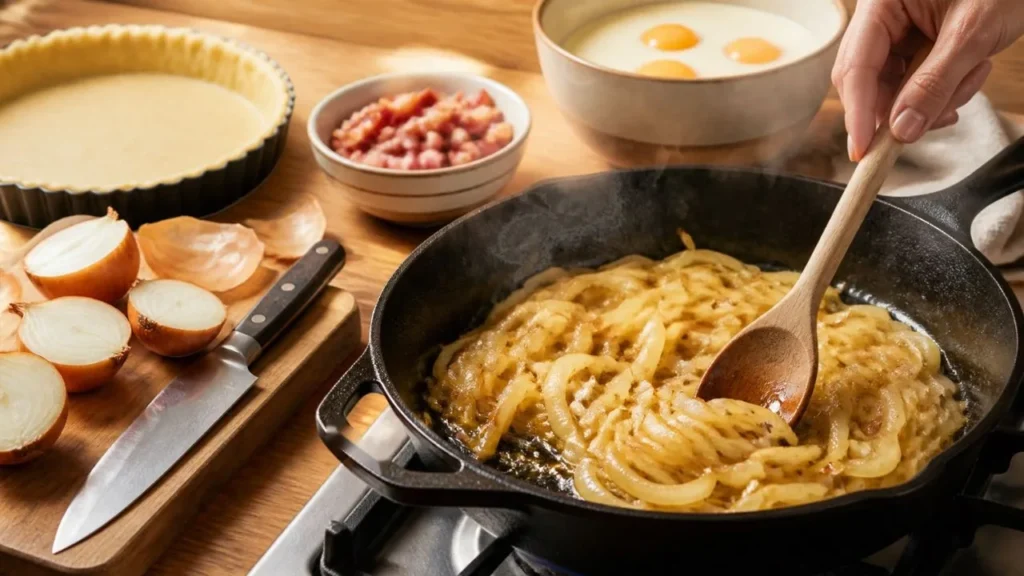
- Peel the onions, halve them and slice them thinly. Melt the butter in a large sauté pan, add the onions and a pinch of salt. Cook them for 25 minutes over low heat, covered for the first 10 minutes, stirring often: they should turn golden and soft without burning.
- Meanwhile, brown the bacon for 3 minutes in a dry frying pan and drain. Preheat the oven to 200 °C (180 °C fan).
- Roll the pastry into a buttered 28 cm tin, prick the base with a fork and chill for 10 minutes.
- Sprinkle the onions with the flour, stir for 1 minute over the heat, then add the caraway and leave to cool slightly. In a bowl, beat the eggs with the cream, milk and two thirds of the Gruyère. Season lightly with salt, add pepper and the nutmeg.
- Spread the onions and bacon over the pastry, pour in the egg mixture and sprinkle with the rest of the Gruyère.
- Bake for 35 minutes on the bottom shelf, until the tart is golden and the filling set. Leave to rest for 10 minutes, sprinkle with chives and serve warm.
Notes
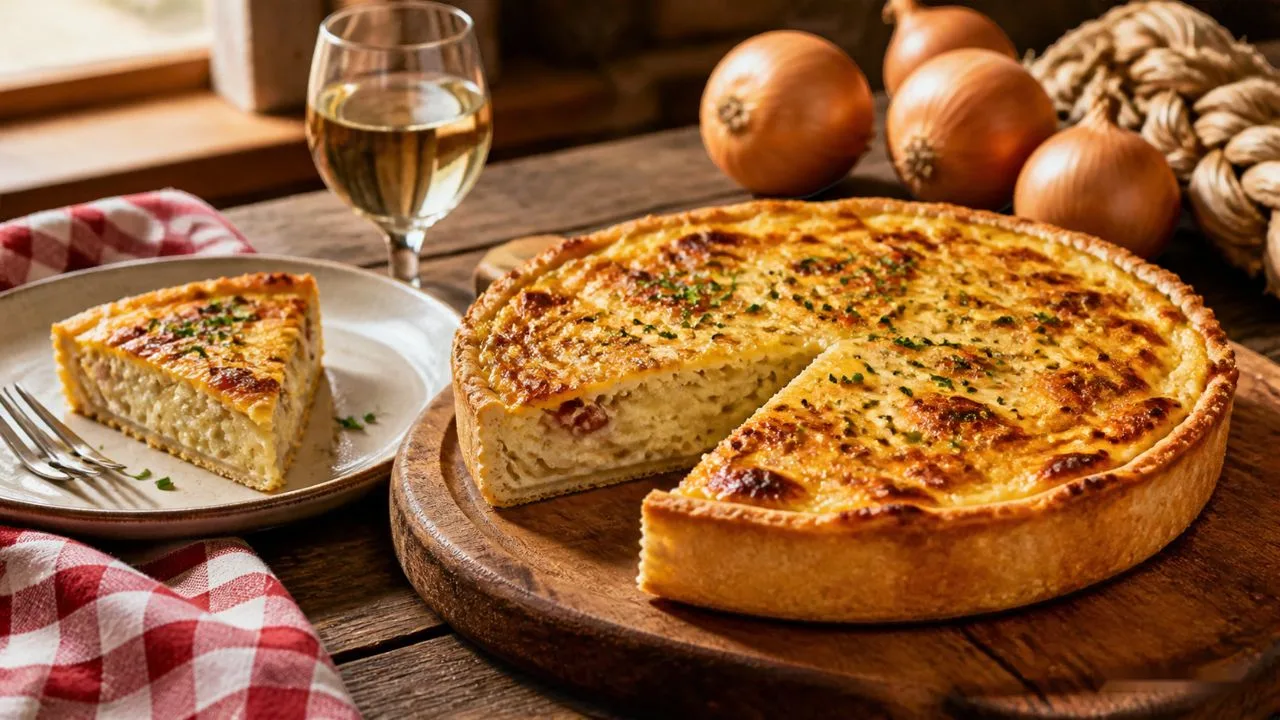
Soft, golden and fragrant: the Swiss onion tart is the great classic of autumn markets in Switzerland. Onions slowly cooked in butter, a little bacon, an egg, cream and Gruyère filling, all on a crisp pastry base. This onion, bacon and cream tart uses simple ingredients and is an easy, quick onion tart recipe: 20 minutes of preparation, and the oven does the rest. Here is our Zwiebelkuchen recipe, its story and all the secrets for perfectly soft onions.
The traditional Swiss onion tart
In German-speaking Switzerland it is called Zwiebelkuchen, “onion cake”, or Zwiebelwähe, a Wähe being the flat savoury or sweet tarts typical of the country. In Basel it is inseparable from carnival: in the early hours of the Morgestraich, which opens the Fasnacht, people warm up with flour soup, a slice of onion tart and a slice of cheese tart.
In Bern, the traditional Swiss onion tart is the star of the Zibelemärit, the onion market held every year on the fourth Monday of November. That day the old town is covered with decorative onion plaits, and stalls sell slices of hot onion tart from dawn. It is a true Swiss autumn dish, traditionally served with a glass of new white wine or grape must, the juice of the harvest.
Swiss onion tart or Alsatian onion tart?
The Alsatian onion tart is a close cousin. Both recipes share the same base: lots of onions, bacon and an egg and cream filling. The Alsatian version often uses thick crème fraîche and is made on shortcrust or bread dough. The Swiss version readily adds grated Gruyère and a hint of caraway, and is made on shortcrust in Bern and on yeast dough in the north-east of the country. Not to be confused with flammekueche, a thin cream tart baked in a wood oven in a few minutes.
How to make Zwiebelkuchen: step by step
Wondering how to make Zwiebelkuchen? The recipe has three stages. First, soften the sliced onions in butter over low heat for about 25 minutes. Next, make the filling by beating the eggs with the cream, milk and Gruyère. Finally, fill the pastry with onions and bacon, pour over the filling and bake for 35 minutes. The tart is ready when the top is golden and the centre no longer wobbles.
Soft onions for the tart
This is the whole secret of the tart: soft onions for a tart, mellow and almost sweet. Choose yellow onions, which have the best balance between sweetness and character. Slice them thinly into even half-moons so they all cook at the same speed. Then let them soften in butter over low heat, without rushing: they should become translucent, then golden, but never brown. Onions that are too dark make a bitter tart.
To season soft onions, salt them from the start: salt helps them release their water and soften without burning. Cover the pan for the first 10 minutes, then remove the lid so the water evaporates. Stir often and add a spoonful of water if the onions stick. At the end, a spoonful of flour absorbs the remaining juices so the pastry will not go soggy.
Which pastry for an onion tart?
The choice of pastry for an onion tart depends on the region. Shortcrust, the most common, gives a thin, crisp tart that shows off the filling. Use a good all-butter pastry, or make your own with 250 g flour, 125 g cold butter, a pinch of salt and 5 to 6 spoons of iced water. To avoid a soggy base, prick it with a fork and bake the tart on the bottom shelf of the oven, closest to the heat.
Zwiebelkuchen on yeast dough
In north-eastern Switzerland and southern Germany, Zwiebelkuchen on yeast dough is common: an enriched, almost brioche-like bread dough spread on a baking tray. To make it, mix 300 g flour, 1 sachet of dried yeast, 150 ml warm milk, 50 g melted butter and a pinch of salt. Leave to rise for 1 hour, spread the dough on a tray, top and bake for 35 to 40 minutes. The result is softer and more generous, perfect for a buffet or a meal with friends.
Spices for onion tart
There are few spices for onion tart, but they make all the difference. Caraway is the traditional spice of Zwiebelkuchen: its aniseed-flavoured seeds make the onions easier to digest and perfume the filling. Cumin, warmer and stronger, is not a true substitute, but a tiny pinch gives a spicier version that is also very good. To understand the difference between these two often-confused seeds, read our full article on cumin, its benefits and uses.
A pinch of grated nutmeg, as in a quiche, brings out the mildness of the cream and cheese: find out how to dose it in our guide to nutmeg. Finally, add a grind of black pepper and some fresh chives just before serving.
Swiss onion and Gruyère tart
The Swiss onion and Gruyère tart is the most indulgent version. Gruyère AOP, made around the town of Gruyères in French-speaking Switzerland, has a fruity, slightly salty taste that goes perfectly with the sweetness of the onions. Grate it yourself: mixed into the filling, it makes it creamier; sprinkled on top, it forms a golden, crisp crust. You can also use Emmental or a mix of both, as in the classic half-and-half fondue.
Onion tart variations
Onion quiche without cream
For a lighter onion quiche without cream, replace the cream and milk with 250 g of quark, Greek yoghurt or ricotta, beaten with the eggs. The filling will be slightly firmer and a little tangy, but just as tasty. You can also use milk only, with one extra egg so the filling sets well. For another savoury tart idea, try our carrot top and goat’s cheese quiche.
Vegetarian version
Simply leave out the bacon and add 50 g more Gruyère, or a few crushed walnuts for crunch. Soft onions and cheese are enough to make a tart full of flavour.
What to serve with onion tart
In Switzerland, onion tart is eaten hot or warm as a main course with a big green salad or a lamb’s lettuce salad with a sharp dressing, which balances the richness of the cream. Cut into small squares, it also works as a snack with drinks. For a real Swiss menu, serve it as a starter before our Zurich-style veal. To drink, a Chasselas or a Fendant, or grape must for an alcohol-free version, goes wonderfully with it.
Frequently asked questions about Swiss onion tart
Can you make onion tart in advance?
Yes. You can soften the onions the day before and keep them in the fridge. The baked tart keeps for 3 days in the fridge and reheats in 10 minutes in the oven at 160 °C: avoid the microwave, which softens the pastry.
How do you avoid a soggy base?
Let the onions cool slightly and add a spoonful of flour at the end of cooking to absorb their juices. Prick the pastry, keep it cold before filling and bake the tart on the bottom shelf of the oven.
How many onions for one tart?
Allow about 800 g of onions for a 28 cm tin, or 5 to 6 medium onions. It looks like a lot, but they lose more than half their volume as they cook.