Basque piperade with Espelette pepper
Ingredients
Method
- Thinly slice the onions, chop the garlic and cut the peppers into thin strips, removing the seeds and white membranes. Score a cross in the tomatoes, plunge them into boiling water for 30 seconds, then peel and roughly chop them.
- In a large frying pan or sauté pan, heat the olive oil and gently fry the onions over a low heat for 5 minutes. Add the garlic and cook for 1 minute.
- Add the peppers and let them soften over a medium heat for 10 minutes, stirring from time to time.
- Add the tomatoes, thyme, bay leaf, sugar, salt and Espelette pepper. Simmer uncovered for 30 minutes, until the cooking juices have almost completely evaporated.
- If you are serving Bayonne ham, quickly sear the slices in a hot frying pan, 30 seconds on each side.
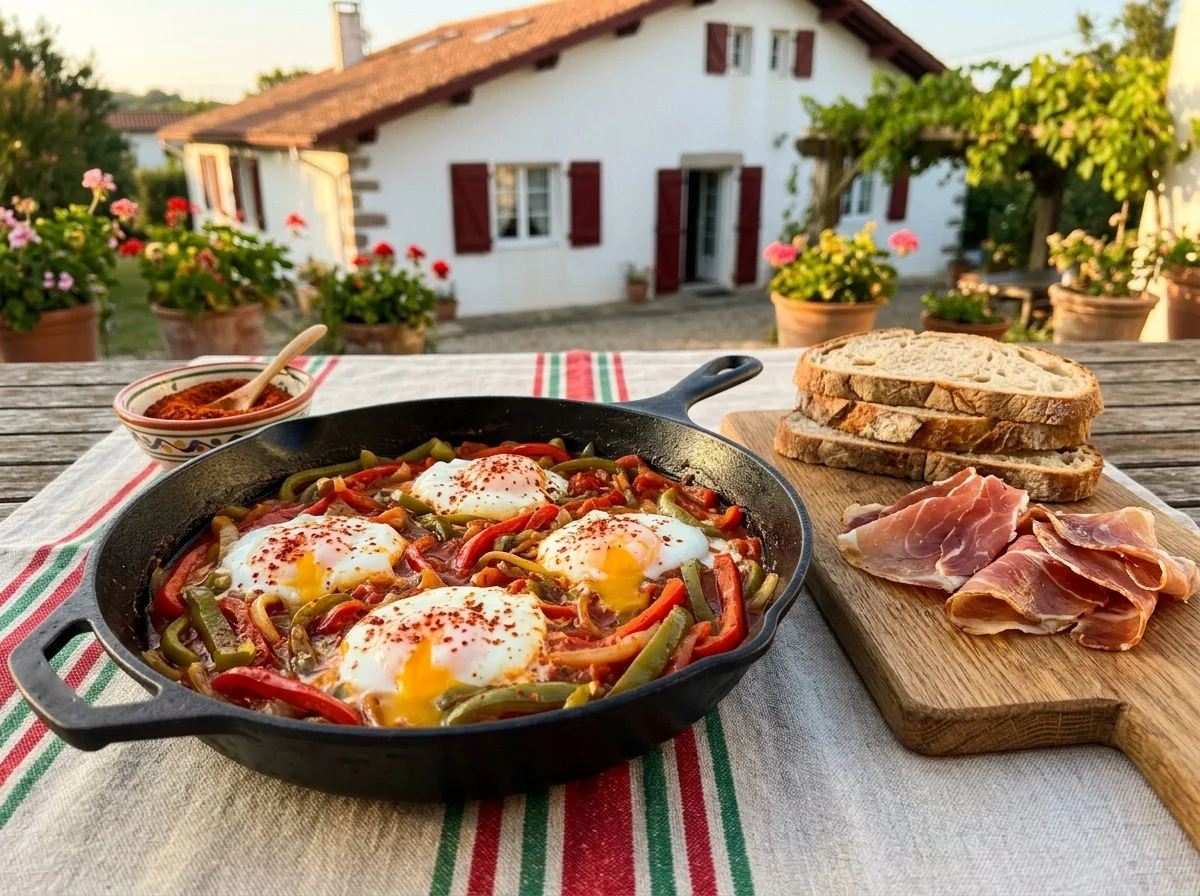
- For the version with eggs, make four small hollows in the piperade, crack the eggs into them, cover and cook for 5 minutes. Serve with the ham and a pinch of Espelette pepper.
Notes
Red, green and fragrant, piperade is one of the signature dishes of the Basque Country. Peppers, tomatoes and onions slowly softened in olive oil and lifted with a pinch of Espelette pepper: it is simple, colourful and full of sunshine. Homemade piperade is within everyone’s reach: all it takes is a little patience while the vegetables simmer. Here is our piperade with Espelette pepper, served with eggs and Bayonne ham, along with all our tips.
The traditional piperade recipe
Our piperade recipe follows the Basque method: first the onions, then the peppers, then the tomatoes, each cooked gently to bring out all its flavour. The secret of a traditional piperade recipe is patience. Piperade should simmer uncovered until the water from the tomatoes has evaporated: it then becomes soft and concentrated, almost jammy, rather than runny like a sauce.
In the Basque Country, cooks often use long, thin sweet peppers rather than bell peppers. They are more fragrant and less watery. If you find them at the market in summer, go for them: your piperade will be all the better for it. Peel the tomatoes too: the skin comes away during cooking and forms unpleasant little strands.
The origins of Basque piperade
Basque piperade takes its name from the word piper, which means both chilli and pepper in Basque. It is a peasant dish, made at the end of summer with vegetables from the kitchen garden. It is often said to echo the colours of the Basque flag: the red of the tomatoes and peppers, the green of the sweet peppers and the white of the onions or eggs.
Every family has its own recipe: with or without peeled tomatoes, with sweet peppers or bell peppers, with scrambled or poached eggs. But they all share one essential ingredient: Espelette pepper.
Espelette pepper, the soul of piperade
Espelette pepper is grown in around ten villages of the French Basque Country, around the village of Espelette, and has been protected by a designation of origin (AOP, the French equivalent of PDO) since 2002. Its heat is gentle, and its flavour fruity and slightly smoky. In piperade, it lifts the vegetables without overpowering them. To find out all about how it is grown, its designation and its uses, read our guide to Espelette pepper.
How to cook with Espelette pepper?
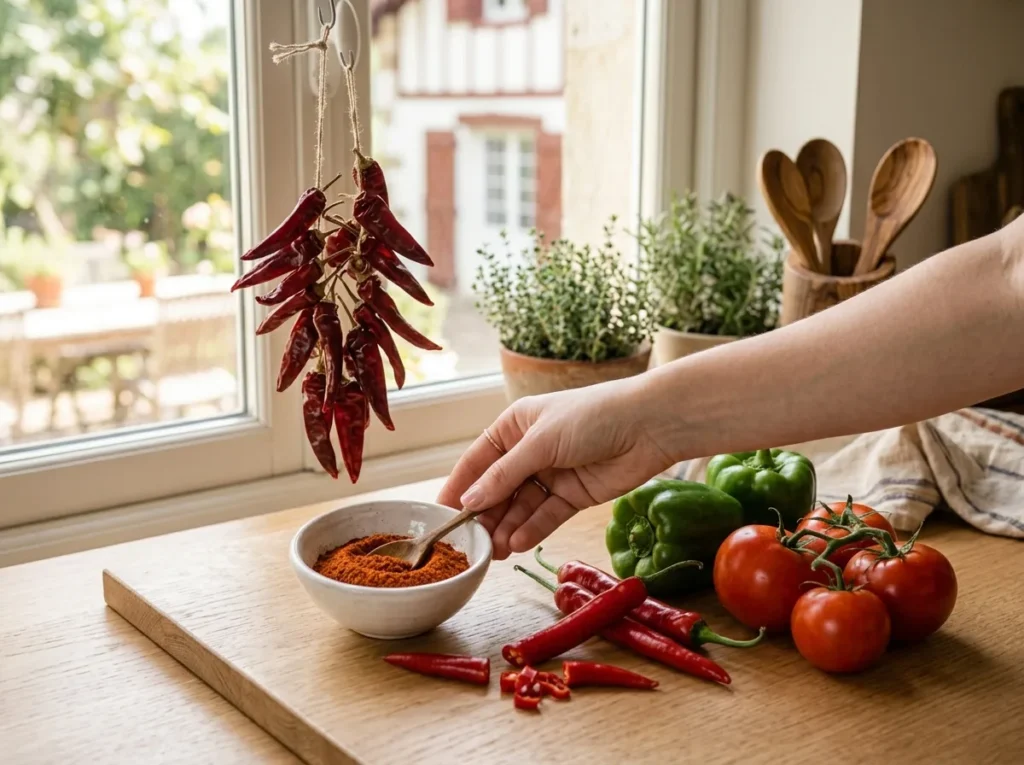
Wondering how to cook with Espelette pepper? The most practical form is Espelette pepper powder, which you can easily find in delicatessens, some supermarkets and online. Add it during cooking to flavour the dish, then a pinch just before serving, for its colour and aroma. Avoid burning it in very hot oil: it would turn bitter. It makes an excellent replacement for black pepper on eggs, grilled meats, fish, soups and sheep’s cheeses.
Espelette pepper is also sold fresh at the end of summer, or dried and strung into garlands that hang on the fronts of Basque houses. If you do not have any, a little sweet paprika with a hint of cayenne pepper can stand in for it, even if the taste is not quite the same.
What to serve with piperade?
Piperade is a very versatile dish. You can serve it as a main course or as a side dish. Here are the most classic ways to enjoy it.
- Piperade with eggs: poached eggs cooked directly in the piperade, or scrambled eggs stirred into the vegetables. This is the most common version in the Basque Country.
- Piperade with Bayonne ham: slices of Bayonne ham, quickly seared in a frying pan and laid on top of the piperade. The saltiness of the ham goes wonderfully with the sweetness of the vegetables.
- With roast chicken, grilled fish such as tuna or hake, white rice or potatoes.
- Cold or warm, on slices of toast, as a pre-dinner nibble.
For an all-Basque meal, serve it with a sheep’s cheese and a slice of gâteau basque (Basque custard cake) for dessert.
How to make piperade preserves
At the end of summer, when peppers and tomatoes are plentiful and cheap, it is the perfect time to make piperade in jars. The simplest and safest method is freezing: let the piperade cool, divide it between freezer boxes or bags, and keep it for up to 6 months.
For glass jars, pour the piperade while still very hot into clean jars, close them, then sterilise them in a sterilising pan or a large pot of water, following the time given by the manufacturer for vegetables, usually at least 1 hour 30 minutes at 100 °C. Store them in a cool, dark place, and throw away any jar whose lid is bulging or that no longer holds its vacuum seal.
More Basque recipes with Espelette pepper
If you like piperade, other dishes of Basque cooking also give pride of place to Espelette pepper. Axoa is finely chopped veal simmered with sweet peppers and Espelette pepper. Basque-style chicken (poulet basquaise) is cooked in a sauce very similar to piperade. And Basque-style tuna pairs the fish with peppers and tomatoes. Every Basque recipe with Espelette pepper shares the same base: soft, slow-cooked vegetables, olive oil and a touch of gentle heat. Discover all our spices in our guide to spices.
Frequently asked questions
Is piperade spicy?
No, it is just gently seasoned. Espelette pepper has a mild heat. If you are cooking for children, add only a little during cooking and let everyone add more on their own plate.
Can you make piperade with tinned tomatoes?
Yes, out of season, a tin of good-quality peeled tomatoes does the job very well. Simply let it simmer a little longer to evaporate the juice.
Is piperade vegetarian?
Yes, without the ham. With eggs, it makes a complete vegetarian dish. Without eggs or ham, it is entirely plant-based.