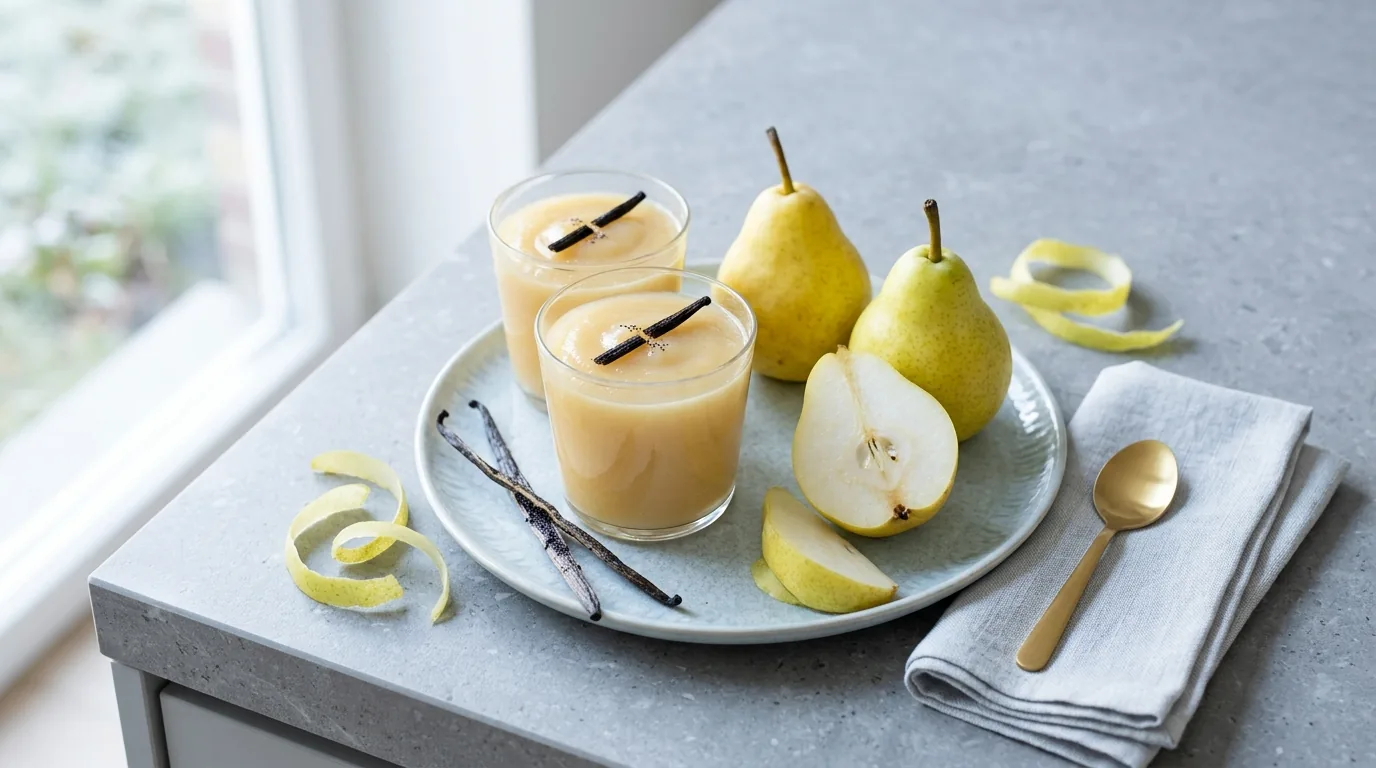
Pear peel compote with vanilla
Ingredients
Method
- Wash the pears carefully, rubbing them gently, then dry them. Peel the ones for your main recipe and immediately sprinkle the peelings with lemon juice.
- Cut the 2 whole pears into pieces, skin on, making sure to remove the core and pips.
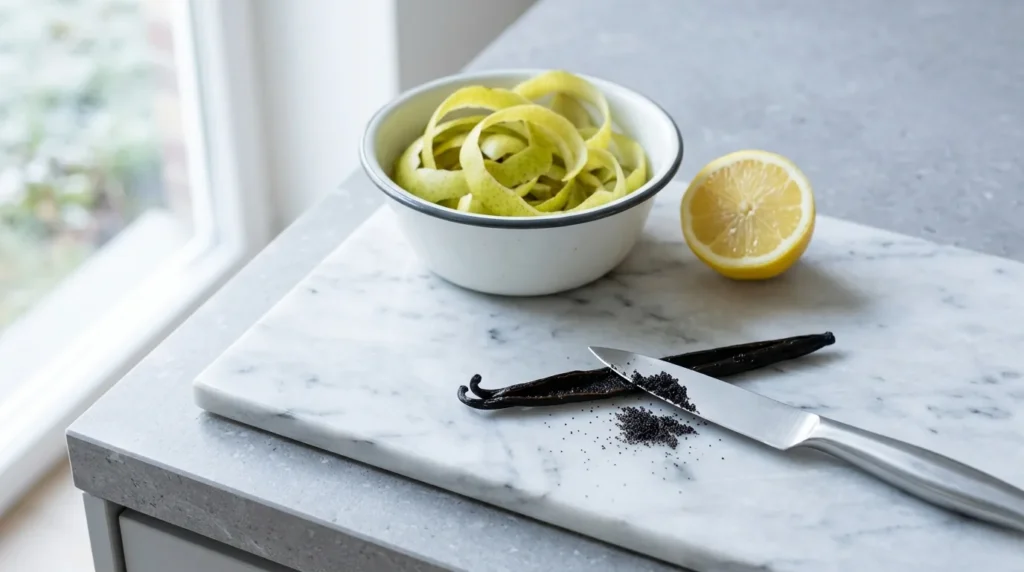
- Split the half vanilla pod lengthways and scrape out the seeds with the tip of a knife.
- Put the peelings, pear pieces, water, the rest of the lemon juice, the sugar, and the vanilla seeds and pod into a saucepan.
- Cover and cook over a low heat for 20 minutes, stirring from time to time. If the compote is too runny, let it reduce for a few minutes uncovered.
- Remove the vanilla pod, then blend for a good while and pass the compote through a mouli or a fine sieve. Serve warm or cold.
Notes
After making a pear and almond tart (the French tarte Bourdaloue), a charlotte or a simple bowl of poached pears, you are often left with a little pile of peelings. Rather than throwing them away, turn them into a pear peel compote with vanilla: smooth, melting and delicately fragrant. With two whole pears for body and half a vanilla pod, in 30 minutes you get a mellow, almost creamy dessert that is every bit as good as a classic compote.
The pear, a delicate fruit
Pears have been grown in Europe since ancient times. The Romans already knew several dozen varieties, but it was in France, in the 17th and 18th centuries, that the pear enjoyed its golden age. In the King’s Kitchen Garden at Versailles, Jean-Baptiste de La Quintinie grew hundreds of different kinds for the table of Louis XIV, a great lover of pears.
Unlike the apple, the pear is a fragile fruit. It is picked while still firm and finishes ripening off the tree, from the inside out. Its flesh is juicier and more melting, and its skin is thinner. That is exactly what makes this compote different from our apple peel compote with cinnamon: it needs less water, cooks more quickly and gives a silkier texture.
Why keep pear peelings?
Pear skin holds a good share of the fruit’s fibre, as well as polyphenols, antioxidant compounds found in fruit and vegetables. It also adds flavour: slightly tart, sometimes a little astringent, it brings depth to the sweetness of the flesh.
For a kilo of peeled pears, you usually throw away just under a hundred grams of peel. It isn’t much, but in zero-waste cooking every little bit counts. At Curcuma.top, we love cooking the parts we usually throw away, as in our radish leaf soup or our carrot top pesto.
Which pears to choose for a pear peel compote?
Organic or unsprayed pears
As with apples, this is the golden rule: since you are cooking the skin, choose organic pears, pears from your own garden or from a grower who doesn’t spray them. Wash them under running water, rubbing gently, then dry them before peeling.
The best varieties for compote
- Williams (also known as Bartlett), yellow and very fragrant, is the compote pear par excellence. It melts as it cooks.
- Conference, long, with green and russet skin, keeps a slightly tart flavour.
- Doyenné du Comice, round and very juicy, makes a particularly smooth compote.
- Louise Bonne, harder to find, gives a pretty pink tinge thanks to its colourful skin.
Choose really ripe pears for the whole fruit: they are sweeter, so you can reduce the sugar or leave it out altogether.
Vanilla, the precious spice
Vanilla is the fruit of a climbing orchid native to Mexico, where the Totonac people grew it long before the Spanish arrived. Outside its homeland, the plant flowered but produced no fruit, because the insect that pollinates it naturally did not exist anywhere else. Everything changed in 1841 on the island of Réunion, then known as Île Bourbon: a 12-year-old enslaved boy, Edmond Albius, devised a method of pollinating the flowers by hand that is still used today. This is where the name “Bourbon vanilla” comes from.
Today, Madagascar produces most of the world’s vanilla. Because every flower has to be pollinated by hand, and every pod then dried and cured for months, vanilla is one of the most expensive spices in the world, second only to saffron.
Pod, extract or flavouring?
For this compote, a vanilla pod gives the best result: split it in half lengthways, scrape out the tiny black seeds with the tip of a knife and cook both the seeds and the pod with the pears. Failing that, use a natural vanilla extract, added at the end of cooking. Avoid cheap “vanilla flavouring”, often made with synthetic vanillin, which tastes much flatter.
Our zero-waste tip: homemade vanilla sugar
Don’t throw the pod away after cooking! Rinse it, leave it to dry for a few days, then tuck it into a jar of sugar. After one to two weeks, you will have homemade vanilla sugar, far more fragrant than the shop-bought kind. Once it is completely dry, you can also blitz it with the sugar.
The secret of a silky pear compote
Very little water
Pears release a lot of juice as they cook. A splash of water is enough to get things started. If the compote is too runny at the end, let it reduce for a few minutes uncovered.
Lemon to stop browning
Pear peelings brown very quickly in the air. Sprinkle them with lemon juice as soon as you set them aside: the compote will keep a lovely golden colour, and the acidity of the lemon will lift the sweetness of the vanilla.
Blend, then sieve
Some pears have small hard grains in their flesh, called stone cells, which give a slightly gritty texture. Blend the compote for a good while, then pass it through a mouli or a fine sieve for a perfectly smooth result. Remove the vanilla pod before blending.
How to enjoy pear and vanilla compote
- Warm, with a scoop of vanilla ice cream or a little crème fraîche.
- In glasses, layered with Greek yoghurt and crumbled biscuits.
- With chocolate: a spoonful of compote and a square of melted dark chocolate makes a speedy take on the classic poire Belle-Hélène. Try it with our aquafaba chocolate mousse too.
- At breakfast, on porridge, fromage frais or thick plain yoghurt, or on toast.
- With cheese: a little lightly sweetened compote goes very well with a blue cheese or a mature goat’s cheese.
Variations
Pear and apple
Pear and apple peelings go very well together. Mix them and swap the vanilla for a blend of vanilla and cinnamon, halfway between this recipe and our apple peel compote with cinnamon.
Pear, vanilla and tonka bean
Grate a very small amount of tonka bean at the end of cooking, no more than a quarter of a bean for the whole recipe: its almond and caramel flavour is powerful.
Pear and ginger
Add a thin slice of fresh ginger during cooking and remove it before blending. The compote takes on a lively, slightly spicy note.
No added sugar
With really ripe pears, sugar is rarely needed. Taste before adding any.
Storage
The compote keeps for 4 days in the fridge in a clean, sealed jar, and for 3 months in the freezer in small portions. You can also freeze the raw peelings, sprinkled with lemon juice, as you make your desserts, then cook the compote once you have collected enough.
Frequently asked questions
Can I make the compote with peelings only?
Yes, but there will be less of it and it will be a little more fibrous. The two whole pears provide the softness and volume. With peelings alone, blend for a long time and sieve.
Why is my compote grey?
The peelings probably browned before cooking. Next time, sprinkle them with lemon juice as soon as you peel the pears. The flavour stays the same.
Can I reuse the vanilla pod?
Yes. Rinsed and dried, it will still flavour a jar of sugar, milk for a custard or a syrup.