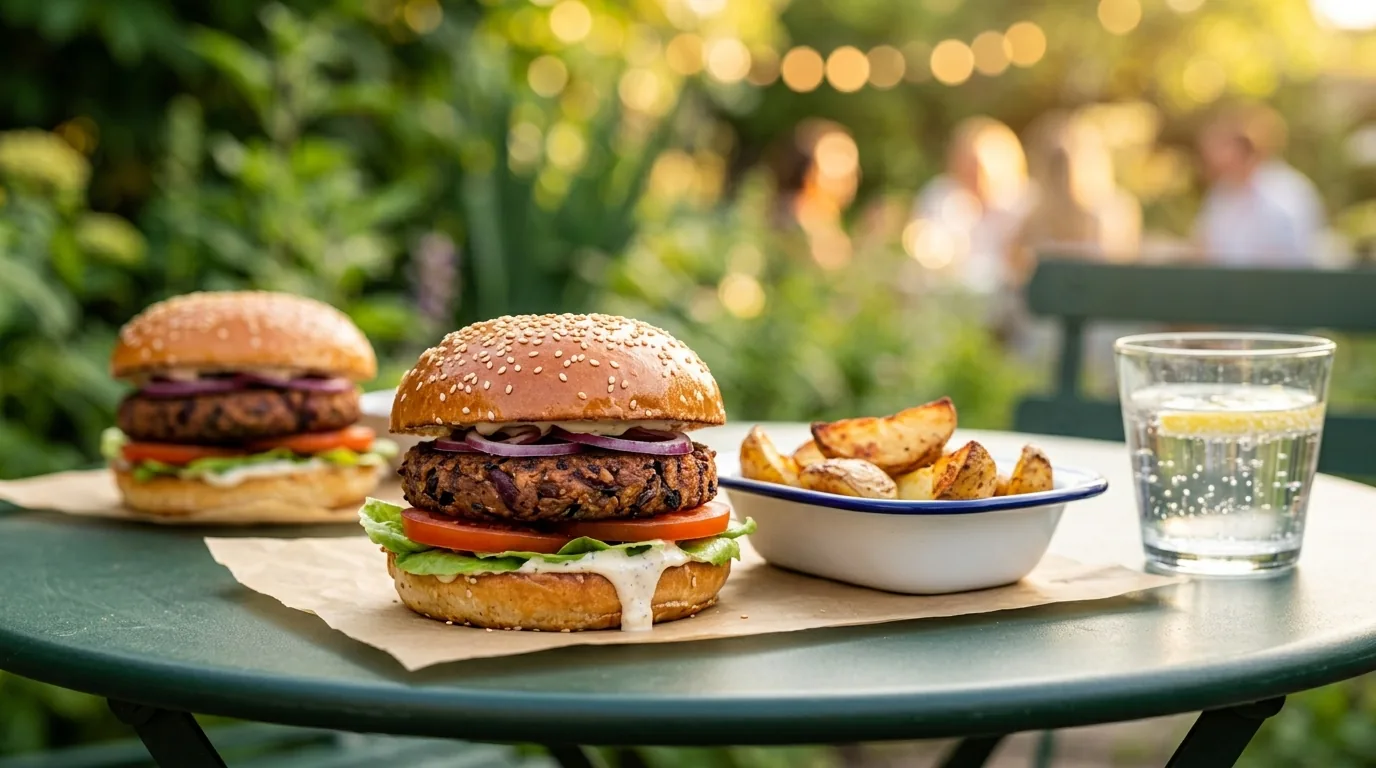
Kidney bean and oat veggie burger
Ingredients
Method
- Rinse the kidney beans, drain them and dry them in a tea towel. Finely chop the onion and garlic.
- Fry the onion in 1 tablespoon of oil for 4 minutes over a medium heat, add the garlic and spices and cook for 1 more minute.
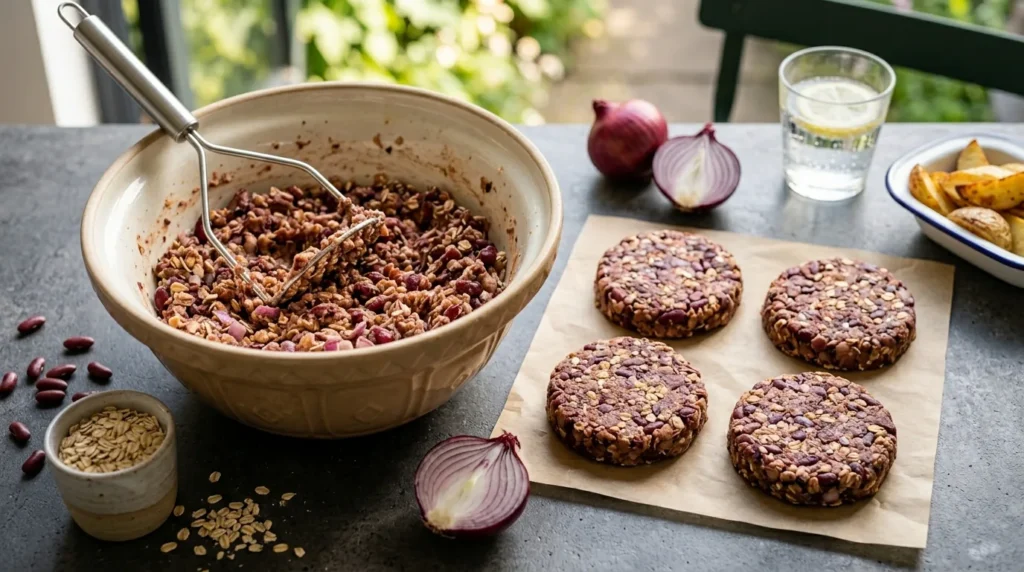
- In a mixing bowl, mash the beans with a potato masher, leaving a few pieces. Add the onion, oats, egg, tomato purée, soy sauce, salt and pepper, and mix well.
- Leave to rest for 10 minutes, then shape 4 burgers about 2 cm thick with damp hands.
- Heat the rest of the oil over a medium heat and cook the burgers for 5 minutes on each side, without pressing them down, until nicely browned.
- Serve straight away in a toasted burger bun with lettuce, tomato and red onion, or on the plate with roasted vegetables.
Notes
A really good homemade burger, with no meat, and a patty that holds together, browns beautifully and is full of flavour: it is possible, and without any complicated ingredients. Our kidney bean and oat veggie burger is made with two tins of kidney beans, porridge oats, an onion and a few spices. In 30 minutes, you get four thick, tender burgers to slip into a bun or serve on the plate with a salad and roasted vegetables.
A veggie burger, not just a patty
At Curcuma.top, you will already find our thin, crispy oat and vegetable patties and our small, bright green herby chickpea croquettes. This veggie burger is in a different league: it is thick, dense and tender, with a dark colour and a smoky, slightly chargrilled flavour reminiscent of a beef burger. It is designed for a bun: it doesn’t go mushy when you bite into it, stays put in the bread and stands up to sauces.
To get there, we combine three elements: kidney beans for body and protein, oats to bind and absorb moisture, and a small mix of ingredients packed with flavour.
The kidney bean, a pulse from the Americas
The common bean, which includes the kidney bean, is native to Central and South America, where it has been grown for thousands of years, often alongside maize and squash. It arrived in Europe in the 16th century, after the voyages of Christopher Columbus, and quickly became a staple of peasant cooking. Today, the kidney bean is the star ingredient of chilli con carne, New Orleans red beans and rice and Indian rajma.
Like other pulses, it is rich in plant protein, fibre and minerals such as iron and potassium. Paired with a grain, like the oats in this burger or the bread of the bun, it makes a complete, filling meal.
A word of warning about dried kidney beans
Raw or undercooked kidney beans contain a natural substance, phytohaemagglutinin, which can cause severe digestive upset. It is destroyed by vigorous boiling. Tinned or jarred beans are already cooked and pose no problem. If you start with dried beans, soak them for at least 12 hours, discard the soaking water, then boil them hard for at least 10 minutes before continuing to cook them until tender. Never cook them only at a low temperature, in a slow cooker for example.
Oats, the natural binder
Oats are the secret to this burger holding together. They absorb the moisture from the mashed beans and, as they cook, form a kind of network that holds everything in place. They are rich in beta-glucans, soluble fibres that give that slightly sticky texture when mixed with something moist.
Ideally, use fine porridge oats, or briefly blitz jumbo oats. If you need to avoid gluten, choose oats labelled gluten-free: oats contain almost none, but they are often contaminated with wheat during growing or processing.
The secret of a veggie burger that holds together
Well-drained beans
Rinse the kidney beans, drain them thoroughly, then dry them in a tea towel. Excess water is the number one enemy of veggie burgers.
Mash, don’t purée
Mash the beans with a potato masher or a fork, leaving a few pieces. A purée that is too smooth gives a pasty burger. The pieces of bean add bite, just like in a real beef burger.
Cook the onion first
Fry the onion and garlic for a few minutes before adding them. Raw onion would release water during cooking and make the burger break apart. Cooked, it adds sweetness and a caramelised flavour.
Let it rest
Leave the mixture to rest for 10 to 15 minutes before shaping the burgers: the oats have time to swell and the mixture becomes much easier to shape. Form burgers about 2 cm thick with damp hands.
Gentle cooking
Cook them over a medium heat for 5 to 6 minutes on each side, without pressing them down with the spatula. If the heat is too high, the outside will burn before the middle is hot.
Flavour first
Blandness is the number one complaint about this kind of recipe. To avoid it, we rely on ingredients rich in umami, the fifth taste, found in grilled, fermented or slow-cooked foods: soy sauce, tomato purée, well-browned onion and smoked paprika, which gives a barbecue note. A touch of cumin warms everything up, and a pinch of turmeric, our signature spice, goes alongside the pepper. To find out more about this duo, read our article on the health benefits of turmeric.
How to serve a kidney bean veggie burger
- In a bun: in a lightly toasted burger bun, with lettuce, slices of tomato, red onion, gherkins and a yoghurt sauce or mayonnaise. A slice of Cheddar melted over the burger at the end of cooking is also very welcome.
- On the plate, with roasted potato or sweet potato wedges and a green salad. You can also serve it with our sweet potato rösti with cumin.
- Crumbled into tacos or wraps, with avocado, sweetcorn and lime.
- With pesto: a spoonful of our carrot top pesto on the hot burger is delicious.
Variations
Vegan version
Replace the egg with one tablespoon of ground flaxseed mixed with three tablespoons of water, left to swell for 10 minutes. The burger will be a little more fragile: make sure you let the mixture rest well.
With other pulses
Black beans give a very similar burger, with a slightly milder flavour. Cooked green or brown lentils, well drained, also work.
With vegetables
Add a grated carrot, a few chopped mushrooms fried until dry, or some sweetcorn. Make sure you dry the vegetables well so you don’t add moisture.
In the oven
Bake the burgers on a tray lined with baking paper, brushed with a little oil, for 25 minutes at 200°C (180°C fan), turning them halfway through.
Storage
Cooked burgers keep for 3 days in the fridge. Reheat them in a covered frying pan for a few minutes on each side. They freeze very well, raw or cooked, separated by a sheet of baking paper: cook or reheat them straight from frozen, without defrosting, allowing a little extra time.
Frequently asked questions
Why does my burger break up during cooking?
The mixture is too wet or hasn’t rested long enough. Add one or two tablespoons of oats, leave it to rest for 15 minutes in the fridge and turn the burgers only once, gently.
Can I cook it on the barbecue?
Yes, but on a griddle plate or a sheet of foil or baking paper placed on the grill: a veggie burger is more fragile than a meat one and could fall through the bars.
Can I make the burgers in advance?
Yes, and it is actually recommended. Shape the burgers in the morning or the day before, place them on a plate lined with baking paper and keep them in the fridge, covered with cling film. They firm up in the fridge and hold together even better during cooking. It is handy when you have friends round: all that is left to do is brown them while the buns are toasting.
What bread should I use for the burger?
A classic brioche burger bun, a sesame seed bun or a small wholemeal roll all work very well. Toast the cut side for a moment in a frying pan: it will stay crisp and won’t go soggy under the sauce.