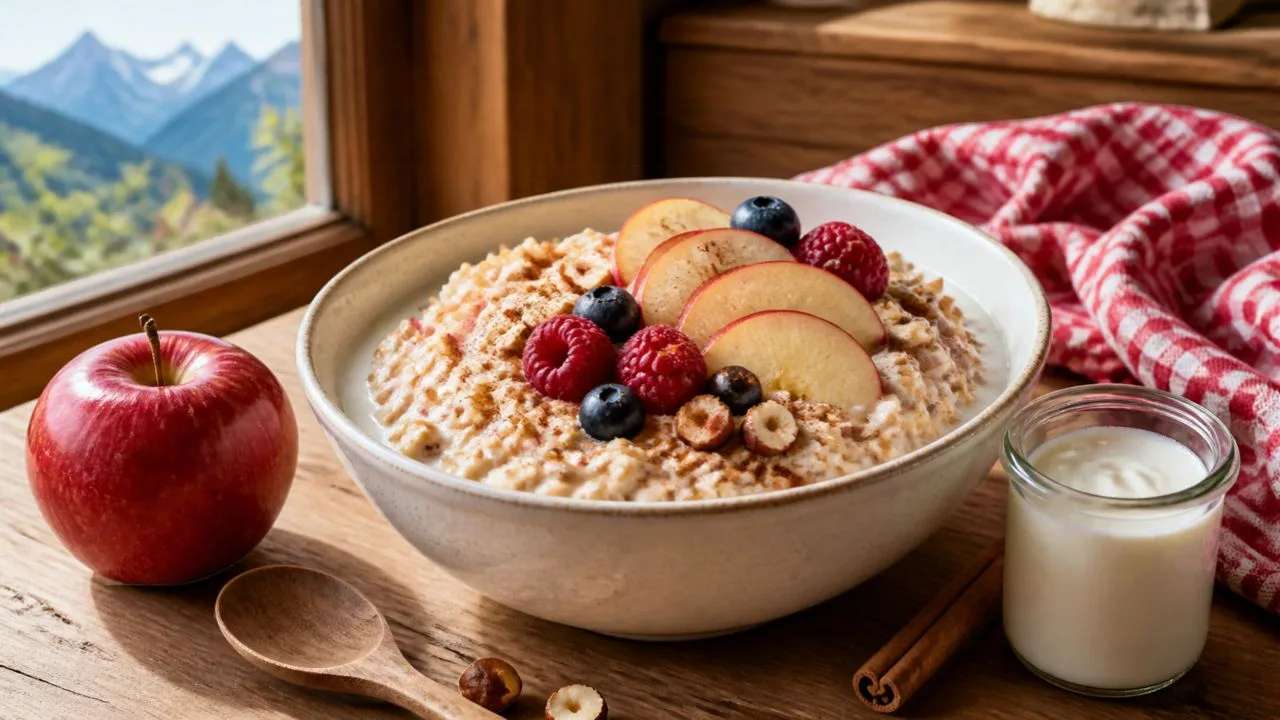
Bircher muesli with apple and hazelnuts
Ingredients
Method
- The evening before, put the oats in a bowl, add the milk and stir. Cover and leave to soak overnight in the fridge (at least 30 minutes if you are in a hurry).
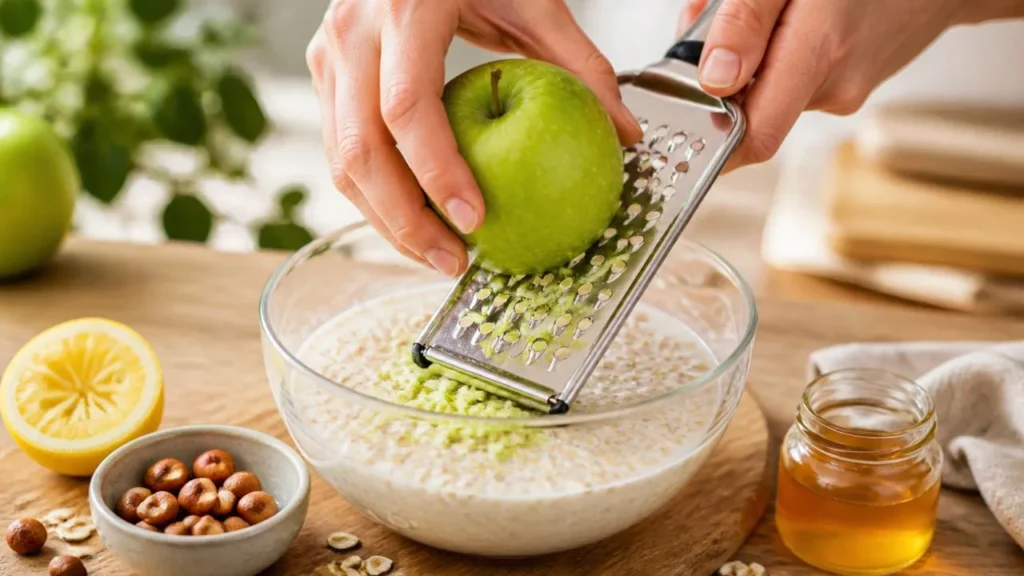
- In the morning, wash the apples and grate them with their skin on the coarse side of a grater, stopping at the core. Sprinkle them straight away with lemon juice so they do not turn brown.
- Add the grated apples, yoghurt, honey and cinnamon to the soaked oats. Mix well: the muesli should be creamy. Add a little milk if it is too thick.
- Roughly chop the hazelnuts with a knife and, if you like, toast them for 2 to 3 minutes in a dry frying pan.
- Divide the muesli between two bowls. Top with the berries and chopped hazelnuts, and serve well chilled.
Notes
Creamy, fresh and ready before you even open your eyes: Bircher muesli is Switzerland’s national breakfast. Oats soaked overnight, an apple grated with its skin, a little yoghurt, hazelnuts and a pinch of cinnamon: that is all. Invented in Zurich around 1900 by a doctor, Dr Bircher-Benner, it is a healthy oat and apple breakfast that needs no cooking and keeps you going until lunch. Here is our Bircher muesli recipe, its history and all the variations to make it your own.
The real Swiss recipe by Dr Bircher-Benner
Maximilian Oskar Bircher-Benner (1867-1939) was a Swiss doctor and a pioneer of nutrition. Convinced that raw food and fresh fruit were the foundation of good health, in 1904 he opened a sanatorium in the hills above Zurich called Lebendige Kraft, “living force”. His patients followed a diet rich in fruit, raw vegetables and grains, in stark contrast to the meat-heavy cooking of the time.
According to family legend, the idea came to him on a hike in the Alps: a shepherdess served him a strange mixture of oats, apple and milk. The doctor turned it into a precise recipe, which he simply called d’Spys, “the dish” in Swiss German, and which his patients ate before every meal. The word Müesli comes from Mues, meaning mash or porridge: it literally means “little mash”. In Switzerland today it is called Birchermüesli, or simply “a Bircher”. It is the ultimate Swiss breakfast recipe, just as rösti is for brunch.
The original Bircher muesli, made with condensed milk
The original Bircher muesli does not look quite like the one we know. For one person, Dr Bircher-Benner used:
- 1 tablespoon of rolled oats, soaked for 12 hours in 3 tablespoons of water;
- the juice of half a lemon;
- 1 tablespoon of sweetened condensed milk, safer than fresh milk at a time when tuberculosis could be passed on through milk;
- 1 large grated apple, with its skin and even its core;
- 1 tablespoon of grated hazelnuts or almonds, sprinkled on at the last moment.
This condensed milk muesli recipe made the fruit the star, with the oats as a simple binder. Over the decades the proportions were reversed: the oats became the base, and condensed milk gave way to fresh milk, yoghurt and a little honey. Our recipe keeps the spirit of the original, with plenty of apple, but with the creamy texture we love today. For the original taste, replace the honey with a spoonful of sweetened condensed milk.
How to make Bircher muesli: step by step
Wondering how to make Bircher muesli? It is done in two stages. The evening before, the oats are left to soak in milk in the fridge. In the morning, all you have to do is grate the apples, add the yoghurt, honey and cinnamon, then top with fruit and hazelnuts. Ten minutes in total, without turning on the hob.
Five minutes of preparation the night before
That is the great advantage of this easy no-cook muesli: in the evening, simply pour the oats and milk into a bowl or a jar, stir and close. Five minutes flat. No time to plan the night before? Soaking for 30 minutes is enough, especially with quick oats. The muesli will be a little firmer, but just as good.
Why soak the oats overnight?
Muesli soaked overnight is nothing like dry oats with milk poured on at the last minute. During the night, the oats absorb the liquid, swell and become soft and creamy, almost melting. They are also easier to digest. This is exactly the principle of overnight oats, the next-day oat recipe that has become so popular on social media: Dr Bircher-Benner invented it more than a century earlier. Bircher is often described as a cold porridge: the same softness as porridge, but chilled, perfect for summer mornings.
Homemade muesli: which oats to choose?
For a successful homemade oat muesli, choose your base carefully. Quick oats (fine flakes) absorb milk quickly and give a very smooth muesli, almost a cream. Jumbo oats (whole rolled oats) keep more bite and a more rustic texture, ideal for soaking overnight. Both work: choose according to your taste. For a gluten-free version, use certified gluten-free oats, as oats are often contaminated with wheat in factories.
The apple is the soul of Bircher. Choose a tart, crunchy variety such as Granny Smith, Braeburn or Gala, and grate it with its skin, which contains much of the fibre and vitamins. Sprinkle it straight away with lemon juice: this stops it turning brown and adds the tangy touch of the original recipe.
Cinnamon and other spices in Bircher
Dr Bircher-Benner’s recipe contained no spices, but cinnamon naturally found its place: with apple, it is a perfect match. Half a teaspoon is enough to flavour two bowls, and its sweetness lets you use less honey. Ideally choose Ceylon cinnamon, which is more delicate and fragrant than cassia. To learn all about its varieties and benefits, read our full article on cinnamon, its health benefits and its uses in cooking.
You can also try a pinch of cardamom, ground ginger or vanilla. In winter, a mix of cinnamon, ginger and cloves gives your Bircher the flavours of gingerbread.
Bircher muesli variations
Which seasonal fruits to add to muesli?
Bircher muesli with fresh fruit changes with every season. Always keep at least one apple for flavour, then add:
- In spring: strawberries and poached rhubarb.
- In summer: raspberries, blueberries, diced apricots and peaches.
- In autumn: grated pear, fresh figs, blackberries and grapes.
- In winter: banana, kiwi, orange segments and pomegranate.
Dairy-free, vegan or indulgent Bircher
- Dairy-free Bircher: soak the oats in apple juice, as many Swiss people do, or in plant milk (oat, almond, soya). Apple juice gives a fruitier, sweeter muesli: leave out the honey.
- Vegan Bircher: plant milk, soya or coconut yoghurt, and maple syrup instead of honey.
- Indulgent Bircher: replace some of the yoghurt with whipped cream, as in Swiss cafés. This is the “dessert” version.
- High-protein Bircher: skyr or quark instead of yoghurt, plus a spoonful of chia seeds.
A healthy, energising and filling breakfast
With around 460 kcal per bowl, Bircher muesli is an energy-boosting breakfast, very popular with athletes. Oats provide complex carbohydrates that release their energy slowly throughout the morning: ideal before a bike ride, a hike or a workout. Yoghurt and milk supply protein and calcium, hazelnuts healthy fats, and fruit vitamins.
Bircher is also a good ally when you are watching your weight. This kind of muesli fits well into a weight-loss diet thanks to its high fibre content: around 11 g per bowl. The beta-glucans in oats form a kind of gel in the stomach that slows digestion and acts as a natural appetite suppressant until lunch. For a lighter version, halve the hazelnuts and use skimmed milk and fat-free yoghurt: you will drop below 380 kcal.
In Switzerland, Bircher is not only eaten at breakfast. You will find it on hotel buffets, in cafés mid-morning and even in the evening, as a light meal with a slice of bread.
Bircher muesli FAQ
What is the difference between Bircher muesli and overnight oats?
Overnight oats are the modern, English-speaking version of Bircher: oats soaked overnight in milk or yoghurt. Bircher stands out for its grated apple and lemon juice, which are at the heart of the original recipe.
How long does Bircher muesli keep?
Soaked oats keep for 2 days in the fridge in a closed container, so you can prepare enough for two mornings. Just add the grated apple when serving, so it stays crunchy and does not brown.
Can you eat Bircher warm?
It is not traditional: Bircher is eaten cold. But if you prefer a hot breakfast in winter, cook the oats in the milk for a few minutes: you will get porridge, which you can top with grated apple and cinnamon in the same way.