“I don’t like vegetables.” If you often find yourself thinking “my child won’t eat vegetables“, you are not alone: in many families, this sentence comes up at almost every meal. You try small pieces, purées, sauces, grated cheese… and the plate comes back half full. Yet there is one idea that is often forgotten, because we associate it with “grown-up” food: spices for kids.
This is not about serving children a fiery curry. We are talking about mild spices, used in small amounts, that completely change the taste of a vegetable without making it strong. A pinch of cinnamon on carrots, a hint of cumin in a purée, and a “boring” vegetable becomes a dish that smells good and makes you want to eat it. In this guide, you will learn which spices to choose, from what age to offer them, how much to use, and five easy recipes to get children to love vegetables.
Why children turn their noses up at vegetables
Before reaching for the spice jars, it helps to understand what is going on. Children have a natural preference for sweet tastes and a distrust of bitter ones. Many green vegetables (broccoli, cabbage, spinach, chicory) have a slight bitterness. It is a very old reflex: in nature, a bitter taste could signal a toxic plant.
There is also food neophobia, the fear of anything new, which particularly affects vegetables. Between the ages of about 2 and 6, many children refuse anything unfamiliar, even foods they happily ate as babies. It is a normal stage of development. Studies on children’s eating behaviour show that a food often has to be offered many times, sometimes eight to ten, before it is accepted. In other words, a refusal is never final.
Mild spices work on both fronts. Some bring a sweet or rounded note that softens bitterness. And they create a familiar aroma that the child recognises from one dish to the next: if cinnamon reminds them of grandma’s cake, they will be more willing to try the carrots that contain it. When it comes to food neophobia, the smell and colour of a spiced vegetable matter as much as its taste: a dish that smells good and looks pretty reassures before the very first bite.
The benefits of mild spices in children’s diets
Spices are not medicines, and the amounts used for children are too small to talk about a “health” effect in the strict sense. They do, however, have several real everyday advantages.
- Less salt. French health guidelines advise not adding salt to toddlers’ food and limiting it afterwards. Spices and herbs add flavour without added salt.
- Less sugar. Cinnamon, vanilla and cardamom enhance the impression of sweetness. A compote with cinnamon tastes sweeter than a plain one, even without added sugar.
- A more curious palate. A child used to varied flavours more easily accepts new foods as they grow up.
- More varied meals for the whole family. You cook one gently spiced dish instead of a “kids'” dish and a “grown-ups'” dish.
How to flavour vegetables without salt
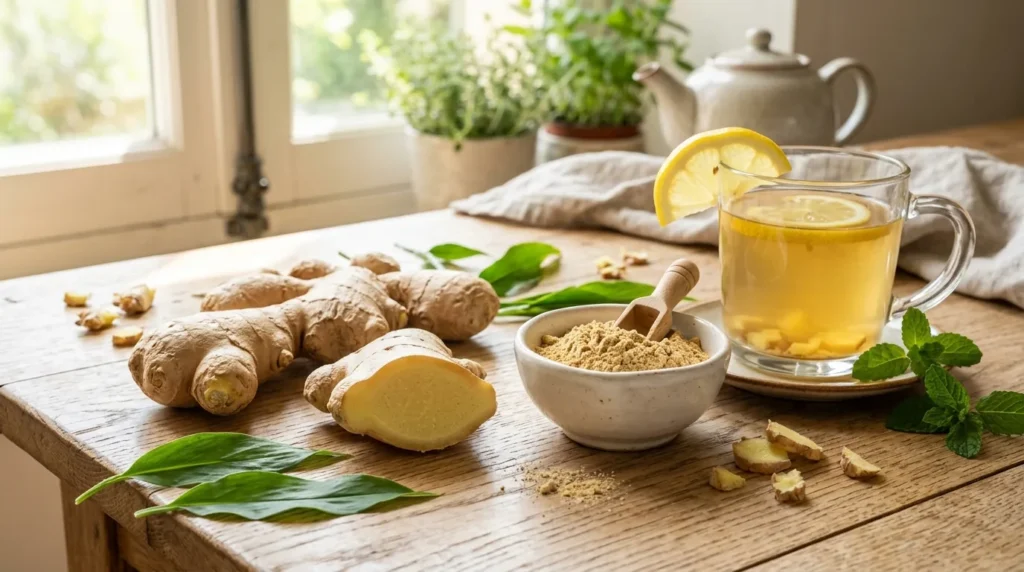
If you are wondering how to flavour vegetables for children, remember one simple rule: replace the pinch of salt with a pinch of mild spice and a fresh herb. Carrots and cinnamon, cauliflower and turmeric, courgettes and sweet paprika, green beans and parsley: every vegetable has its partner. A drizzle of olive oil or a knob of butter also helps carry the aromas.
Some spices, such as turmeric, ginger and cinnamon, are also studied for their antioxidant compounds. But for children, their main appeal remains flavour and the pleasure of eating.
Which spices for children, and from what age?
The official guidelines of Santé publique France, the French public health agency, state that herbs and spices can be used in small amounts from the start of weaning, as long as no salt is added. Here is a simple progression to adapt to your child. If in doubt, if there are allergies in the family or digestive problems, ask your doctor or paediatrician for advice.
First meals (from the start of weaning)
Start with the mildest spices, one at a time, in very small amounts (the tip of a knife): cinnamon, vanilla, cumin in a tiny dose, and a touch of turmeric for colour. Fresh herbs (parsley, chives, basil) are also welcome.
For a first baby purée with spices, steam the vegetable, blend it with a little cooking water and a knob of butter or a drizzle of oil, then add the tip of a knife of cinnamon (carrot, sweet potato) or cumin (courgette, pumpkin). No salt, no sugar: the spice is enough to add flavour.
From 1 to 3 years
The child eats more and more like the rest of the family. You can add sweet paprika, ground coriander seeds, a very small amount of ground ginger and a light grating of nutmeg in a purée or white sauce. Always without chilli.
From 3-4 years
Tastes become more defined. This is a good time to offer mild blends (a mild curry without chilli, a mild ras el hanout) and to let your child help choose the spices. Hot spices (chilli, cayenne pepper, Espelette pepper) can come later, very gradually, if the child wants them.
Mild spices and vegetables: the 5 winning pairings
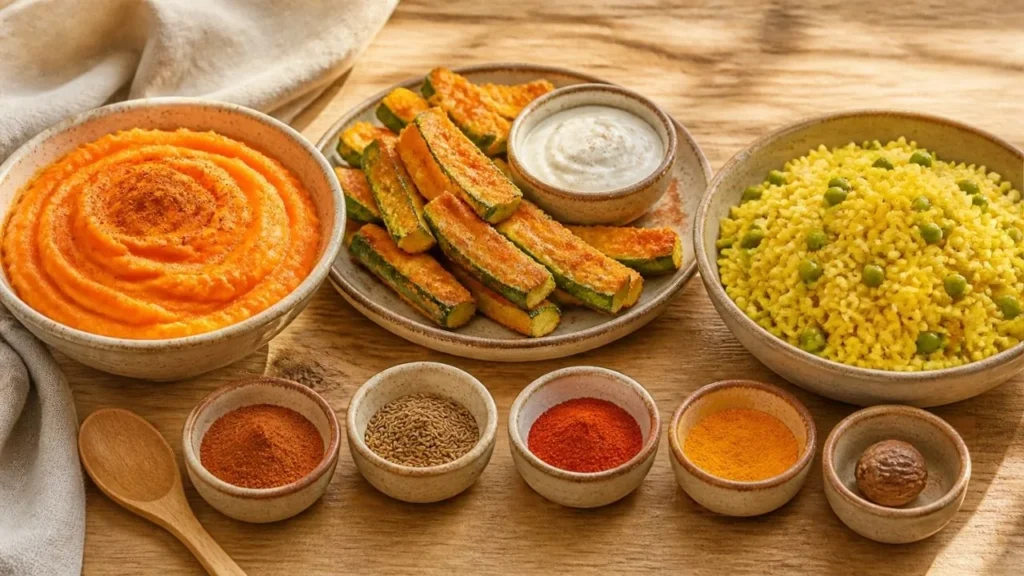
No need for a collection of twenty jars. Five spices are enough to get started, and they keep for several months in a dry cupboard, away from light. To go further, our spice guide presents each of them in detail.
Cinnamon, the most reassuring
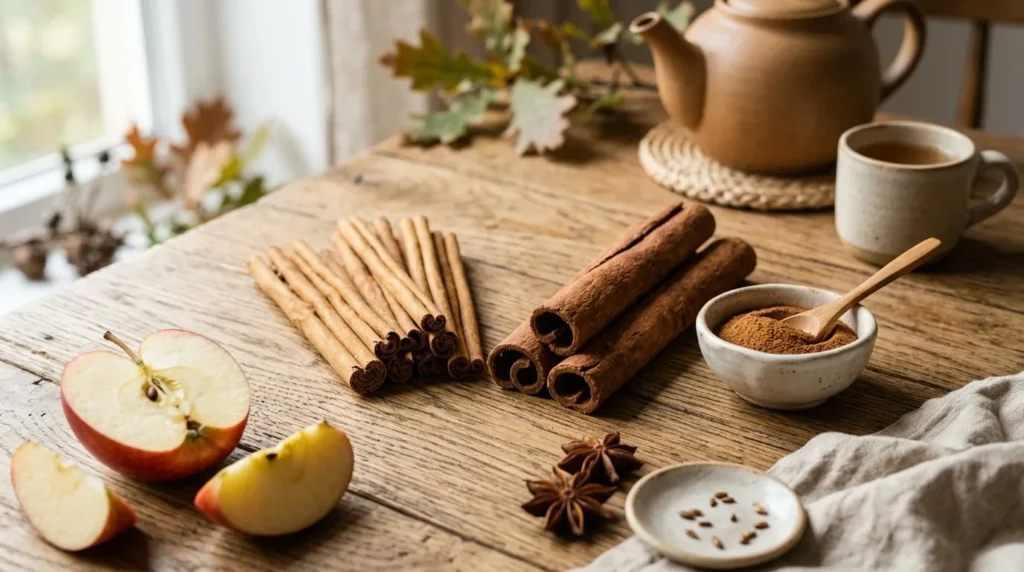
This is the dessert spice, the one children already know. It pairs very well with naturally sweet vegetables: carrot, pumpkin, butternut squash, sweet potato. A pinch is enough for a saucepan of purée. It gives a “snack-time” feel that little ones love. All its other uses are in our article on cinnamon.
Cumin, for root vegetables
Cumin has a warm, slightly earthy taste with no heat. It is perfect with carrot, cauliflower, red lentils or chickpeas. It is also traditionally used to make pulses easier to digest, which is no small matter when you want to serve them to children.
Sweet paprika, for colour
Not to be confused with hot paprika or chilli. Sweet paprika colours dishes reddish-orange and brings a slightly sweet flavour. On potato wedges or oven-baked courgettes, it gives a “homemade fries” look that works very well.
Turmeric for kids: sunshine yellow
Turmeric has a subtle, almost neutral taste in small doses, but a spectacular colour. Rice or cauliflower purée turns bright yellow: children love eating “sunshine”. Combine it with a fat (a drizzle of olive oil, a little butter) and, on the grown-ups’ plates, with a touch of pepper.
Box: a chilli-free spice blend for family cooking. In a small jar, mix 2 teaspoons of sweet paprika, 1 of cumin, 1 of turmeric, 1/2 of cinnamon and 1/2 of ground coriander. This mild blend, with no chilli and no salt, is used at half a teaspoon for a dish serving four: roast vegetables, soups, rice, chicken or meatballs. Perfect for the whole family, and no more cooking two separate meals.
Nutmeg, for purées and gratins
This is the classic spice for white sauce and mashed potatoes. Finely grated, nutmeg gives a rounded taste to spinach, chard or cauliflower. Here the rule is strict: a very light grating, never more, as nutmeg becomes toxic in large doses.
Our tips to get children to eat vegetables
Every tip to get kids to eat vegetables is based on the same idea: make the vegetable familiar, pretty and fun. A few simple principles make the difference between a dish that is adopted and one that is rejected.
- Start very lightly. A pinch for the whole family, not a spoonful. You can always add more to the grown-ups’ plates.
- One spice at a time. The child needs to be able to recognise the taste. Blends come later.
- Avoid heat. Chilli, cayenne pepper or “strong” blends are for later.
- Smell before tasting. Open the jar, let the child sniff and guess. Smell prepares the taste.
- Pair with a food they already like. Cumin carrots next to their favourite burger go down better than a 100% new dish.
- Don’t force it. One bite “just to taste” is enough. Offer it again the following week.
- Play with colours. An orange, yellow and green plate catches the eye. Turmeric and paprika are real natural colourings.
The magic of oven-roasted vegetables for kids
If you only remember one method, make it this one. Oven-roasted vegetables appeal to children far more than boiled vegetables: the heat of the oven caramelises their natural sugars, the edges turn golden and crispy, and some of the bitterness disappears. Cut carrots, sweet potato, squash or cauliflower into pieces of the same size, toss them with a drizzle of olive oil and a pinch of sweet paprika or turmeric, then roast for 25 to 30 minutes at 200 °C. Served like fries, with a yoghurt dip, they often vanish in minutes.
5 easy recipes to get children to love vegetables
Each spiced vegetable recipe for kids below takes less than 35 minutes to make, with simple ingredients. They suit the whole family: just add pepper or a little chilli to the grown-ups’ plates.
1. Carrot purée with cinnamon (15 minutes)
Serves 4: 600 g carrots, 1 potato, 20 g butter, 50 ml milk, 1 pinch of cinnamon.
Peel and cut the carrots and potato into pieces. Steam or boil them for 12 to 15 minutes, until very tender. Drain, then mash with the butter, warm milk and cinnamon. The potato adds creaminess, the cinnamon brings out the natural sweetness of the carrot. For older children, also try our roasted carrots with honey and cumin.
Variation: glazed carrots with turmeric and honey. For a carrot recipe with turmeric and honey for kids, cook sliced carrots covered with a little water, a knob of butter, a teaspoon of honey and a pinch of turmeric, until the liquid becomes a shiny syrup. Important: honey is not recommended before the age of 1, so replace it with a little orange juice for babies.
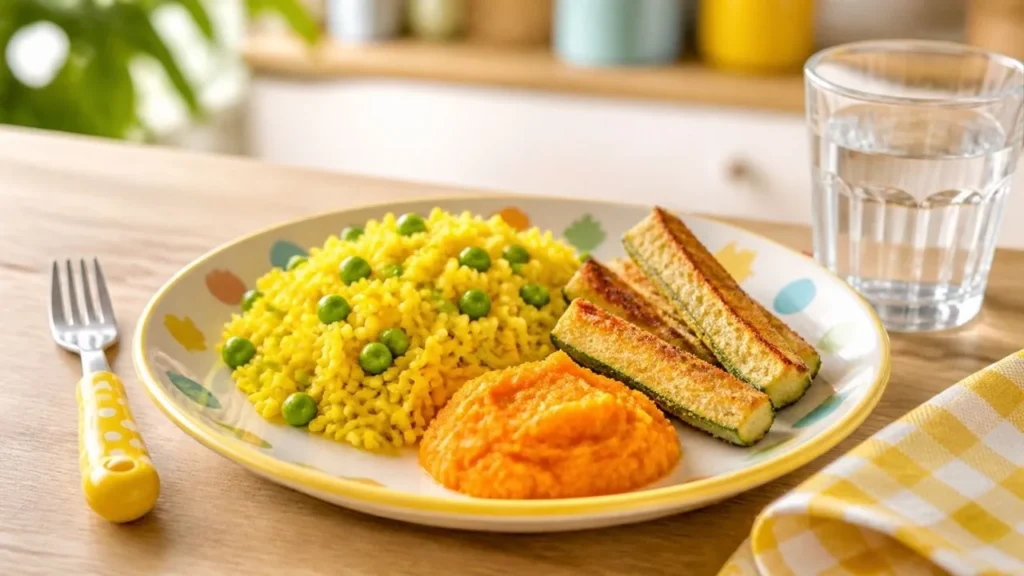
2. Courgette sticks with sweet paprika (25 minutes)
Serves 4: 3 courgettes, 2 tablespoons olive oil, 3 tablespoons breadcrumbs, 2 tablespoons grated parmesan, 1 teaspoon sweet paprika.
Preheat the oven to 210 °C. Cut the courgettes into sticks like fries. Toss them with the oil in a bowl. On a plate, mix the breadcrumbs, parmesan and paprika, then roll the sticks in the mixture. Spread them on a baking tray lined with baking paper and bake for 18 to 20 minutes, turning them halfway through. Serve with a small bowl of fromage frais or thick yoghurt for dipping.
3. Sunshine rice with turmeric and peas (20 minutes)
Serves 4: 250 g rice, 1 onion, 1 tablespoon olive oil, 1/2 teaspoon turmeric, 200 g peas (fresh or frozen), 500 ml unsalted vegetable stock.
Sauté the chopped onion in the oil for 3 minutes. Add the rice and turmeric and stir for 1 minute to coat the grains. Pour in the hot stock, cover and cook over low heat for the time shown on the packet. Add the peas 5 minutes before the end. The rice turns bright yellow and the peas stand out like little green marbles: guaranteed success at the table. Same idea for our roasted cauliflower with turmeric.
4. Mild butternut soup with cumin (30 minutes)
Serves 4: 1 small butternut squash (about 1 kg), 1 onion, 1 potato, 1 tablespoon olive oil, 1 small pinch of cumin, 100 ml coconut milk or cream, water.
Peel the squash, remove the seeds and cut it into cubes with the onion and potato. Sauté everything for 5 minutes in the oil with the cumin, then cover with water. Simmer for 20 minutes. Blend until smooth with the coconut milk. The cumin brings a warm note that breaks the “school canteen soup” image. Tip: serve it in a mug with a wide straw, children love it.
5. Carrot and cinnamon muffins for snack time (35 minutes)
Makes 10 muffins: 2 medium carrots, finely grated (about 200 g), 2 eggs, 70 g sugar, 80 ml neutral oil, 180 g flour, 1 sachet (11 g) baking powder, 1 teaspoon cinnamon, 1 pinch of nutmeg (optional).
Preheat the oven to 180 °C. Whisk the eggs with the sugar, then add the oil. Stir in the flour, baking powder and spices, then the grated carrots. Divide into muffin tins and bake for 20 to 22 minutes. The vegetable hides in a soft cake, and the cinnamon does the rest. For another spiced snack, our soft gingerbread is always a safe bet.
A weekly menu: 5 evenings, 5 spices
To build the habit without thinking about it, here is an example week where each evening puts one mild spice in the spotlight. Only one new thing per meal, always next to a food the child likes.
- Monday, cinnamon: homemade breaded fish and carrot purée with cinnamon.
- Tuesday, turmeric: sunshine rice with peas and an omelette.
- Wednesday, sweet paprika: chicken breast and courgette sticks with paprika.
- Thursday, cumin: butternut soup with cumin, cheese on toast.
- Friday, nutmeg: pasta bake with spinach and a white sauce lightly seasoned with nutmeg.
A practical tip for busy parents: at the weekend, roast a big tray of plain vegetables (carrots, squash, cauliflower). During the week, simply reheat them in a frying pan with a different spice each time. Preparation time drops to five minutes.
Getting children involved: the real secret
A child eats much more readily what they have prepared themselves. Spices are perfect for this, because they don’t cut and don’t burn. Give your child the role of “spice chef”: they are the one who adds the pinch of cinnamon to the purée or sprinkles paprika over the courgettes.
You can also turn discovery into a game. Put three open jars on the table, blindfold your child and ask them to guess. Note their preferences on a little card stuck on the fridge: “I like cinnamon, I don’t like cumin yet”. The word “yet” matters: it leaves the door open.
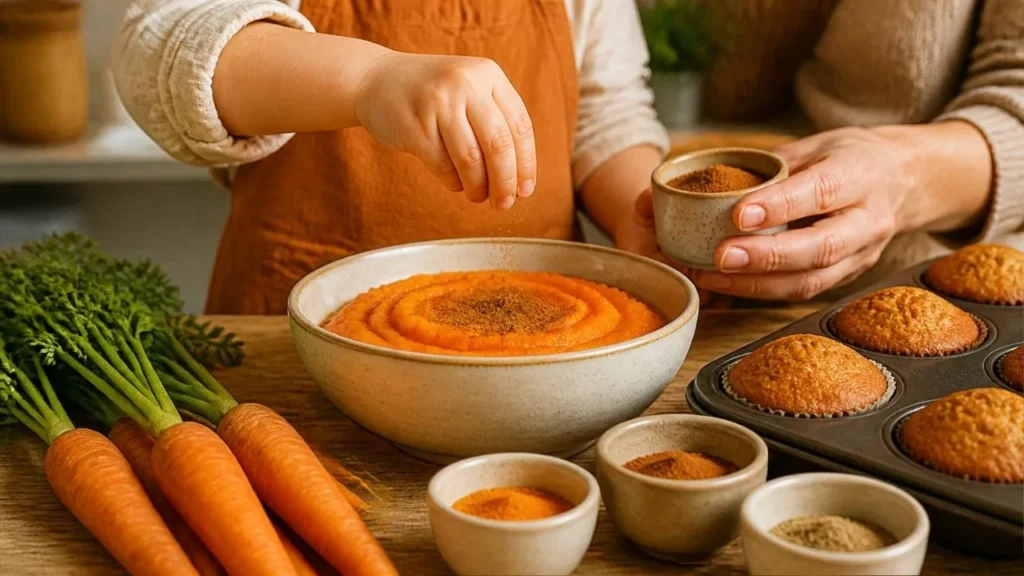
Finally, lead by example. If parents taste with pleasure and talk about the flavour (“it’s sweet, it smells like cake, doesn’t it?”), the child follows much more easily than if they are told over and over that it is good for their health.
Frequently asked questions about spices for kids
At what age can you give spices to a baby?
The guidelines of Santé publique France allow herbs and spices in small amounts from the start of weaning, without added salt. Start with the mildest ones (cinnamon, vanilla, cumin, turmeric) and avoid chilli.
How much spice for a child?
For a toddler, the tip of a knife in one portion is enough. For a family dish serving four, a pinch to half a teaspoon depending on the spice. Nutmeg should always be used as a very light grating.
Is turmeric safe for children?
In cooking, in small amounts, yes. However, turmeric supplements should be avoided in children without medical advice. A practical tip: turmeric stains fabric and plastic badly, so use a bib.
What if my child refuses the spiced dish?
Don’t force it, and don’t give up on the spice for good. Offer it again a few days later, in another dish, or reduce the amount. It often takes several attempts before a flavour is adopted.
Can you use ready-made blends?
Yes, as long as you read the label: many blends contain salt, sugar or chilli. For children, simple spices that you measure yourself are better.
In summary
Mild spices are a simple, inexpensive way to get children to love vegetables: a pinch of cinnamon, cumin, sweet paprika, turmeric or nutmeg is enough to turn a rejected vegetable into a dish they want to eat. Start lightly, one spice at a time, get your children involved and above all, be patient. A vegetable refused today may become a favourite in six months.
Looking for new ideas? Our free recipe book brings together 20 delicious, easy recipes to cook as a family.
This article is for general information only and does not replace the advice of a doctor or paediatrician.