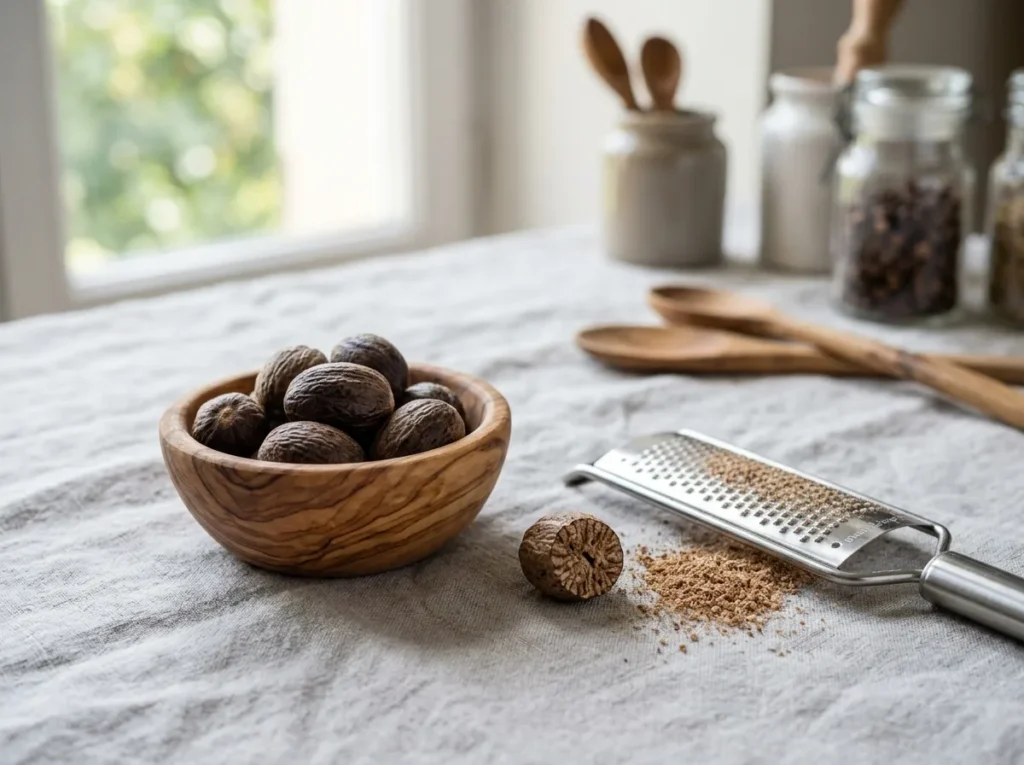
Béchamel without nutmeg? For many cooks, that’s unthinkable. Freshly grated over a gratin, mashed potatoes or a quiche, this small wrinkled nut brings a gentle, slightly peppery warmth that nothing else can replace. But nutmeg has two faces: delicious by the pinch, it can become toxic in large amounts. In this guide, we look at the health benefits of nutmeg, its reputation as a sleep aid, how much nutmeg is too much, the difference between nutmeg and mace, and all the ways to use it in the kitchen.
What exactly is nutmeg?
Nutmeg is the seed of the nutmeg tree (Myristica fragrans), a tall tropical evergreen native to the Banda Islands, a tiny archipelago in the Moluccas, Indonesia. For centuries, these islands were the world’s only source of nutmeg, and the Dutch held the monopoly by force in the 17th century. As with cloves, it was the Frenchman Pierre Poivre who, in the 18th century, managed to smuggle out seedlings and grow them in the Indian Ocean.
Today, Indonesia is still the world’s leading producer, ahead of India and the Caribbean island of Grenada, nicknamed “the Spice Isle”: nutmeg even appears on its flag.
The fruit of the nutmeg tree looks like a small yellow apricot. When ripe, it splits open to reveal a brown seed wrapped in a bright red web. The seed, once dried and removed from its shell, becomes nutmeg; the red web, dried separately, gives a second spice: mace. So a single tree produces two spices.
Mace vs nutmeg: what’s the difference?
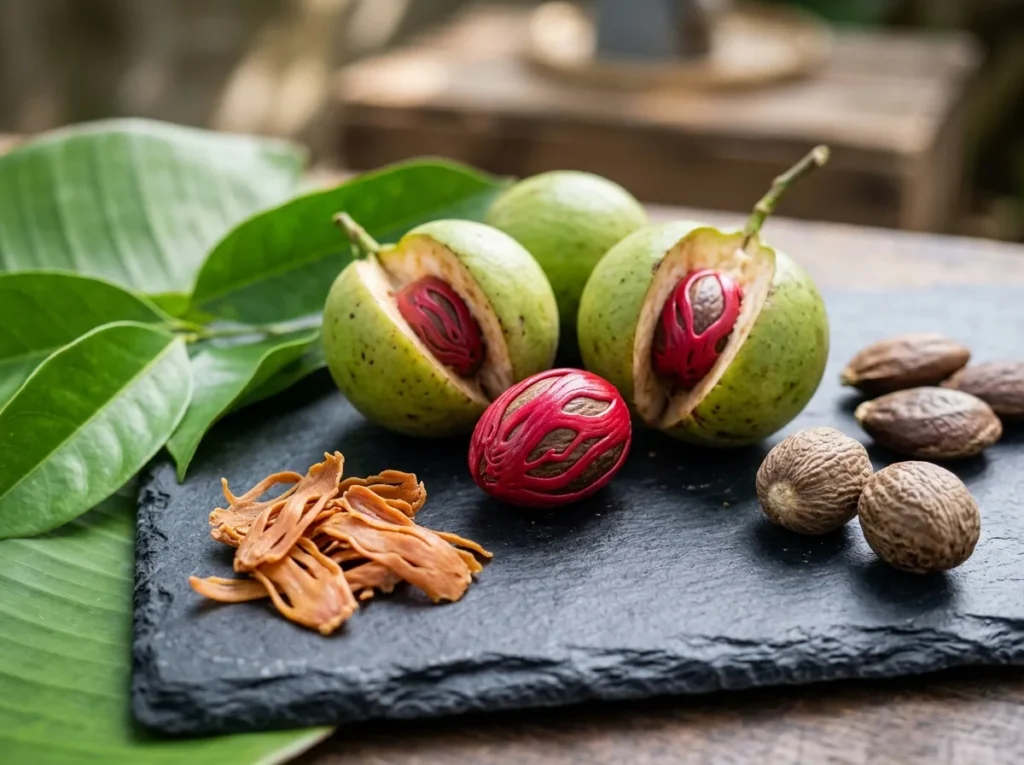
Mace is the aril of the nutmeg, the thin, lace-like covering that wraps around the seed. Bright red on the fresh fruit, it turns orange as it dries. It is sold as dried pieces, called “blades”, or ground. Its flavour is similar to nutmeg, but more delicate, more floral and a little more peppery. The table below sums up the differences between the forms of nutmeg and mace.
| Spice | Part of the fruit | Flavour | Storage and uses |
|---|---|---|---|
| Whole nutmeg | Dried seed | Warm, woody, slightly sweet and peppery | Several years; grate just before use over béchamel, mashed potatoes, gratins |
| Ground nutmeg | Ground seed | Milder, loses its aroma quickly | A few months; baking, spice blends |
| Mace | Dried red aril around the seed | More delicate, floral, slightly peppery | 1 to 2 years whole; stocks, cured meats, pale sauces, baking |
Mace is rarer and more expensive than nutmeg, because each fruit yields only a few grams. It is prized in stocks, terrines, sausages, white sauces and some English and Dutch baked goods. In cooking, the two spices are interchangeable: replace a pinch of nutmeg with a pinch of mace, and vice versa.
Nutmeg benefits
Nutmeg has long been used in traditional medicine in Asia and Europe, mainly for digestion and sleep. It contains essential oils, including myristicin, elemicin and safrole, as well as antioxidant compounds. In the laboratory, its extracts have shown antibacterial, antioxidant and anti-inflammatory effects. In humans, however, robust studies are lacking: there is no solid evidence that nutmeg has any health effect at the amounts used in cooking. Bear in mind that in Europe, no health claims are authorised for nutmeg.
Nutmeg and digestion
Like cardamom, cloves and cumin, nutmeg is traditionally used to help digest rich dishes and reduce bloating. It’s no coincidence that it turns up in cream sauces, gratins and cheese dishes. A pinch makes these recipes more fragrant, and perhaps a little easier to digest, although the evidence remains thin.
Nutmeg and sleep
It’s a well-known home remedy: a pinch of nutmeg in a glass of warm milk, with a little honey, before going to bed. Animal studies suggest that some compounds in nutmeg have a mild sedative effect. In humans, no robust study has shown that it improves sleep.
Our view: warm nutmeg milk is a gentle, comforting bedtime ritual, and a pinch carries no risk. However, never increase the dose in the hope of sleeping better: in large amounts, nutmeg doesn’t make you sleep; on the contrary, it causes agitation, palpitations and feeling unwell. If you have persistent insomnia, talk to your doctor.
Nutmeg tea
You don’t steep a whole nutmeg: nutmeg is best used in a milky drink or a light infusion, with just a pinch.
Warm nutmeg milk, for 1 cup:
- 250 ml milk or plant-based milk (almond, oat)
- 1 small pinch of freshly grated nutmeg
- 1 teaspoon honey
- Optional: a pinch of cinnamon or a crushed cardamom pod
Method: gently heat the milk with the spices without letting it boil, then sweeten with the honey and drink hot. For a dairy-free version, pour 250 ml hot water over a pinch of nutmeg, a slice of ginger and a slice of lemon, steep for 5 minutes and strain. One cup a day is enough.
The danger of too much nutmeg
This is the least-known side of nutmeg: in large amounts, it is toxic. The main culprits are myristicin and elemicin, which act on the nervous system. Poison control centres regularly report cases of poisoning, often in teenagers or young adults who swallow it deliberately for its supposed hallucinogenic effects, or in young children who have eaten it by accident.
Symptoms usually appear 3 to 8 hours after ingestion and can last up to a day or two:
- nausea, vomiting, abdominal pain;
- dry mouth, flushed face, racing heart, palpitations;
- dizziness, anxiety, agitation, confusion, sometimes hallucinations.
This kind of poisoning is rarely fatal, but it is very unpleasant and may require a hospital stay. If a large amount has been swallowed, especially by a child, call a poison control centre or emergency services straight away.
How much nutmeg is toxic?
There is no official maximum dose, but the guidelines are clear:
- In cooking, you use one or two pinches, or a few hundred milligrams for a whole dish. These amounts are safe.
- The first toxic effects are described in the medical literature from around 5 g of ground nutmeg, or about two teaspoons, roughly one whole nutmeg.
- A cautious guideline: don’t exceed half a teaspoon a day for an adult, spread across your meals, and much less for a child.
In practice, it is very hard to reach a dangerous dose through normal cooking: the taste becomes bitter and unpleasant long before.
Nutmeg: contraindications and precautions
By the pinch, nutmeg is fine for almost everyone. A few precautions are needed, however:
- Children: keep whole nutmegs and the jar of ground nutmeg out of their reach. A small amount is enough to poison them.
- Medication: myristicin may interact with certain antidepressants and drugs that act on the nervous system. If you are taking such medication, stick to culinary amounts and ask your doctor or pharmacist for advice.
- Essential oil: nutmeg essential oil is highly concentrated. It should not be swallowed without medical advice, and it is not recommended for children or pregnant women.
- Allergy: despite its name, nutmeg is not a nut in the botanical sense, but a seed. Most people with tree nut allergies tolerate it, but if you have an allergy, ask your allergist for advice.
Nutmeg and pregnancy
During pregnancy, nutmeg in cooking, as a pinch in a béchamel or mashed potatoes, poses no known problem. However, large amounts must be strictly avoided: nutmeg was once used, wrongly and dangerously, in attempts to induce miscarriage, and it can speed up the heart rate of both mother and baby. Also avoid nutmeg essential oil and nutmeg-based supplements during pregnancy and breastfeeding. If in doubt, ask your doctor or midwife.
How to use nutmeg
Nutmeg is a finishing spice: its aroma is volatile and evaporates during cooking. So it’s best added at the end, just before serving or putting the dish in the oven. It goes well with:
- Sauces and dairy: béchamel, Mornay sauce, cream, cheese, soufflés, quiches, potato gratin (gratin dauphinois).
- Vegetables: mashed potatoes, creamed spinach, pumpkin, cauliflower, carrots, leeks.
- Stuffings and meat: ravioli and cannelloni fillings, terrines, pâtés, meatballs, stews.
- Desserts and drinks: gingerbread, pumpkin pie, custard tarts, rice pudding, fruit compotes, eggnog, mulled wine.
It is also part of many spice blends: French quatre-épices (four-spice mix), Indian garam masala, Moroccan ras el hanout and American pumpkin pie spice.
Nutmeg in béchamel sauce
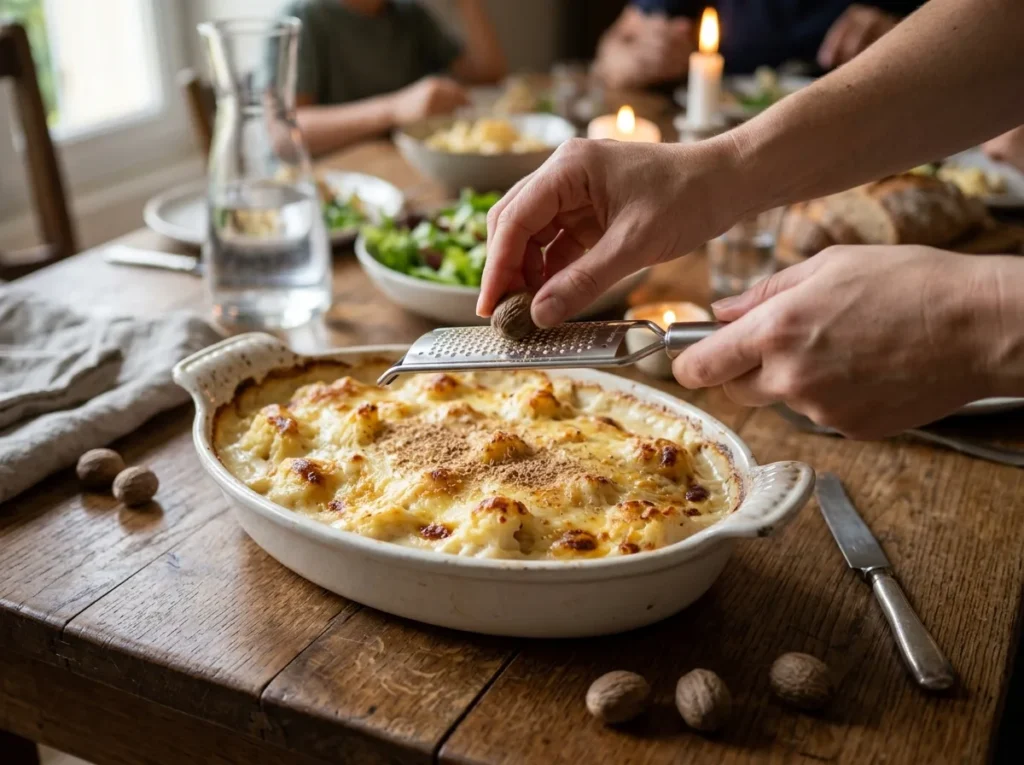
This is the most famous pairing in French cuisine. For a classic béchamel (500 ml milk, 40 g butter, 40 g flour), add a pinch of freshly grated nutmeg at the end of cooking, when you season with salt and pepper. Nutmeg softens the floury taste and brings out the flavour of the milk. For an even more delicate sauce, use a pinch of mace instead.
Nutmeg béchamel is the base of lasagne, cauliflower cheese, chicory and ham gratin, croque-monsieur, cannelloni and vegetable gratins. If you add cheese to turn it into a Mornay sauce, keep the nutmeg: it goes perfectly with Gruyère and Comté.
Nutmeg in mashed potatoes
A hint of nutmeg transforms homemade mashed potatoes. For 1 kg of potatoes, mash the cooked potatoes, add the butter and hot milk, then a small pinch of grated nutmeg, salt and pepper. Taste before adding more: nutmeg should stay in the background, like a subtle scent, and never dominate. The same principle applies to sweet potato, celeriac, pumpkin or cauliflower purées, and to potato gratin.
Freshly grated or ground nutmeg?
Our advice: buy whole nutmegs and grate them just before use. The difference in flavour is striking. A whole nutmeg keeps its essential oil and aroma for several years, whereas ground nutmeg loses much of its aroma within a few months once the jar is opened. Ground nutmeg is still handy for baking and spice blends, as long as you replace it often. Bonus: a whole nutmeg costs barely more than a small jar of ground nutmeg and yields the equivalent of two to three teaspoons.
How to grate nutmeg
No complicated equipment needed:
- With a nutmeg grater: a small grater with very fine holes, often with a compartment to store the nutmeg. Rub the nutmeg over it, holding it firmly.
- With a fine Microplane-style grater: the most efficient tool, the one chefs use. It produces a very fine, light powder.
- With the finest side of a box grater: this works too, with a little more effort.
- With a nutmeg mill: some mills are designed specifically for whole nutmegs, handy if you use it often.
Grate directly over the dish or pan. When the nutmeg becomes too small to hold safely without grating your fingers, save it to flavour a stock or warm milk, where it will infuse whole.
Nutmeg in desserts and drinks
It’s often forgotten, but nutmeg is also a sweet spice. In English-speaking countries, it is essential in pumpkin pie, Christmas eggnog and spiced cookies. In the Netherlands, it flavours speculaas, the biscuits eaten for St Nicholas. In France, it is found in pain d’épices (French spiced bread) and in some recipes for flan or pastry cream.
A few easy ideas:
- a pinch over rice pudding or a custard tart, grated just before serving;
- a hint in apple or pear compote, with a little cinnamon;
- a pinch in the batter of a carrot cake or a crumble;
- a dusting of grated nutmeg on a cappuccino or hot chocolate.
As in savoury cooking, the rule stays the same: a pinch is enough; nutmeg should add fragrance without dominating.
Nutmeg substitutes
Run out of nutmeg? Here are the best alternatives:
- Mace: the perfect substitute, since it comes from the same fruit. Use the same amount.
- Allspice: its ground berries are reminiscent of nutmeg, cloves and cinnamon. Perfect in savoury dishes and desserts.
- Quatre-épices (French four-spice mix): it already contains nutmeg; ideal in terrines, stews and spiced bread.
- Cinnamon or cardamom: for desserts, compotes and hot drinks, in small amounts.
In a béchamel or mashed potatoes, if you have neither nutmeg nor mace, a hint of white pepper is better than nothing: it adds subtle warmth without changing the taste of the dish.
How to store nutmeg
Keep whole nutmegs in an airtight jar, made of tinted glass or metal, in a cool, dry cupboard, away from light and from the hob. They stay fragrant for two to four years. Ground nutmeg, on the other hand, is best used within six months. To check whether a nutmeg is still good, prick it with the tip of a knife or grate a little: a fresh nutmeg feels heavy, releases a little oil and has a strong smell. A light, dry, odourless nutmeg is past its best.
Nutmeg and its fellow spices
Nutmeg loves company. In mulled wine or gingerbread, it joins cloves, cinnamon and ginger; in a béchamel, pepper; in garam masala, cardamom and cumin. To learn all about these spices, also check out our guides to paprika, saffron and the health benefits of turmeric. And for gentle heat, discover Espelette pepper, the pride of the Basque Country. Finally, for a gentle lemony note, try coriander seeds, perfect in vegetables à la grecque.
Nutmeg FAQ
How much nutmeg in a béchamel?
A pinch of freshly grated nutmeg for 500 ml of milk is enough. Taste before adding more.
Is a whole nutmeg dangerous?
Swallowed whole or grated all at once, one nutmeg can be enough to cause poisoning in an adult. Used pinch by pinch, it lasts for weeks and is perfectly safe.
Is nutmeg hallucinogenic?
In very large doses, it can cause hallucinations, but always together with severe discomfort: nausea, palpitations, anxiety. It is poisoning, not a pleasant experience, and it can be dangerous.
Does nutmeg go off?
It doesn’t become dangerous, but it loses its aroma over time, especially when ground. A whole nutmeg keeps for several years.
This article is for general information only and is not a substitute for advice from a doctor, midwife or pharmacist.