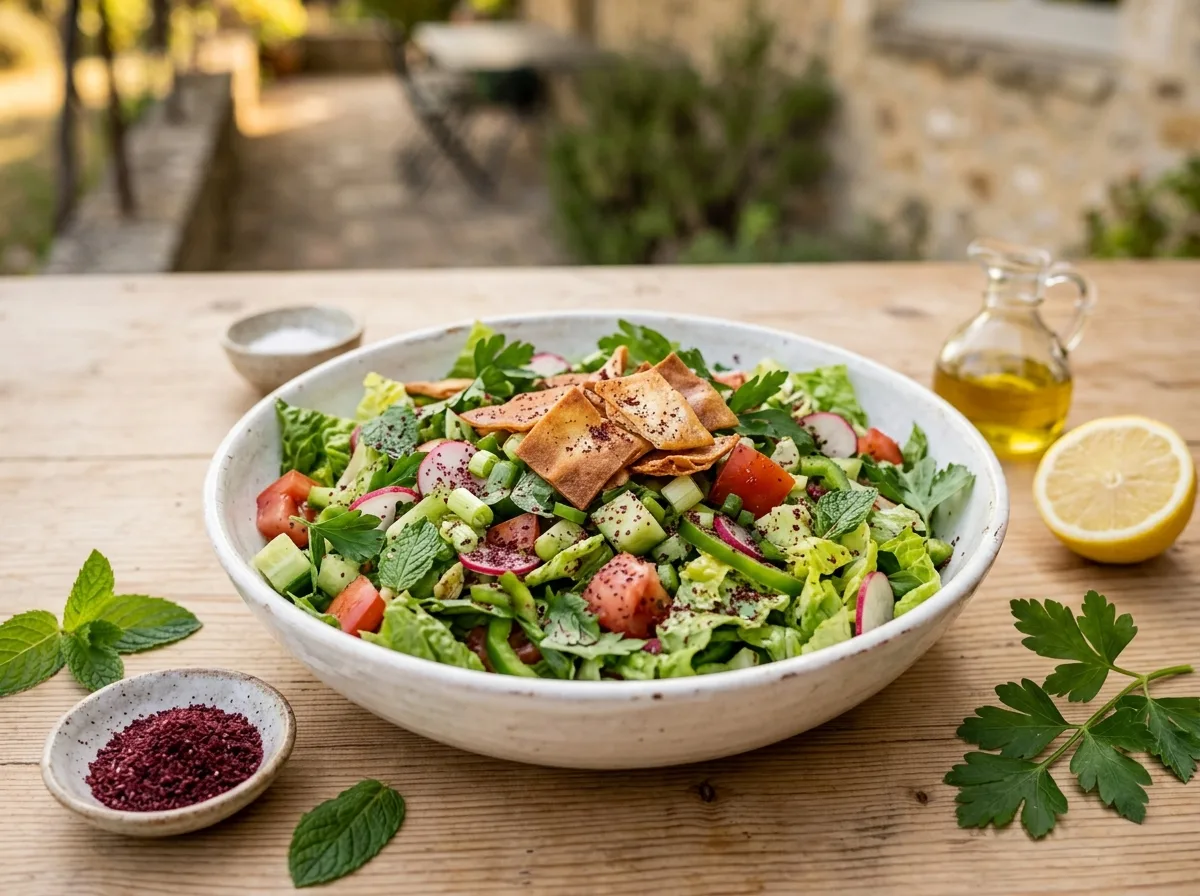
Fattoush salad with sumac
Ingredients
Method
- Preheat the oven to 200 °C. Split the pitta breads in two, cut them into 3 cm squares, toss them with 1 tablespoon of olive oil and a pinch of sumac, then bake for 8 to 10 minutes, until golden and crisp. Leave to cool.
- Make the dressing: crush the garlic, then whisk it with the lemon juice, pomegranate molasses, sumac, dried mint, salt and pepper. Drizzle in the olive oil, whisking as you go.
- Wash and dry the lettuce and herbs carefully. Cut the romaine into strips, the tomatoes and cucumber into cubes, the radishes into thin slices, the pepper into small pieces and the spring onions into rings.
- Pick the parsley and mint leaves and chop them roughly.
- In a large salad bowl, combine the vegetables, herbs and purslane. Pour over the dressing and toss gently.
- At the last moment, add the toasted bread, toss one last time, sprinkle with sumac and serve straight away.
Notes
Crunchy, colourful and wonderfully fresh, fattoush is the signature salad of Lebanon and Syria. Raw vegetables cut into chunks, plenty of herbs, pieces of toasted pitta bread and a tangy lemon and sumac dressing: it’s simple, quick and irresistible. Here is our recipe, the story of this dish born out of a wish to waste nothing, and all our tips for a really crisp fattoush.
Fattoush, a no-waste salad
The name fattoush comes from the Arabic word fatt, which means “to crumble” or “to break into pieces”. It refers to the bread: originally, fattoush was a way of using up the previous day’s flatbread, which had gone dry, by mixing it with vegetables from the garden. So it is a family recipe, thrifty and waste-free, like the Italian panzanella, which also makes use of stale bread.
Today it is served all over the Middle East, as part of a mezze spread, alongside tabbouleh, hummus or falafel. There is no single recipe: every family adds seasonal vegetables, more or fewer herbs, and chooses whether to toast or fry its bread.
Sumac, the spice that makes fattoush
What sets fattoush apart from an ordinary mixed salad is sumac. This deep reddish-purple powder, made from the dried and ground berries of a Mediterranean shrub, has a tangy, fruity flavour, close to lemon, with no heat. It goes into the dressing and is sprinkled over the salad just before serving, which also gives it its lovely colour.
You’ll find sumac in Middle Eastern grocers, in the spice aisle of large supermarkets or online. To find out how to choose it, store it and use it in other dishes, read our complete guide to sumac. If you have no sumac, you can replace it with finely grated lemon zest, but the fattoush will lose a little of its character.
The vegetables in fattoush
The classic base brings together romaine lettuce, tomato, cucumber, radish, pepper and spring onion. In Lebanon, purslane is often added too: a small plant with fleshy, slightly tangy leaves, found at markets in summer, or sometimes in your own garden. If you can’t find any, don’t worry: the salad will be just as good.
Cut the vegetables into fairly large pieces, about 1 to 2 cm: fattoush is a rustic salad, eaten with a fork, not a finely chopped salad like tabbouleh. Choose really ripe tomatoes and a firm cucumber. In winter, replace the tomato with pomegranate and add a few cabbage leaves or some lamb’s lettuce.
The secret to really crisp bread
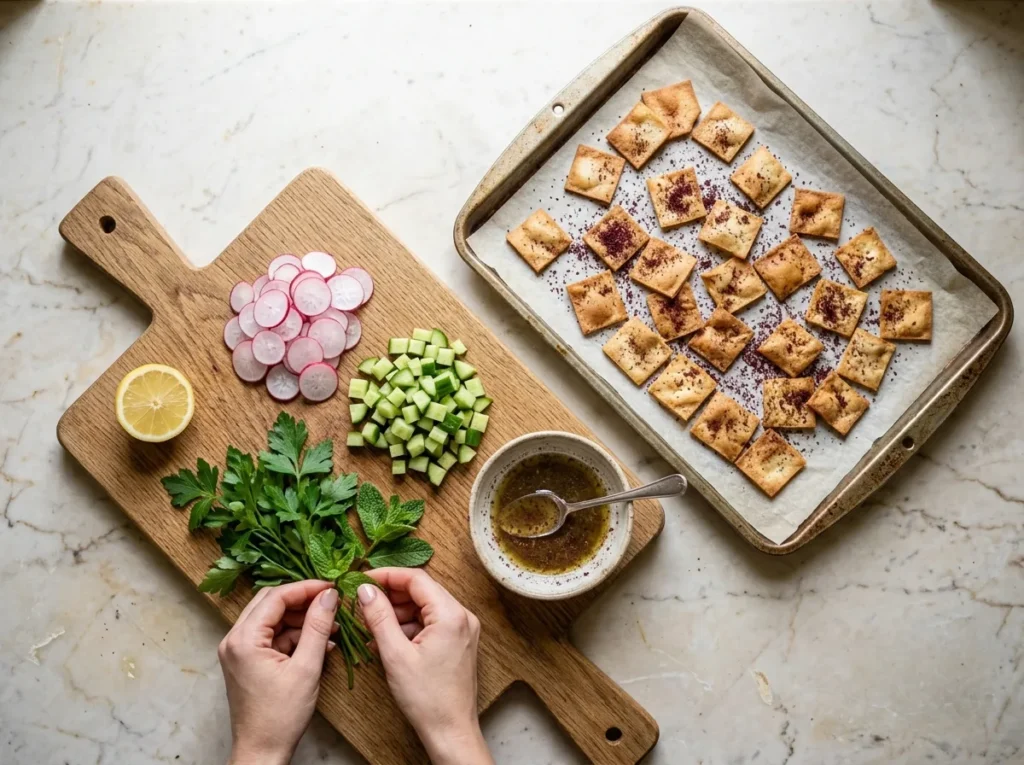
The bread is the soul of fattoush. Traditionally it is fried in oil, which makes it very crisp but also greasier. Our version browns it in the oven with just one spoonful of olive oil: it stays light and nicely crunchy. Split the pitta bread in two before cutting it: the thinner pieces dry out better and brown more quickly.
Toasted bread keeps for several days in an airtight container. So you can make it ahead, or use pitta breads that have gone a little dry: they’ll be perfect. Above all, add it at the very last moment, just before serving. Some people like it to soak up a little dressing, others want it really crunchy: it’s up to you.
The lemon, sumac and pomegranate molasses dressing
The fattoush dressing is bright and tangy. It combines olive oil, lemon juice, sumac, dried mint and a hint of garlic. Pomegranate molasses, a thick syrup of reduced pomegranate juice, adds a very characteristic sweet and sour note. It is optional but truly delicious, and you’ll find it in Middle Eastern grocers. If you don’t have any, add a little more lemon and half a spoonful of honey.
What to serve with fattoush?
Fattoush is served as a starter, or as part of a mezze platter with hummus, baba ganoush and our baked falafel. It also goes very well with grilled meats, roast chicken, kebabs or grilled fish. To make it a complete meal, add chickpeas, feta or a hard-boiled egg. It is also the perfect side for our sumac chicken with onions (musakhan).
Our variations
Fattoush with chickpeas
Add 250 g of cooked chickpeas, rinsed and drained, along with the vegetables. The salad becomes a complete meal, rich in fibre and plant protein. If you like this combination, also try our chickpea, feta and cucumber salad.
Fattoush with feta
Crumble 100 g of feta over the salad just before serving. Its saltiness goes beautifully with the tanginess of the sumac and lemon.
Winter fattoush
Replace the tomato and cucumber with orange segments, pomegranate seeds, thinly sliced fennel and lamb’s lettuce. A fresh, colourful version for the colder months.
Storage
Once dressed, fattoush should be eaten straight away: the leaves and the bread soften quickly. If you want to get ahead, keep the chopped vegetables in a container in the fridge, the dressing in a jar and the toasted bread in an airtight container. Then all you have to do is mix everything together at mealtime.
Frequently asked questions
What is the difference between fattoush and tabbouleh?
Lebanese tabbouleh is a salad of very finely chopped parsley, with a little bulgur, tomato and lemon. Fattoush contains more coarsely cut vegetables, toasted bread and sumac, but no bulgur.
Is fattoush vegan?
Yes, the classic recipe is entirely plant-based. It contains gluten because of the pitta bread: for a gluten-free version, use corn tortillas or toasted gluten-free bread.
Can I replace the pitta bread?
Yes, with any flatbread, such as Lebanese bread or wheat tortillas, or even with toasted croutons made from country bread.