Split pea and cumin dip
Ingredients
Method
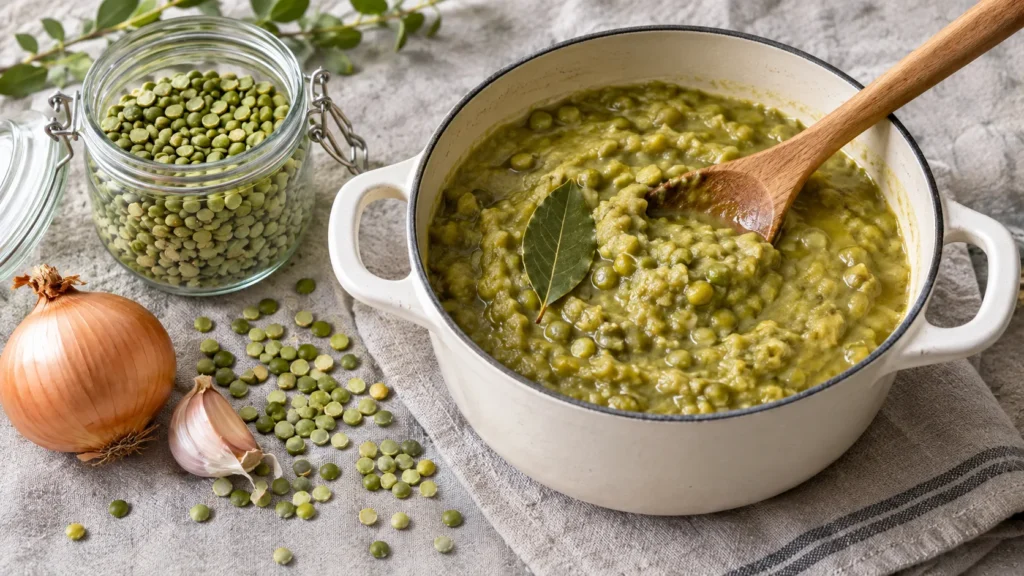
- Rinse the split peas in cold water until the water runs clear. Peel the onion and cut it into quarters, and peel the garlic.
- Put the split peas, onion, garlic and bay leaf in a saucepan with the cold water. Bring to the boil and skim off the foam that forms.
- Partly cover and cook over a low heat for 35 minutes, until the peas break down into a purée. Add a little hot water if needed.
- Meanwhile, toast the cumin seeds for 1 minute in a small dry frying pan. Set aside a pinch for garnish.
- Remove the bay leaf. Blend the warm split peas with the onion, garlic, cumin, turmeric and lemon juice, pouring in the olive oil in a thin stream. Season with salt and pepper.
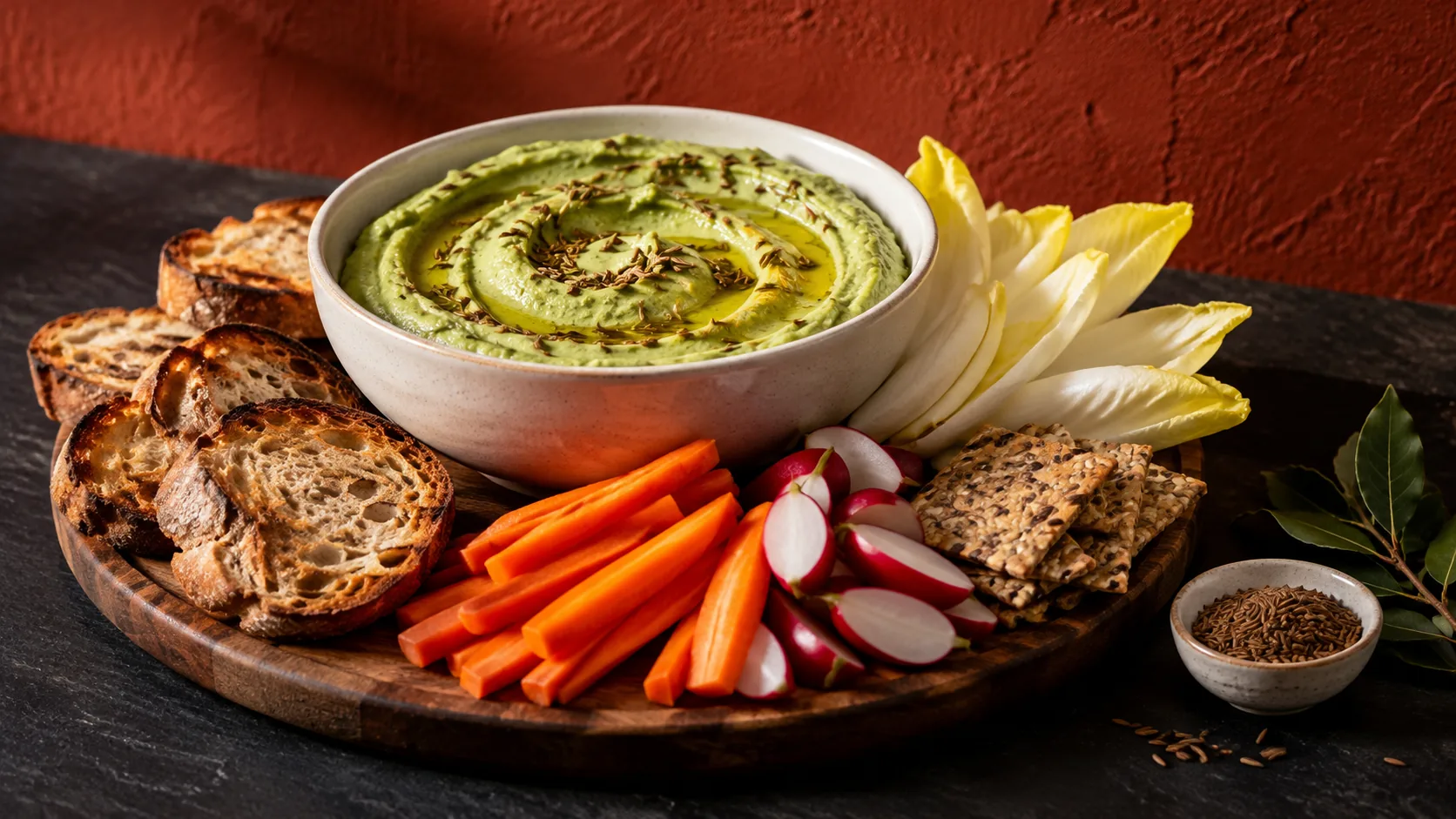
- Spoon into a bowl, make a swirl with the back of a spoon, drizzle with olive oil and sprinkle with the reserved cumin. Serve warm or cold.
Notes
Mellow, creamy, a pretty soft green and fragrant with toasted cumin: this split pea and cumin dip is one of the simplest and cheapest ways to make homemade nibbles. Split peas don’t need soaking. They cook for 35 minutes with an onion and a bay leaf, then are blended with olive oil, lemon and cumin. The result, for spreading on toast or serving with crunchy vegetables, makes a pleasant change from hummus.
The split pea, a forgotten store-cupboard treasure
A split pea is nothing more than a garden pea left to mature, dried, stripped of its skin and then split in half. They come in two colours: green split peas, the most common in France, and yellow split peas, widely used in Greece, India and the Nordic countries.
For a long time, they were a staple of European peasant cooking, particularly in winter, when fresh vegetables were scarce. In France, they are best known through split pea soup and potage Saint-Germain, a pea soup that is a great classic of traditional French cooking. They have been somewhat forgotten since, which is a shame: they are cheap, keep for months in the cupboard and can be cooked without soaking.
A nourishing, filling pulse
Like all pulses, split peas are rich in plant protein and fibre. They also provide iron, potassium and B vitamins. Paired with a grain, here the bread you spread it on, they round out a vegetarian meal nicely. Their fibre also explains why they are so filling: a few slices of toast are enough to keep you going until dinner.
A cousin of Greek fava
If this dip reminds you of something, perhaps you have already tasted fava in Greece. Despite its name, Greek fava contains no broad beans: it is a purée of yellow split peas, served warm with a drizzle of olive oil, raw red onion and capers. On the island of Santorini, the local fava, which has protected designation of origin status, is even made from a related pulse, a type of grass pea grown in the island’s volcanic soils.
Our version captures the spirit of fava, using green split peas, which are easier to find, and adds cumin, which gives it a warm, slightly earthy character.
Split pea dip or hummus?
People sometimes mix them up, but the two are quite different. Hummus is made with chickpeas and tahini, the sesame paste that gives it its distinctive flavour. Our dip uses split peas and only olive oil. It is milder, lighter on the palate and cooks much more quickly, with no soaking the night before.
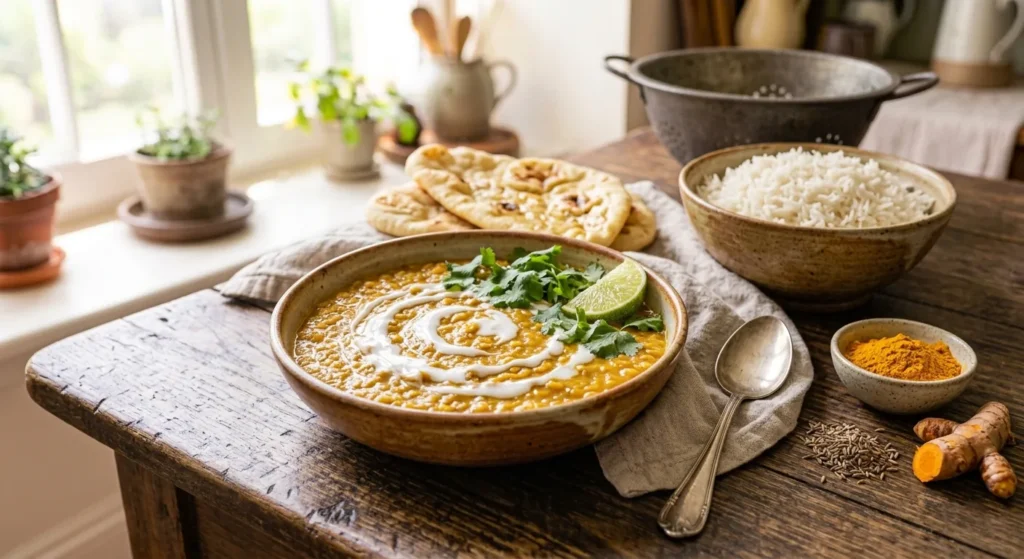
If you like chickpeas, at Curcuma.top you will find our baked chickpea falafel, our herby chickpea croquettes and our chickpea, feta and cucumber salad. And for another pulse that needs no soaking, try our red lentil dhal with coconut milk.
The secret of a really creamy split pea dip
Rinse the split peas
Put the split peas in a sieve and rinse them under cold water, stirring them with your hand, until the water runs clear. Pick out any small stones or damaged peas as you go.
Skim, and salt at the end
At the start of cooking, a whitish foam forms on the surface: remove it with a slotted spoon. Only add salt at the end of cooking. The water reduces a lot during cooking, and salt added too early can make the dip too salty.
Cook until they break down
The split peas are cooked when they squash effortlessly and start to break down into a purée in the pan, after 30 to 40 minutes depending on their age. Older split peas cook more slowly: add a little hot water if needed.
Blend while warm, with the oil
Blend the split peas while they are still warm, pouring in the olive oil in a thin stream, as you would for mayonnaise. The dip becomes smooth, glossy and creamy. It thickens as it cools: if it becomes too stiff, loosen it with a tablespoon of hot water.
Toasted cumin, the finishing touch
Cumin has been used since ancient times around the Mediterranean, in the Middle East and in India. Its warm, slightly earthy aroma goes perfectly with the mellowness of pulses. To get the most out of it, toast the cumin seeds for a minute in a small dry frying pan, until fragrant. Blend some of them into the purée and keep the rest for garnish.
A pinch of turmeric and a turn of black pepper complete the mix: the turmeric warms up the colour, and the pepper helps bring it out. To find out more, read our article on the health benefits of turmeric.
How to serve split pea dip
- As nibbles, with toast, seeded crackers or breadsticks.
- With crunchy vegetables: carrot and cucumber sticks, radishes, chicory leaves, cauliflower florets.
- The Greek way, warm, with a drizzle of olive oil, thin slices of red onion, capers and a little oregano.
- In a sandwich, spread on wholemeal bread with raw vegetables and cream cheese.
- As a side, instead of mash, with grilled fish or our kidney bean veggie burgers.
Variations
With yellow split peas
They give a golden dip, very close to Greek fava. The cooking time is the same.
Mint and lemon
Replace half the cumin with a handful of fresh mint leaves and the zest of a lemon. The dip becomes very fresh, perfect in spring.
Confit garlic
Cook three whole garlic cloves with the split peas and blend them into the purée. The garlic flavour becomes mellow and almost sweet.
Smoky version
Add half a teaspoon of smoked paprika when blending. The dip takes on a toasted note reminiscent of split pea and bacon soup, without the meat.
A budget-friendly, zero-waste recipe
A bag of split peas costs very little and makes several jars of dip. It is one of the most economical party nibbles there is, far cheaper than ready-made shop-bought dips, and free from preservatives. Keep the cooking water too if it hasn’t all been absorbed: it can be used as a base for a soup or to loosen the dip the next day. And if you have some carrot tops to hand, a little of our carrot top pesto on top makes a lovely colour contrast.
Storage
The dip keeps for 4 days in the fridge in a tightly sealed jar, covered with a drizzle of olive oil to stop it drying out. Take it out 15 minutes before serving and stir it well. It also freezes, in small portions, for up to 3 months.
Frequently asked questions
Do split peas need soaking?
No. Unlike chickpeas or dried beans, split peas have no skin and can be cooked straight away after a simple rinse.
My dip is too thick: what can I do?
Add one or two tablespoons of hot water or cooking water, then blend again. It always thickens as it cools.
Can I serve it hot?
Yes. Warm, it can be eaten like a purée, the Greek way. Cold, it is firmer and spreads better.