Radish leaf soup
Ingredients
Method
- Cut the leaves off the radishes. Wash them in several changes of cold water, remove any damaged leaves and thick stalks, then drain.
- Peel the potatoes and cut them into cubes. Slice the onion.
- In a saucepan, fry the onion in the olive oil with the pinch of turmeric for 3 minutes.
- Add the potatoes and stock. Bring to the boil and simmer for 15 to 20 minutes, until the potatoes are tender.
- Add the radish leaves and cook for a further 3 to 5 minutes.
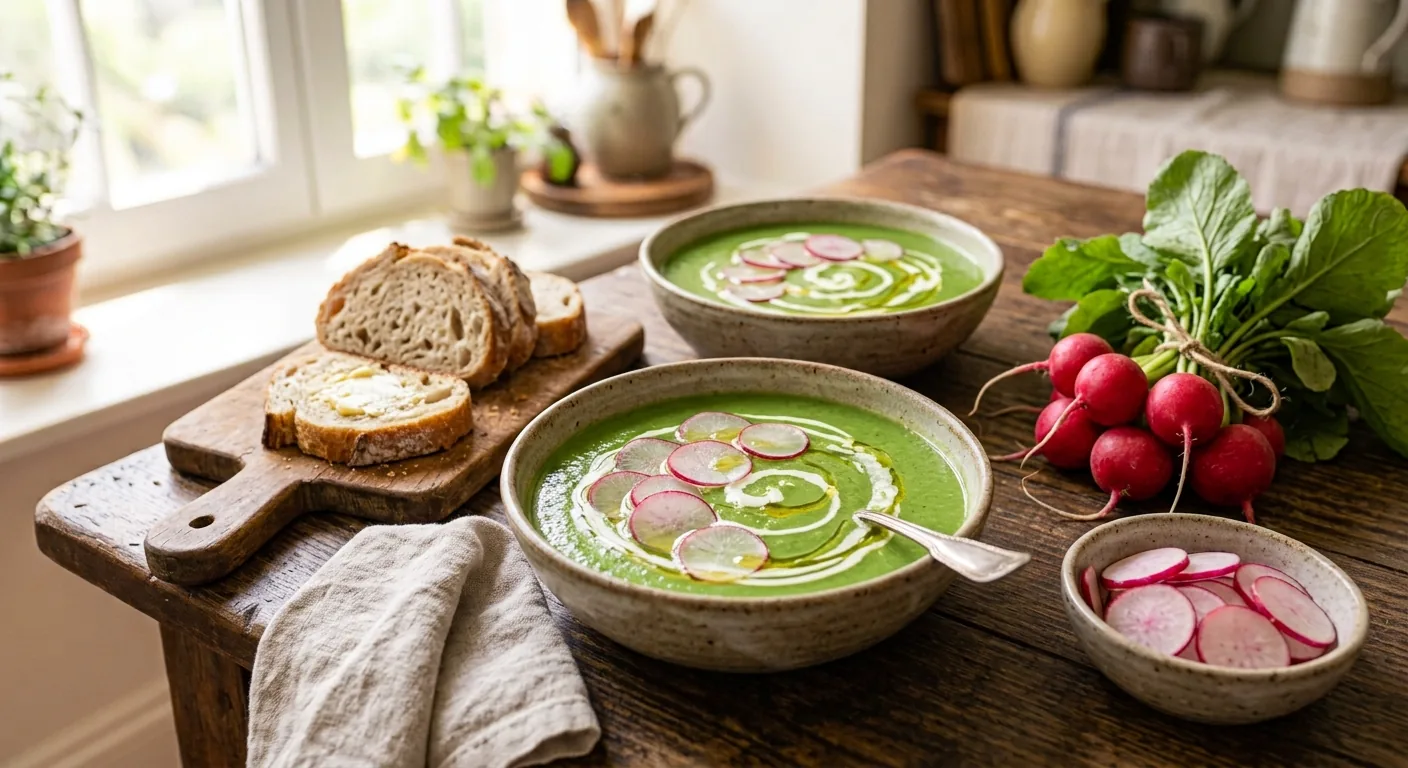
- Blend straight away until the soup is completely smooth. Season with salt and pepper and serve topped with a few slices of fresh radish.
Notes
When we buy a bunch of radishes, we keep the little pink bulbs… and often throw away the leaves. What a shame, because radish leaves make a delicious soup: green, velvety and slightly peppery. Our radish leaf soup is a zero-waste, grandmother-style recipe, ready in 35 minutes with a few potatoes and an onion. Here’s how to make it, and why you’ll never look at radish tops the same way again.
Can you eat radish leaves?
Yes, absolutely. The radish belongs to the brassica family, like cabbage, rocket and watercress, and its leaves are perfectly edible. In fact, they taste a lot like rocket: green, slightly sharp, with a peppery note reminiscent of the radish itself.
Radish leaf soup is a great classic of French home cooking, especially in spring, when the first bunches of radishes arrive at the markets. For a long time, nothing from the vegetable garden went to waste: radish, carrot and turnip tops naturally ended up in the pot.
What about the little hairs on the leaves?
Radish leaves are covered in tiny, slightly rough hairs. That’s probably what puts people off eating them raw. Don’t worry: they disappear completely during cooking, and once blended, the soup is perfectly smooth and velvety.
Choosing and preparing radish leaves
- Choose a bunch with bright green leaves, firm, with no yellow spots or wilted leaves. Spring radishes, from March to June, have the most tender tops.
- Separate the leaves from the radishes as soon as you buy them. The leaves keep drawing water from the radishes, which go soft. The radishes will keep better, and so will the leaves.
- Wash them in several changes of water. Soil and grit cling easily to the leaves. Leave them to soak for a few minutes in a large bowl of cold water, lift them out by hand (the grit stays at the bottom) and repeat two or three times.
- Remove any damaged leaves and stalks that are too thick.
- Cook them quickly: radish leaves wilt fast. Use them within 24 hours, or keep them for a day or two in the fridge wrapped in a damp tea towel.

The role of the potato
In this soup, the potato has two jobs. First, it creates the velvety texture: thanks to its starch, it thickens the soup and makes it creamy without any need for cream. Second, it softens the flavour of the radish leaves, which could be a little strong on their own.
Choose a floury variety, such as Maris Piper or King Edward, which breaks down well as it cooks. A single bunch of radishes is enough for 4 people with 2 or 3 medium potatoes.
Our tips for a vibrant green soup
Add the leaves at the end
This is the secret to a beautifully green soup. First cook the potatoes and onion in the stock. Add the radish leaves only for the last 3 to 5 minutes of cooking: they will wilt and cook just enough without losing their colour.
Blend straight away
Blend the soup as soon as it has finished cooking. If it sits too long with the leaves in it, they turn khaki green.
Adjust the texture
If the soup is too thick, add a little stock or hot water. If it’s too thin, let it reduce uncovered for a few minutes, or add a small cooked potato.
Our golden touch: a pinch of turmeric
A small pinch of turmeric added with the onion brings a warm note that balances the peppery leaves. Careful, though, not too much: the yellow of the turmeric mixed with the green of the leaves can give an olive colour. A pinch is enough. If you’re interested in the spice, discover our history of turmeric.
How to serve radish leaf soup
Here are a few ideas to make it even more special:
- With the radishes themselves: slice a few radishes thinly and scatter them over the soup just before serving. The crunch and the pink make a very pretty contrast.
- With a spoonful of Greek yoghurt or cream, if you like a milder soup.
- With croutons of bread rubbed with garlic.
- With a poached or soft-boiled egg, for a complete meal.
- With a drizzle of olive oil and a few toasted pumpkin seeds.
Variations
Radish leaf and pea soup
Replace one potato with 200 grams of peas, fresh or frozen. The soup will be milder, sweeter and even greener.
Mixed vegetable top soup
Mix the radish leaves with carrot, turnip or beetroot tops. Each bunch brings its own flavour, and nothing goes to waste.
Coconut milk version
Replace some of the stock with coconut milk and add a little grated ginger. The soup takes on a gently exotic feel and is very mild.
Storage
Radish leaf soup keeps for 2 to 3 days in the fridge in an airtight container. It also freezes very well for about 3 months. The colour may darken slightly over time, but the flavour stays excellent.
A budget-friendly spring recipe
With an inexpensive bunch of radishes, a few potatoes and an onion, this soup feeds four people on a tiny budget. That’s the whole spirit of zero-waste cooking: using every part of the vegetable without sacrificing any flavour. The radishes themselves can be enjoyed on the side, eaten the French way with a little butter and flaky sea salt, or thinly sliced in a salad. One bunch, two recipes, zero waste: it’s the kind of small victory that makes cooking a pleasure.
Frequently asked questions
Can you eat radish leaves raw?
Yes, if they are young and tender. Finely chopped, they can go into a salad, like rocket. Larger, rougher leaves are better cooked.
What other recipes can you make with radish leaves?
They make an excellent pesto, omelette or quiche, or can be pan-fried with garlic like spinach. They can also be added to a gratin or a stuffing.
Do you need to peel the potatoes?
For a very smooth soup, yes. If you’re using new potatoes with thin skins, you can simply scrub them well: the skin will be invisible once blended.